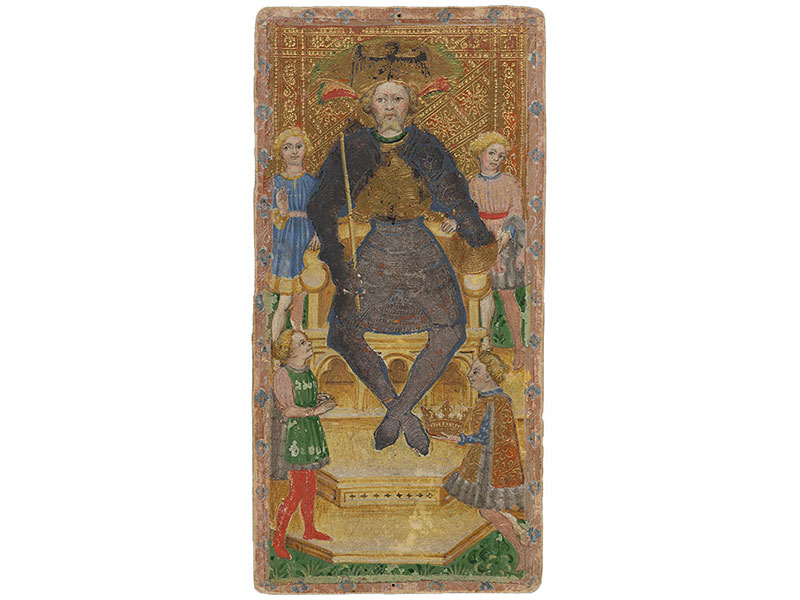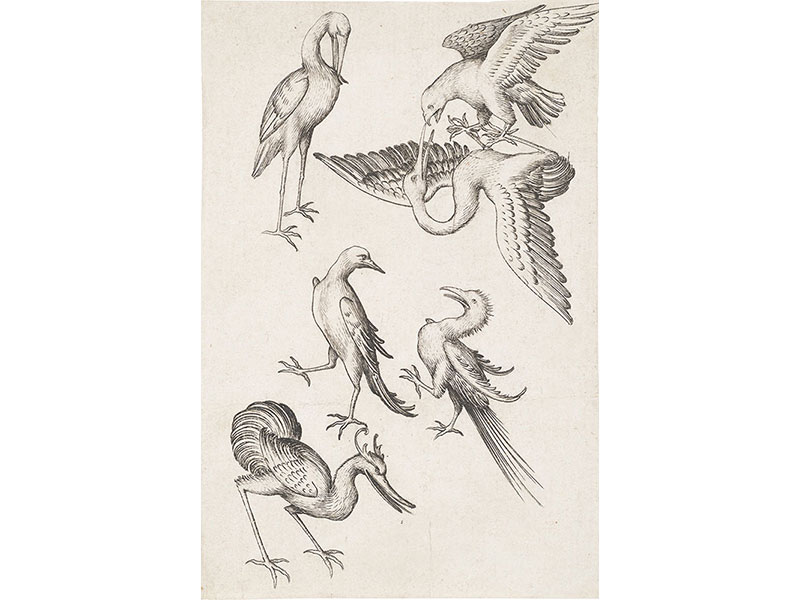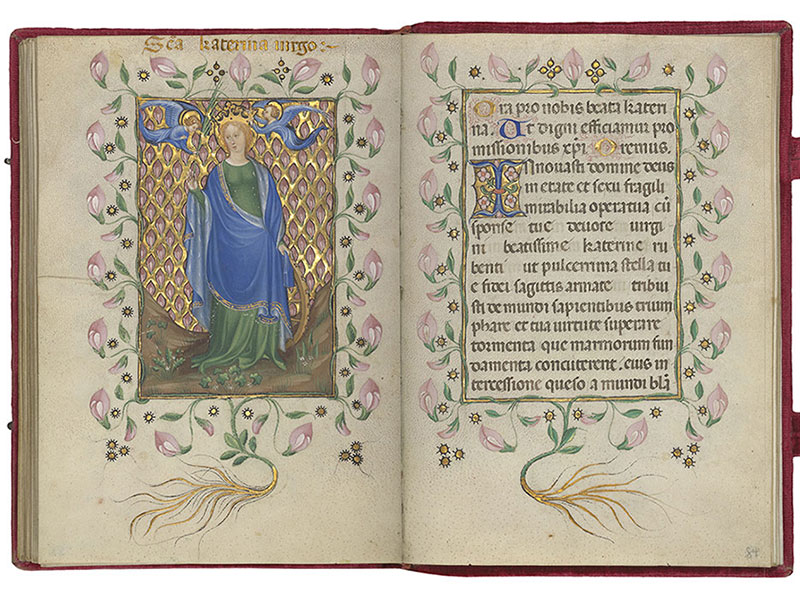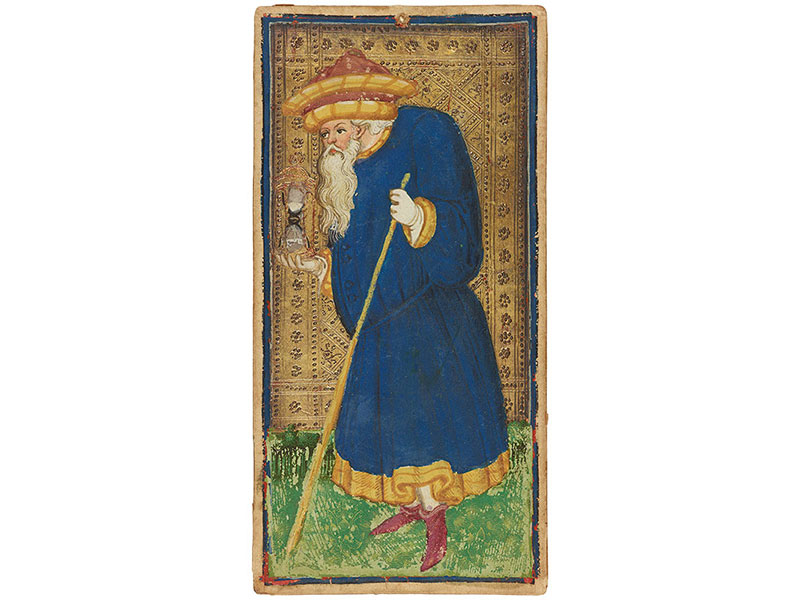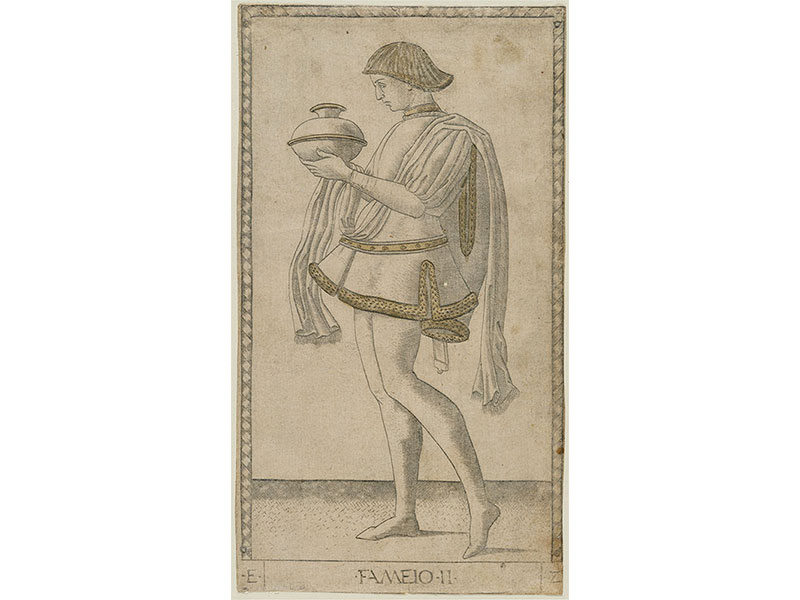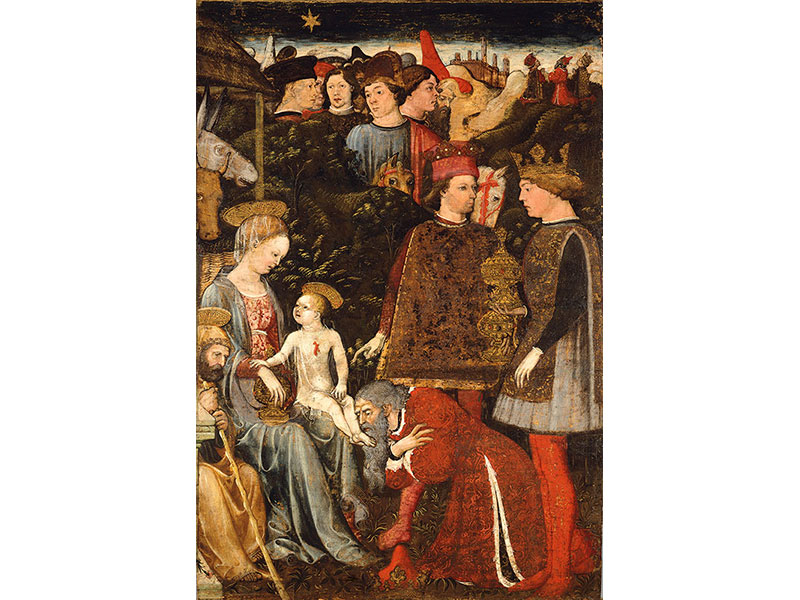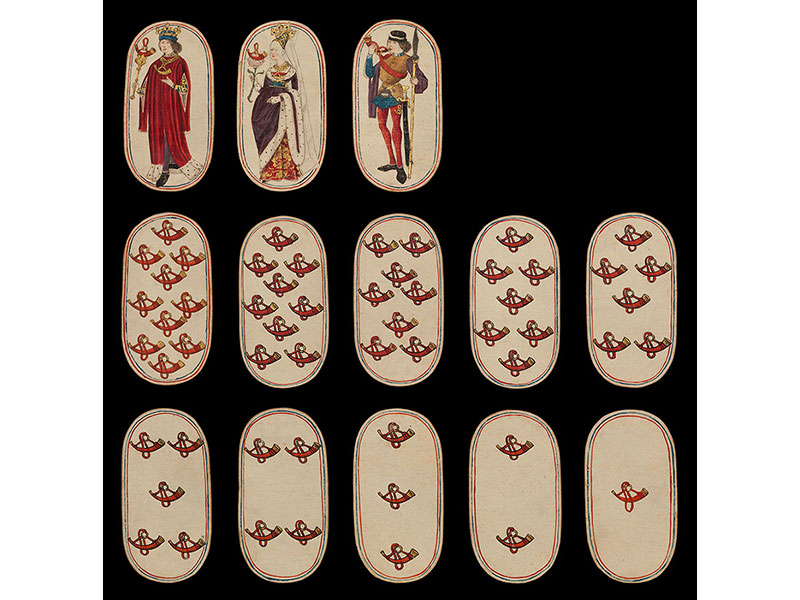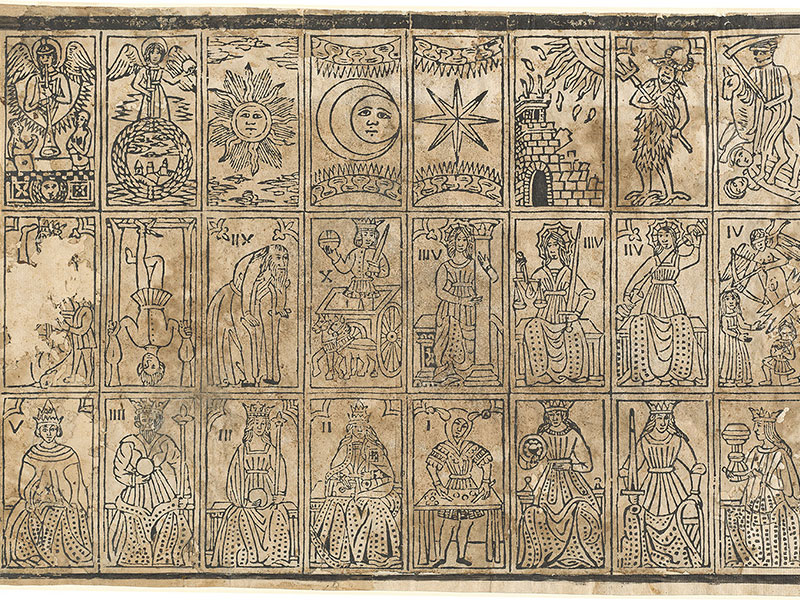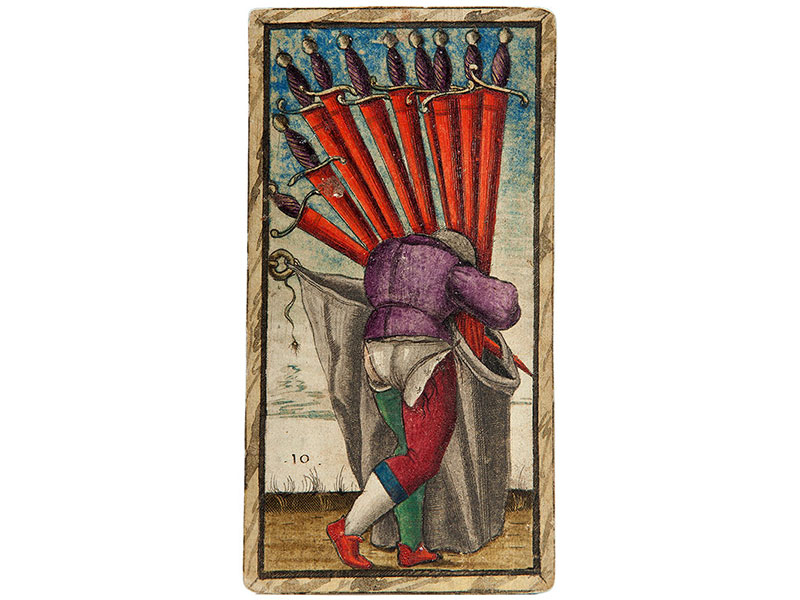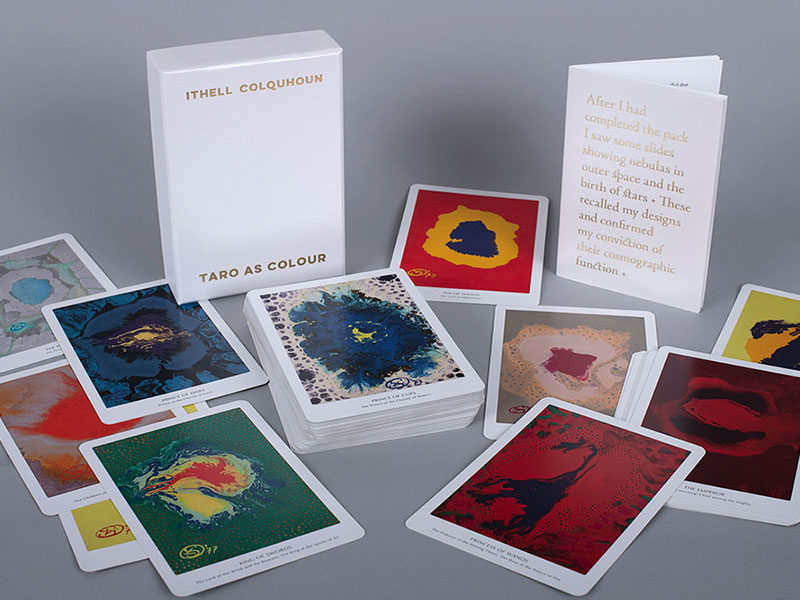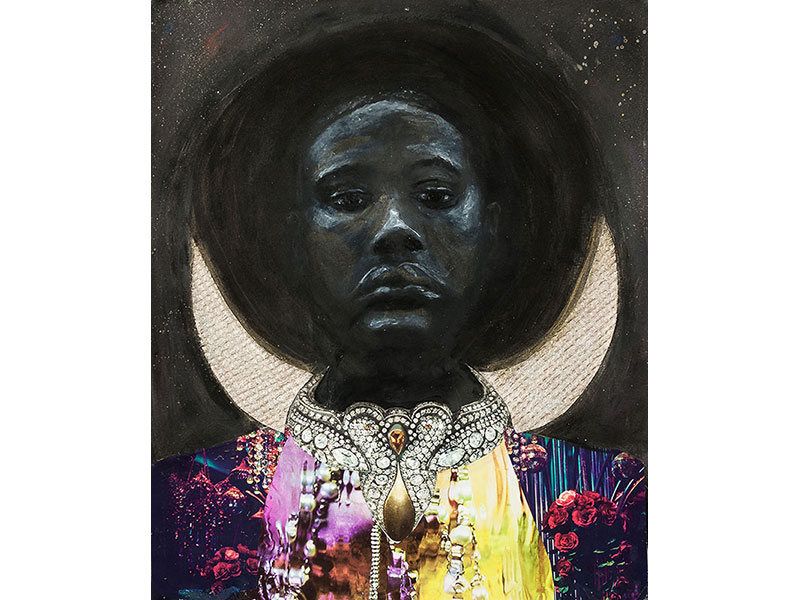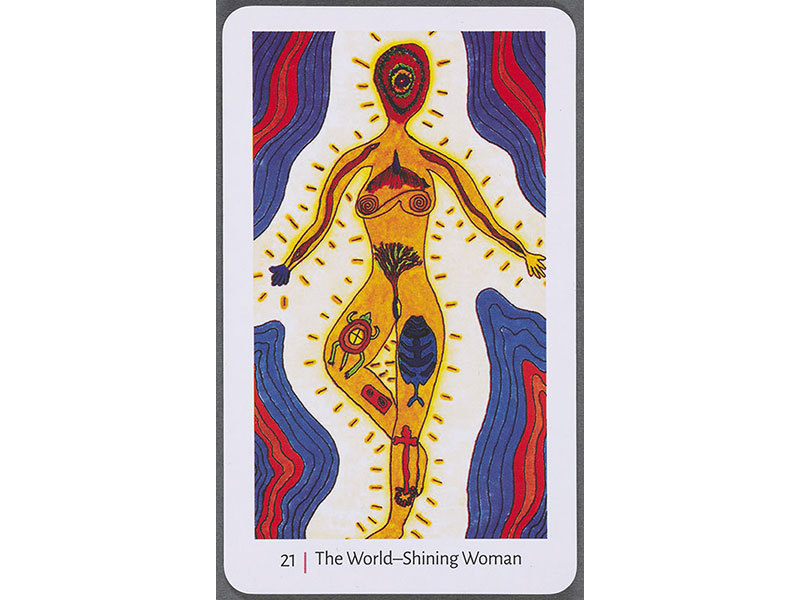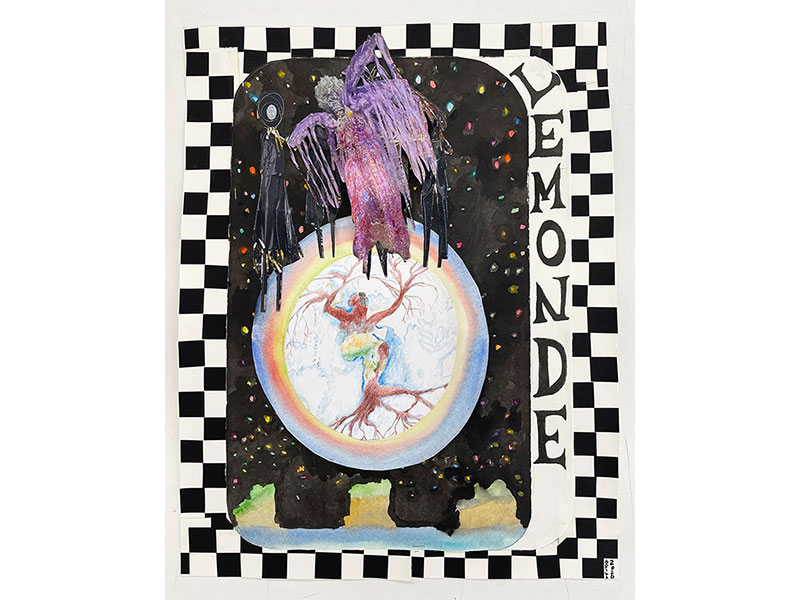
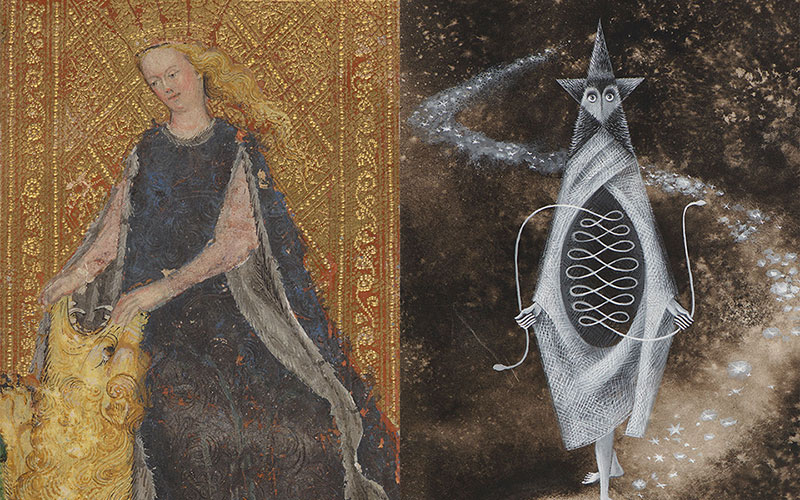
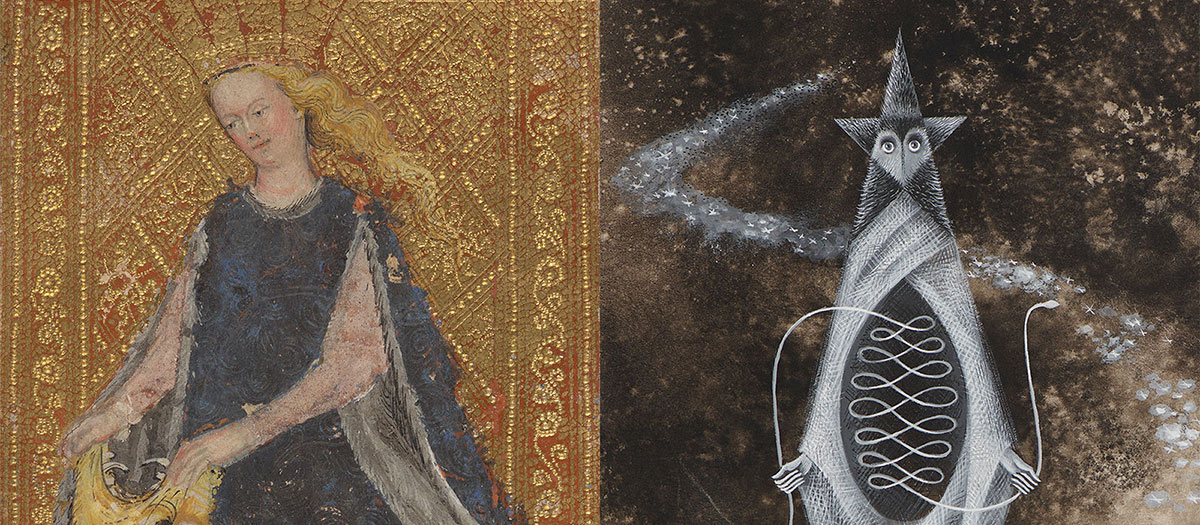
For many people today, tarot offers a gateway to the ineffable, the subconscious, and, ultimately, to personal understanding. Yet its origins lie not in mysticism but in the artistic and intellectual culture of the Italian Renaissance. Tarot’s beginnings can be traced to three fifteenth-century decks, each created in the workshop of the court artist Bonifacio Bembo for the Visconti and Sforza dukes of Milan. Originally conceived to use in a card game, these gilded, hand-painted decks reflect the splendor and refinement of their patrons’ world.
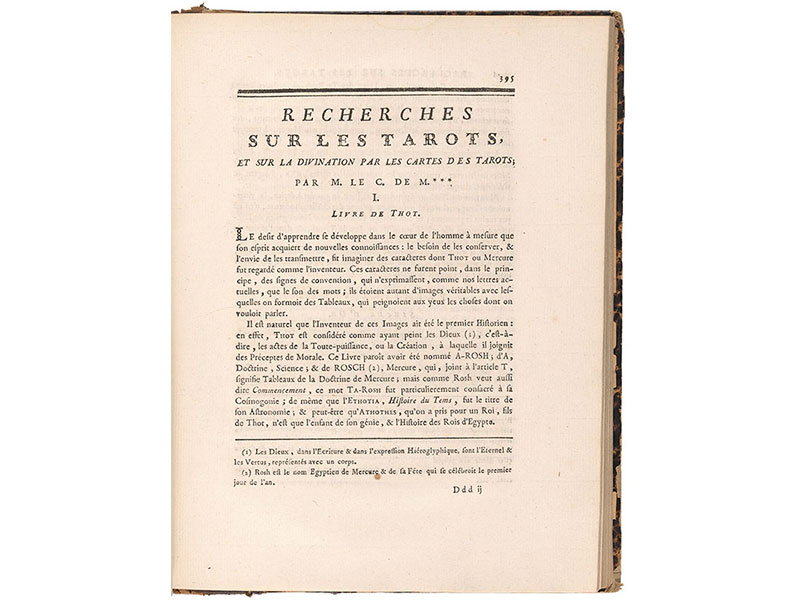
Tarot’s striking imagery later captivated occultists and mystics, first in eighteenth- and nineteenth-century France and then in early twentieth-century Britain with the Occult Revival and the publication of the Rider-Waite-Smith deck in 1909. With the dissemination of this deck, tarot became firmly entrenched in the popular imagination.
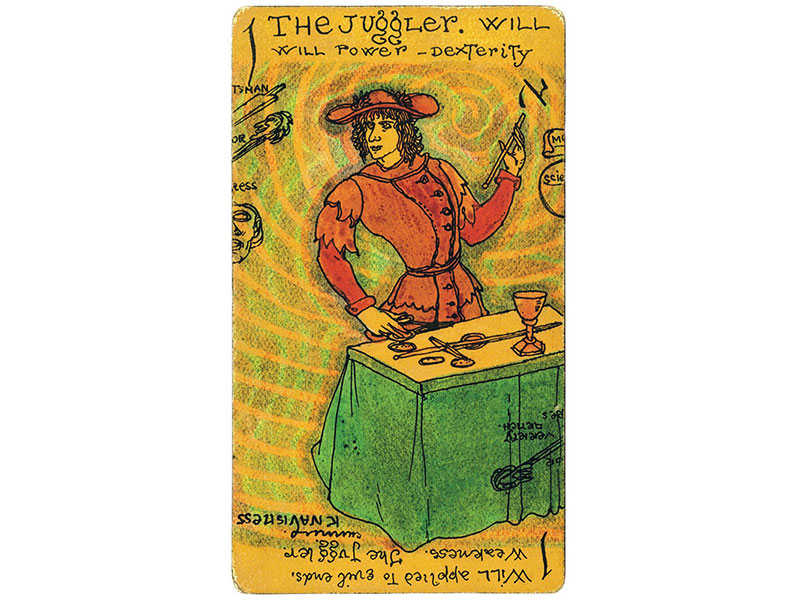
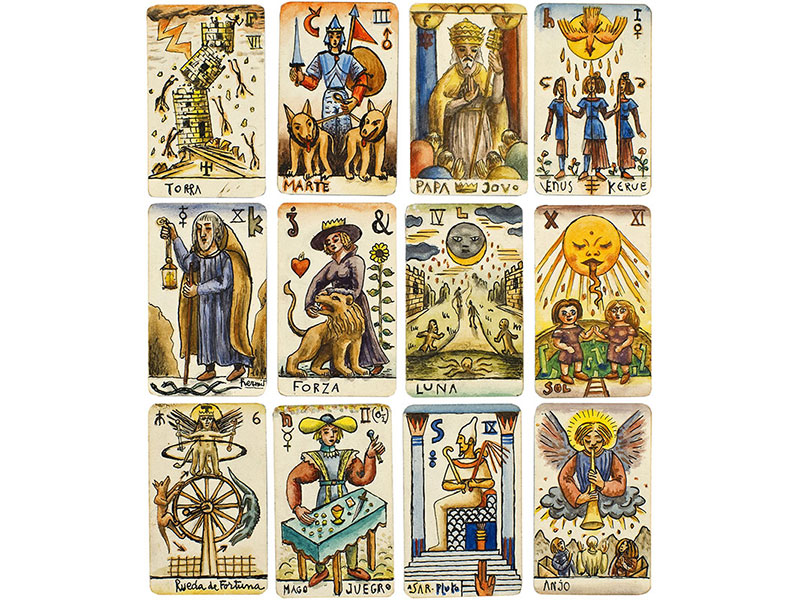
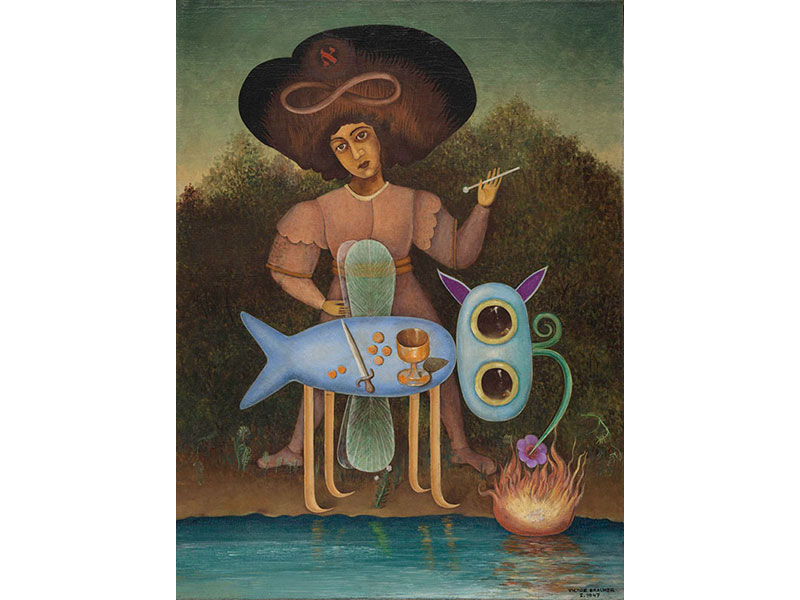
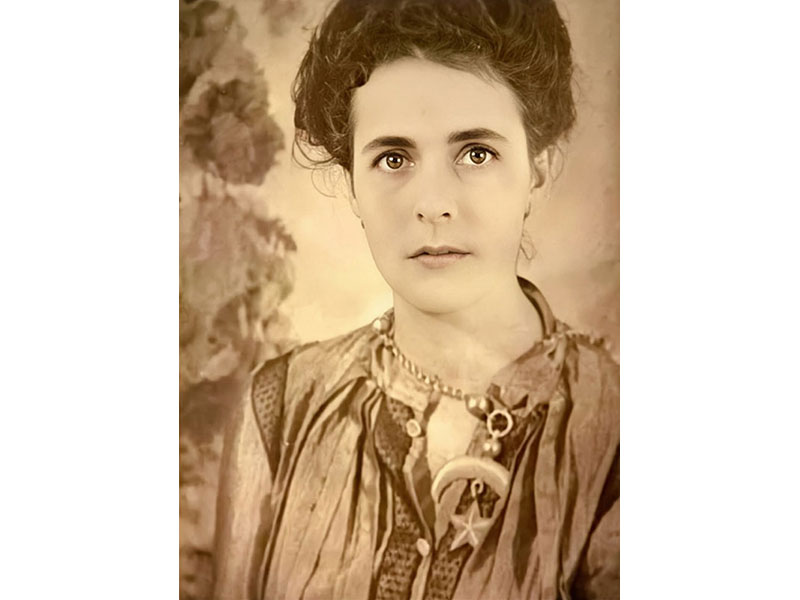
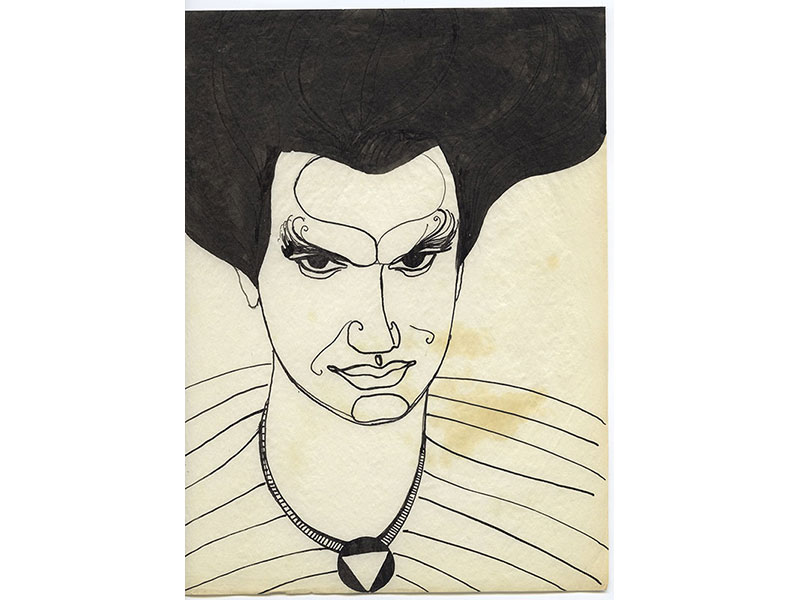
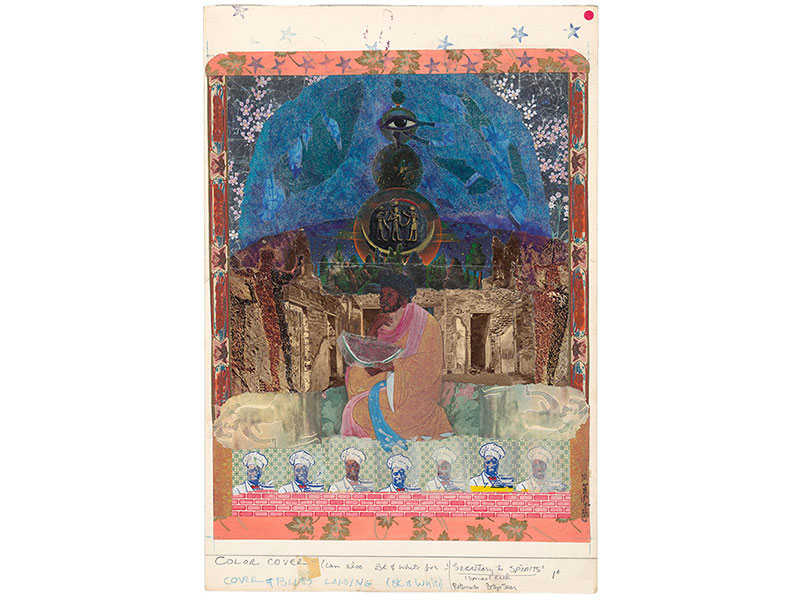
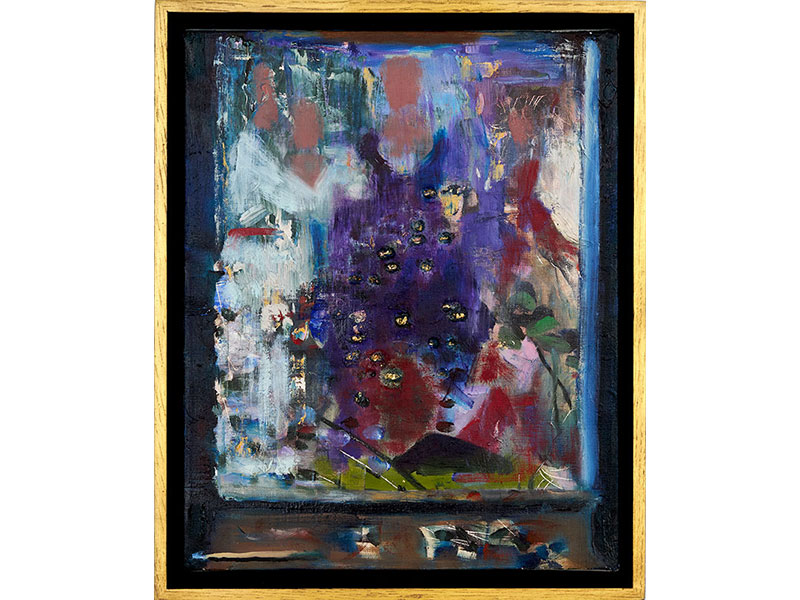
This exhibition explores tarot’s artistic legacy in two parts: The first examines its Renaissance origins, and the second charts its radical transformation in the twentieth- and twenty-first centuries. Bringing these histories into dialogue reveals tarot to be a dynamic symbolic framework that has been shaped and reshaped over time. Steeped in cultural traditions yet adaptable to new norms and beliefs, tarot has provided artists with a structure that unites the universal and the specific, that looks to the past while also pointing toward the unknown.
Tarot! Renaissance Symbols, Modern Visions is made possible by the Elaine and Alexandre Rosenberg Charitable Foundation, an anonymous donor, in memory of Melvin R. Seiden, Beatrice Stern, the Vasari Fund for Exhibitions, the William Randolph Hearst Fund for Scholarly Research and Exhibitions, and an anonymous donor. Generous support is provided by Alyce Williams Toonk, the Lucy Ricciardi Family Exhibition Fund, and Susanna and Livio Borghese, in memory of Agnes Gund, with additional support from Marguerite Steed Hoffman, Dr. Wendy A. Stein and Mr. Bart Friedman, and Rachel and Alex Stern.
Strength/Fortitude, Visconti di Modrone Tarocchi. Italy, 1441–42
Beinecke Rare Book & Manuscript Library. Yale University
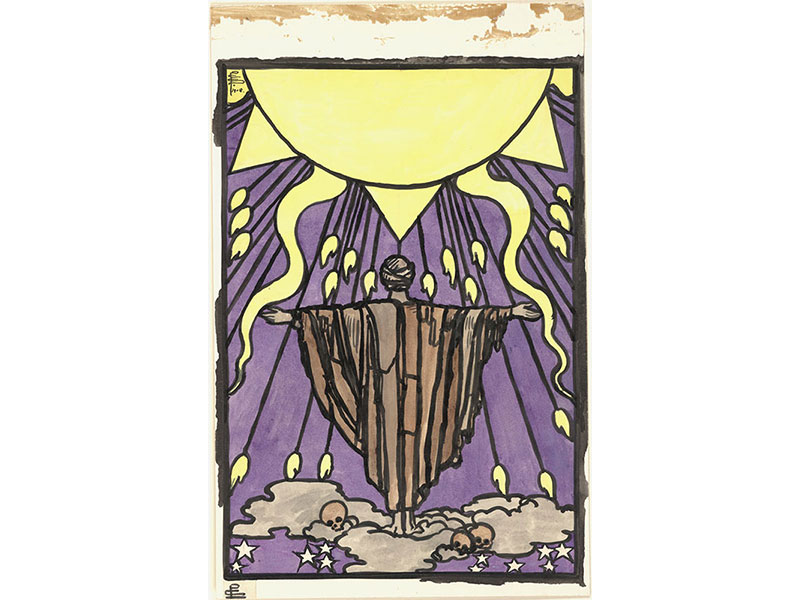
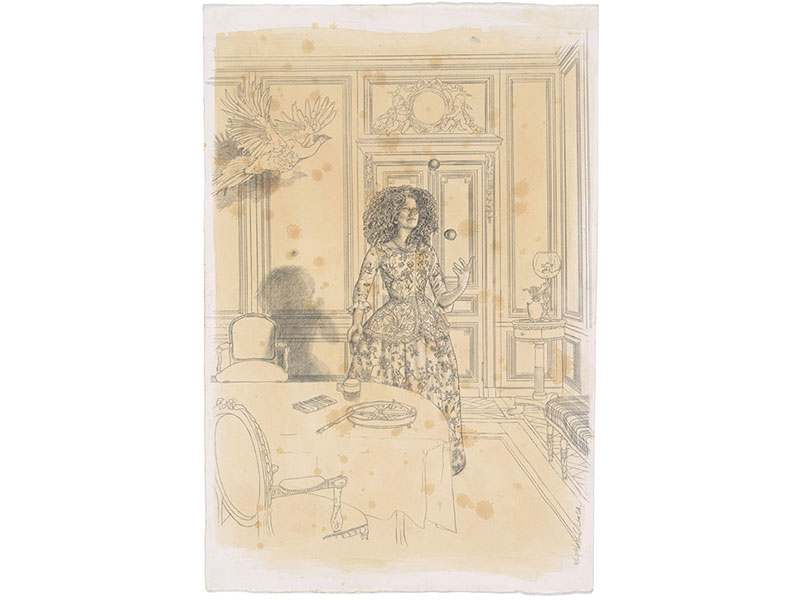
Remedios Varo (Spanish, 1908–1963), El Otro Reloj (The Other Clock), 1957. Gouache on cardboard, 15 3/16 × 9 1/8 in. Private Collection, New York. © 2026 Remedios Varo, Artists Rights Society (ARS), New York / VEGAP, Madrid. Courtesy of Wendi Norris Gallery
Hello. I’m Colin B. Bailey, Katherine J. Rayner Director of the Morgan Library & Museum. I’m pleased to welcome you to Tarot! Renaissance Symbols, Modern Visions.
Conceived in two parts, this exhibition begins in Renaissance Italy, where artists drew upon a rich visual culture to shape the enduring imagery of tarot, and, in the second gallery, explores the profound influence these cards have had on modern and contemporary artists. The exhibition traces the visual history of tarot from its beginnings as an elite, courtly card game, through its transformation into a modern divinatory practice based on occult traditions, to its present-day role as a lasting source of artistic inspiration. The Renaissance artists who first engaged with tarot produced deluxe works of art reflecting the grandeur of their patrons’ courts. Today, artists look to tarot as a practice that transcends time and place, allowing them to explore other universes and imaginative possibilities.
As you move through the galleries, look for the audio symbols to hear additional insights from the exhibition’s curators as well as from some of the artists featured in the exhibition. Thank you for joining us at the Morgan. We hope you enjoy your journey through the generations of artists who have been drawn to tarot’s captivating iconography and their continual reshaping of its themes into an ever-expanding range of artistic media.