
Listen to artist Elizabeth Colomba discuss how she came to Tarot.
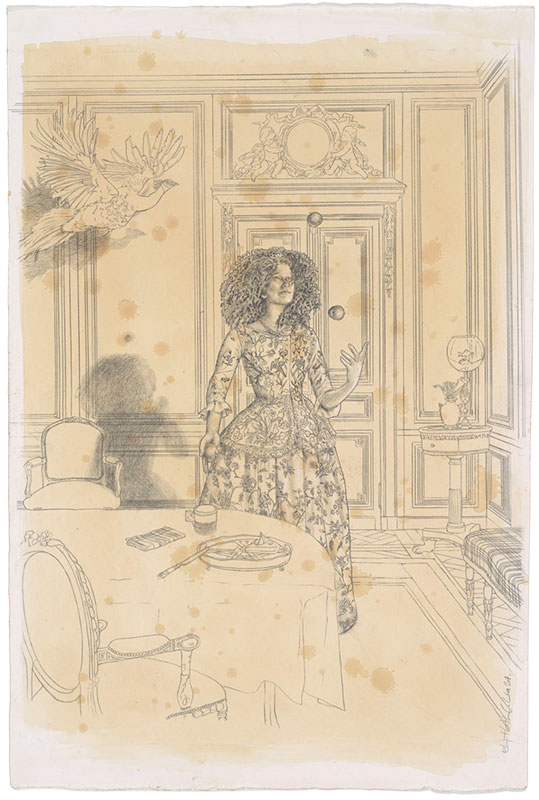
Elizabeth Colomba (French, b. 1976)
Study for The Magician, 2024
graphite and white chalk on paper
22 1/2 x 15 in. (57.2 x 38.1 cm.)
Gift of Jamie and Emmet Watson and purchase on the Manley Family Fund, 2025.102
© Elizabeth Colomba
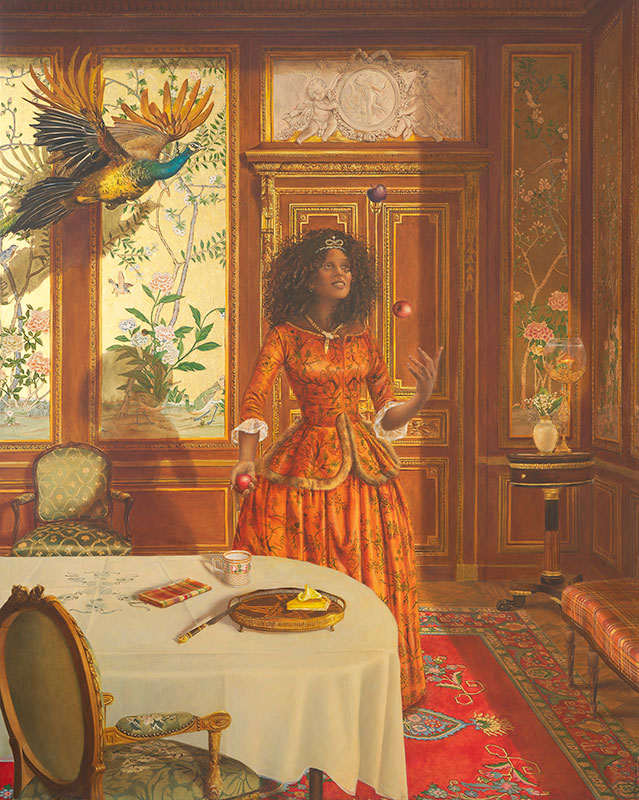
Elizabeth Colomba (French b. 1976)
The Magician, 2025
Oil and gold leaf on canvas
60 × 48 in (152.4 × 121.9 cm)
Private Collection
© Elizabeth Colomba
Claire Gilman:
Artist Elizabeth Colomba shares how she came to tarot and its influence on her work.
Elizabeth Colomba:
I first came to tarot years ago when a close friend introduced me to her reader, an unforgettable woman working from a folding table on the Venice Beach Boardwalk in California. What struck me wasn't just what she said, but how she said it. She wasn't simply reading the symbol. She was holding something, like a linage of myth, psychology, and intuition. The encounter stayed with me. It opened a door not just into tarot as a practice but as a visual language.
My first deck came later in Paris, modest, unassuming, not especially beautiful, but over time it became something else entirely marked by use, by memory, by meaning. Later came the Tarot de Marseille and then the Rider-Waite Smith deck, which has become the foundation for this tarot series, The Magician being one of them. This work moves through the major arcana, and more specifically on what I think of as the positive outcome cards. Each painting places a Black woman at its center, present, composed. She is not incidental, she is the image. These are not just portraits, they are affirmations. Each figure carries the single equator of the chord, but refracted through texture, atmosphere, through feeling.
For me, tarot is not only about prediction. It is also about revelation, a system that endures because it reflects something essential, something deeply human. I'm interested in tradition, but also in resonance, in what happens when these symbols are inhabited differently. What Magician becomes when it's not just the one who transforms the world, but the one who decides that transformation is hers to enact and what are the Wheel of Fortune that turning when it holds not just chance, but the understanding that change is part of a larger unfolding.
Luxury here is not excess. It is restoration, a way of placing Black figures in spaces of dignity, of beauty, of self-possession. There are Caribbean elements woven throughout sitting alongside more familiar Western references, gently expanding what we recognize as heritage, as influence. Across all of my work, I return to the same questions, who is seen, who is remembered, and how? Each card stands alone, but together they form a constellation. The cards do not promise, but they illuminate.