
Listen to artist Ali Banisadr discuss his engagement with tarot.
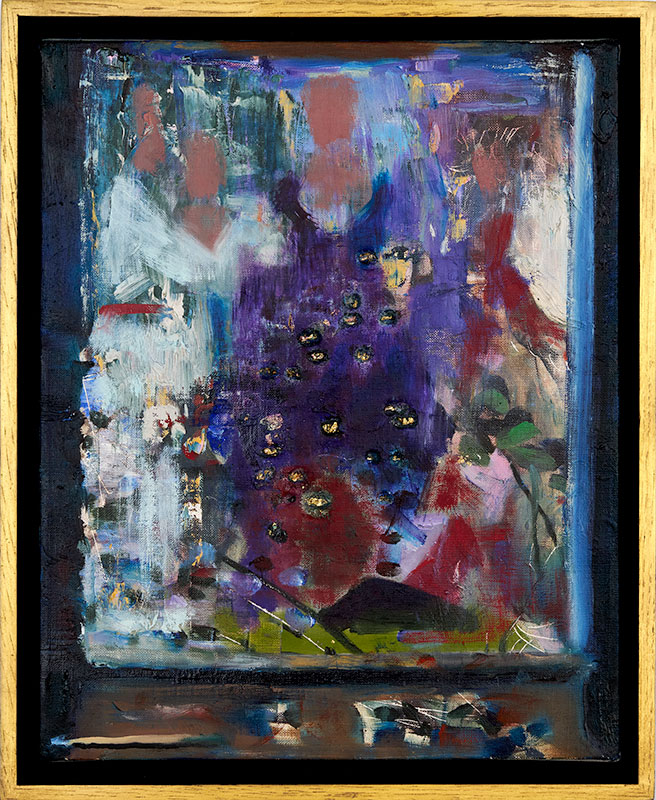
Ali Banisadr (b. 1976)
The Painting, 2020-2024
Oil and gold leaf on linen
Collection of the artist
© Ali Banisdadr. Courtesy of the Artist and Mohammed Afkhami Foundation
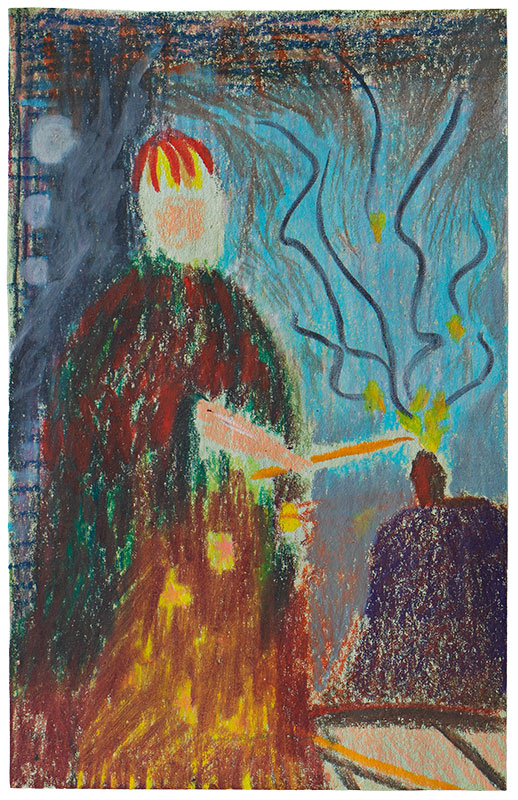
Ali Banisadr (b. 1976)
Tarot Card, 2020-2024
Colored pencil on paper
Collection of the artist
© Ali Banisdadr. Courtesy of the Artist and Mohammed Afkhami Foundation
Claire Gilman:
In this audio clip, artist Ali Banisadr reflects on his longstanding interest in tarot and the way in which it has shaped his production.
Ali Banisadr:
I have always been interested in the power of images, how symbols migrate across civilizations and continue to carry meaning through time. You can trace certain archetypes from ancient Mesopotamian and Egyptian art into medieval and Renaissance imagery and eventually into tarot. These symbols survive because they speak to something deeply human and collective. Many years ago, a set of grand Atelier Tarot cards found me in a small antique shop in Paris. I became fascinated by them, not only by their visual language, but by their strange psychological and divinatory quality. Tarot to me is less about predicting the future than about opening portals into the subconscious. They function almost like omens in a dream. They can reveal possible paths but also warn you about roads not to take.
I've used tarot imagery in many of my paintings and drawings, but once these symbols enter the work, they begin to merge with other forms and histories and transform into something else entirely. That transformation is important to me because interpretation itself is at the core of both tarot and painting.
I think making art is in some ways a collaboration with invisible forces, intuition, memory, the unconscious, perhaps what some people might call a higher self. Recently, I've also been working on a series of seventy-eight drawings loosely inspired by the tarot deck. I've always been drawn to codes, symbols, and hidden systems of meaning.