Plan your visit. 225 Madison Avenue at 36th Street, New York, NY 10016.

Plan your visit. 225 Madison Avenue at 36th Street, New York, NY 10016.

Blog | Research

  • By Reading Room
    Friday, October 8, 2021

    This is a guest post by Madison Schindele is a Brooklyn based musicologist and soprano pursuing her Ph.D. in Musicology at the CUNY Graduate Center.

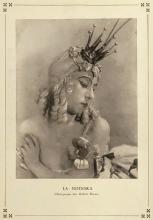
    During my time as a Morgan fellow this summer, I felt as if I were behind the curtain of the Théâtre National de l'Opéra in Paris, surrounded by the many stories and artifacts of celebrated modernist ballets. The Robert Owen Lehman Collection held on deposit at the Morgan since 1972 possesses a wide variety of ballet scores, giving a comprehensive view of the early twentieth-century Parisian dance scene.

  • By Reading Room
    Friday, June 11, 2021

    This is a guest post by Joshua Calhoun, Associate Professor of English and Faculty Affiliate with the Nelson Institute for Environmental Studies at the University of Wisconsin-Madison.

    Stone, wood, paper, plants, fabric. These are the textured impressions I find in the memory that, recalled here, become a story about finding stories. One way to tell this story—one that feels all the more urgent after a year of relying almost entirely on digital archives—is to give weight to the materials that shape our memories of archival research.

  • By Kate McCaffrey
    Friday, May 28, 2021

    This is a guest post by Kate McCaffrey, MA, University of Kent, Department of Medieval and Early Modern Studies.

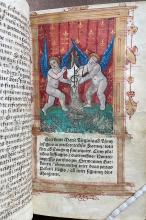
    During my recent research for my master’s degree in medieval and early modern studies at the University of Kent, I was lucky enough to work with a hugely understudied printed Book of Hours once owned, and written in, by Henry VIII’s ill-fated second wife, Anne Boleyn.

  • By John Bidwell
    Wednesday, May 19, 2021

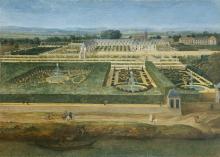
    In 2010 the Morgan presented an exhibition on the cultural history of gardens in Europe and America, Romantic Gardens: Nature, Art, and Landscape Design, curated by Elizabeth Barlow Rogers and others. The catalogue touches briefly on a question still debated by garden historians: what are the origins of the English style of landscape design?

  • By Francesco Guzzetti
    Sunday, February 14, 2021

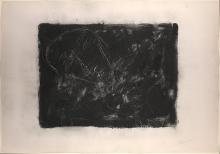
    During my residency at the Morgan as a postdoctoral fellow at the Drawing Institute, I was particularly struck by a drawing in the collection. Made by the Greek-born Italian artist Jannis Kounellis (1936–2017), it was acquired in 2016 thanks to the generosity of the Morgan’s Modern & Contemporary Collectors Committee. The drawing related directly to my research, which focused on Italian drawing in the 1960s and 1970s.

  • By Reading Room
    Thursday, February 11, 2021

    This is a guest post by Alexis Rodda, a classically-trained soprano and a Five-Year Fellowship recipient and doctoral candidate at the Graduate Center of the City University of New York.

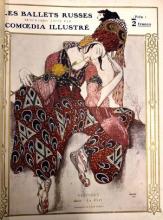
    The Ballets Russes was a ballet company that performed between 1909 and 1929 throughout Europe, but particularly in Paris. The company was innovative in its collaborations with contemporary composers and its daring, often sensual performances. The more I immersed myself in this world through a CUNY Graduate Center/Morgan fellowship, the more I became fascinated not only with the artistic aspects of the Ballet Russes.

  • By Reading Room
    Monday, January 11, 2021

    This is a guest post by Cen Liu, a PhD student in Theatre and Performance at the Graduate Center of the City University of New York.

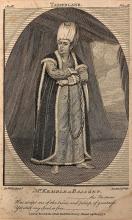
    This fall, I worked with the Department of Printed Books and Bindings to catalog the additional materials in an extra-illustrated version of James Boaden’s Memoirs of the life of John Philip Kemble, esq. (London, 1825; PML 9522-25). My own research is focused on the intersection of theater history and the history of visuality. I investigate how theater, as a concept and an artifact, exhibits and constructs the shifting paradigms of the relation between optical perception and knowledge.

  • By Reading Room
    Thursday, December 31, 2020

    This is a guest post by Jarrett Moran, a doctoral candidate in History at the Graduate Center, City University of New York.

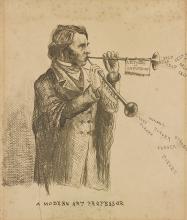
    Bring up the nineteenth century British critic of art and society John Ruskin and there are a few stock stories that get repeated: an art history student might think of J. M. Whistler suing him for libel after Ruskin described his Nocturne in Black and Gold as “flinging a pot of paint in the public’s face,” while a literature student might think of the “pathetic fallacy,” Ruskin’s term for poetic writing that attributes human emotions to the natural world.

  • By Reading Room
    Monday, November 23, 2020

    This is a guest post by Michael Healy, a doctoral candidate in comparative literature at the Graduate Center, CUNY.

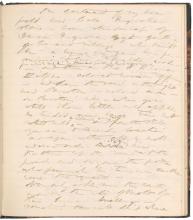
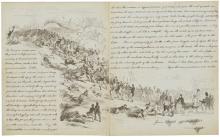
    As a student of the various strands of modernism in the early twentieth century, I found that an early version of one such strand was most prominent among the many nineteenth-century manuscripts I read through and cataloged in the summer of 2018 in the Reading Room at the Morgan: the sense that art and literature grow out of the vivid witness and keen observation of events happening around us all the time, some recorded in official histories and others not.

  • By Reading Room
    Monday, February 3, 2020

    After finishing my master’s thesis in the history of art and medieval history and working at and with different European museums, I wanted to gain more knowledge about other international collections, their history as well as how their art is handled. My interaction with the Morgan Collection started a few years ago in Germany.

  • By Reading Room
    Tuesday, December 24, 2019

    This is a guest post by Sam Bussan, a PhD student in the Department of History at the Graduate Center, CUNY.

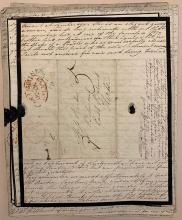
    I spent this summer at the Morgan working with the Literary & Historical Manuscripts Department to catalog the Maria Knox Letters. This collection of sixty-three letters, almost exactly two centuries old, records the life of a British family in India from 1816 to 1822.

  • By Reading Room
    Friday, November 22, 2019

    This is a guest post by Dawn-Elin Fraser, Associate Arts Professor, Head of Spoken Voice and Speech for the New Studio on Broadway at NYU.

    As an Associate Arts Professor at NYU’s Tisch School of the Arts, I teach in the New Studio on Broadway, where our students focus on both musical theater and heightened text. Our student body is talented, eager, and hungry for opportunity. It is also a student population that is overwhelmingly female identified, though the cannon of heightened text (particularly period centered) is primarily written by men with male characters at the heart of the narrative. I wanted to do something to shift that.

  • By Reading Room
    Monday, October 14, 2019

    This is a guest post by Sean Nortz, a PhD student in the Department of English at the Graduate Center, CUNY.

    I was very pleased to be granted a CUNY Graduate Center fellowship this summer to work on the Morgan Library & Museum’s collection of extra-illustrated books from the eighteenth and nineteenth centuries.

  • By Reading Room
    Wednesday, September 18, 2019

    This is a guest post by Eric Dean Wilson, writer, educator, and doctoral student in English at the Graduate Center, CUNY.

    I’d spent two weeks in the Morgan Library & Museum Reading Room when María Molestina offered to take me to see where they store the Peter Hujar Collection. It’s a humbling experience to see spread before you a life in boxes.

  • By Reading Room
    Monday, April 15, 2019

    This is a guest post by Timothy Gress, currently an undergraduate at Manhattan College.

    I first came to the Morgan Library & Museum to view the exhibition I’m Nobody! Who are you? The Life and Poetry of Emily Dickinson in 2017. During my initial visit I was struck not only by this carefully curated exhibition, but also by works on display in J. Pierpont Morgan’s Library—especially a first edition of Mark Twain’s The Adventures of Tom Sawyer. Little did I know that I would soon have the opportunity to write exhibition labels for these same exhibit cases as part of the Morgan’s Treasures from the Vault series.

  • By Reading Room
    Tuesday, February 26, 2019

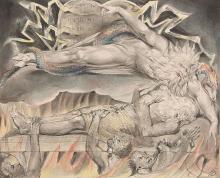
    This is a guest post by Abraham Samuel Shiff, who studies historical topics and has published on William Shakespeare and William Blake.

    When I reached retirement age in 2006, I was free to return to graduate studies full time. I enrolled in the history department of Brooklyn College and also studied at the Graduate Center. In a course on the history of science at the Graduate Center, I was assigned to report on an Elizabethan mathematician who was the first to publish in English on the radical theory of Copernicus.

  • By Reading Room
    Wednesday, January 30, 2019

    This is a guest post by Armando Chávez-Rivera, Scholar in Residence at the Kluge Center, Library of Congress.

    In my research, I try to understand important books written in the American hemisphere and inspired by canonical works of the Spanish language and literature from Spain.

  • By Reading Room
    Friday, January 11, 2019

    This is a guest post by Saira Haqqi, book and paper conservator at the Minnesota Historical Society.

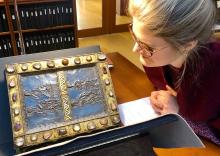
    Every book conservator wonders about the past lives of the books she works on, and I am no exception. It is particularly intriguing when the book bears the marks of an individual craftsperson rather than an industrial bindery.

  • By Reading Room
    Monday, November 5, 2018

    This is a guest post by Sharmishtha Roy Chowdhury, a writer and historian, specializing in modern world history and modern European history.

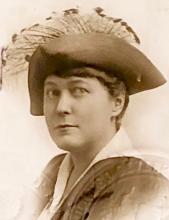
    I came to the Morgan Library & Museum in search of Eleanor Franklin Egan, a forgotten writer of the First World War. While preparing my book manuscript for the First World War, Anticolonialism and British India, 1914–1924 (Routledge, forthcoming), I saw a reference to writings by Eleanor Franklin Egan (1879–1925).

  • By Reading Room
    Thursday, October 4, 2018

    This guest post is by Susie J. Pak, an Associate Professor in the Department of History at St. John’s University (New York).

    When I began working on my dissertation at the Morgan Library & Museum in June 2001, researchers still entered from the 36th Street entrance, and the librarians sat in the center of the Reading Room at a raised oval desk. By the time the Piano renovation was completed, I had finished my dissertation, and I returned to the Morgan to the newly modernized Reading Room, where I spent many days for several years until my book, Gentlemen Bankers, went to press in 2012.