Plan your visit. 225 Madison Avenue at 36th Street, New York, NY 10016.

Plan your visit. 225 Madison Avenue at 36th Street, New York, NY 10016.

Secrets From The Vault

  • By Carolyn Vega
    Tuesday, December 7, 2010

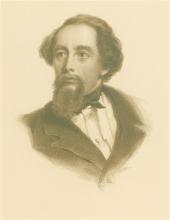
    On July 14, 1851, Charles Dickens expressed his interest in Tavistock House to his brother-in-Law Henry Austin. A mere 11 days later, he put down £1,542 for a 45-year lease of the grand 18-room mansion in the Bloomsbury section of London.

    With Austin’s help, Dickens oversaw the remodeling of Tavistock, concerning himself with the most minute of details, down to the picture rods and pantry shelving. By early September he had "estimated every new thing in the way of furniture and fitting that will be wanted" and found that "the figures are rather stunning."

  • By William Voelkle
    Tuesday, March 1, 2011

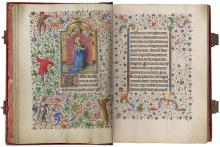
    This playful image from a French 15th-century manuscript depicts a topsy-turvy world in which canine patients seek treatment from a rabbit physician wearing eyeglasses. Some years ago, The Morgan was approached by a firm that wished to use the image in an advertisement for imported burgundy. The red liquid in the beaker the rabbit physician is scrutinizing would, it was hoped, illustrate the wine’s superlative body and flavor.

  • By Sal Robinson
    Friday, July 17, 2020

    Every summer since 2015, a paid undergraduate intern from the University of Pennsylvania’s RealArts@Penn program program has joined the Literary and Historical Manuscripts Department staff at the Morgan. Two summers ago, Delaney Keenan (who graduated this June with a B.A. in Art History from Penn) spent part of her internship working on a project to survey and study the department’s holdings of the letters of women artists.

  • By Carolyn Vega
    Friday, August 27, 2010

    Ever moved your sheeprack on Sunday morning?

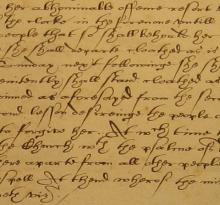
    Now, it might not be a big deal. But if you were caught doing this in the 1500s, you could end up in an English church court.

    The Morgan’s collection of 16th-century penances records the sentences imposed by such a court. From these documents, we learn that Henrie Barker was

  • By Rebecca Filner
    Friday, September 3, 2010

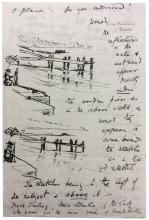
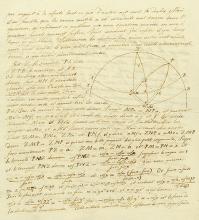
    Leonhard Euler was perhaps the foremost mathematician of the 18th century. He made major contributions to the fields of calculus, mechanics, fluid dynamics, optics, and astronomy. Born in Switzerland, he spent much of his life in Berlin and St. Petersburg. The Morgan holds a series of 99 letters he wrote to his colleague, the French mathematician Pierre Maupertuis, while they were both part of the Berlin Academy under Frederick the Great. In this letter, dated July 4, 1744, Euler is working on a problem in spherical geometry.

  • By John McQuillen
    Wednesday, January 13, 2016

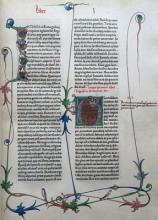
    One of the first books printed in Italy is St. Augustine’s De civitate dei. It was printed at the Benedictine monastery of Subiaco on 12 June 1467 by Conrad Sweynheym and Arnold Pannartz. A recent reference request took me to our copy of the Subiaco De civitate dei. As was traditional, the printers left space in the type-set page for the addition of hand decoration and painted letters. The style of painting often tells you were the book ended up after it left the printing press and hopefully who its first owner was. The Morgan’s De civitate dei left Subiaco and crossed the Alps to Salzburg, where the artist Ulrich Schreier decorated the book for Bernhard von Kraiburg (1412–1477), Bishop of Chiemsee (Bavaria).

  • By Declan Kiely
    Wednesday, December 21, 2016

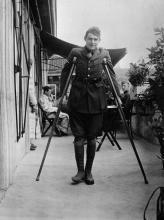
    Ernest Hemingway’s interview for The Paris Review, first published in Issue 18 (1958), is arguably one of the most famous in the journal’s history.

  • By Carolyn Vega
    Thursday, April 7, 2011

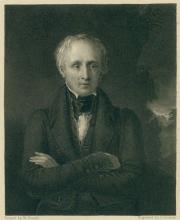
    Today marks the 241st anniversary of William Wordsworth’s birth. He was a founder of the so-called Lake School of poetry, and I have a mental image of Wordsworth wandering “lonely as a cloud” through the mountainous Lake District, penning his lines in the very settings he describes. He has been called “our greatest nature poet,” and was a master of the walking tour – Thomas de Quincey estimated that he “must have traversed a distance of 175 to 180,000 English miles.”

  • By Declan Kiely
    Tuesday, July 4, 2017

    Celebrating the July 4th holiday in New Hampshire, I was reminded of Henry James’s sojourn in the White Mountains in the summer of 1865. In his Notes of a Son and Brother, published almost fifty years after that memorable visit, he would recall it as a “splendid American summer,” spent in the company of his witty and gregarious cousin Minny Temple and her sisters, and his close friend Oliver Wendell Holmes.

  • By Mary Creed
    Wednesday, June 30, 2021

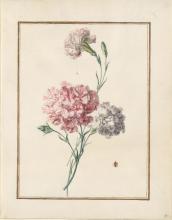
    The mid-eighteenth century witnessed the flourishing of scientific illustration in Europe. In an intellectual climate that valued curiosity and experimentation, the goals of the artist frequently merged with those of the scientist. Before the invention of photography, artists needed to document botanical specimens quickly before they decayed. These visual records of plants aided in their identification and classification and also functioned as aesthetically pleasing works of art.