
The photocollage artist John O’Reilly and his partner, the sculptor James Tellin, lived in Worcester, Massachusetts, from the 1960s until their respective deaths in 2021 and 2023. They are often portrayed as an artist couple who lived a cloistered life and worked “well outside the New York art social scene.”1 O’Reilly—the better known of the two—was not interested in fame and reported making his work for himself and his close circle.2 Although his inclusion in the 1995 Whitney Biennial brought newfound attention to his work, O’Reilly kept his collages close to home. While much could be said about how O’Reilly defied the geographic and temporal limits of his domestic sphere through collage, his home life remained critical to his practice. This post explores how the home operated like a collage for O’Reilly and his peers, forging connections for a select group of artists and bringing together images made by different makers.3
Photographs of the Home
At the start of my fellowship at the Morgan in the summer of 2025, I researched the various photographers who documented O’Reilly and Tellin’s homes in Worcester, spanning over fifty years. Paul A. McDonough began photographing their first home at 13 Hammond Street in 1968, where he captured the couple in and around the house and their studios, as well as surreal architectural angles of the house and the couple’s growing art collection. Upon O’Reilly and Tellin’s move to 1168 Grafton Street in 1984, McDonough assembled an artist’s book, The Geography of a House, composed of twenty-four black-and-white photographs. McDonough later published The Geography of a House as a commercially produced photobook by Granite Books in 2012, now out of print. Reflecting on the project, Paul’s wife, the author Yona Zeldis McDonough, said that “It’s a love letter to a pair of artists whose commitment to their work and to each other gave him a model for how to live a life.”4
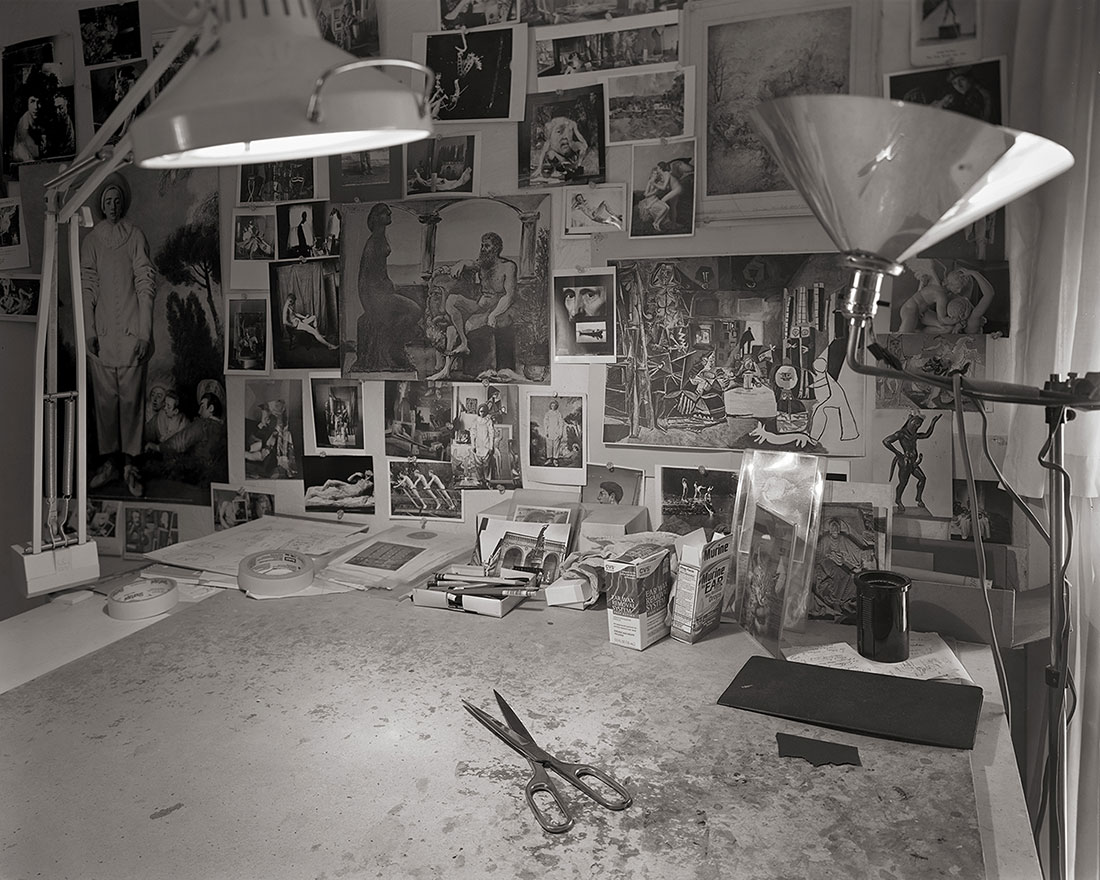
Figure 1: © Stephen DiRado
O’Reilly and Tellin’s Grafton Street house served as a significant subject for a new group of photographers. In 2017, Stephen DiRado, Seth David Rubin, and Bill Jacobson came together to compile a portfolio of photographs, 1168 Grafton Street, after realizing they each had been photographing the home of their own accord. As O’Reilly and Tellin prepared to move to a retirement community, DiRado, Rubin, and Jacobson gifted the couple with the portfolio of fifty-three prints.5 Each photographer reveals a different aspect of the home. Rubin’s photographs depict the couple in their final years at Grafton Street, one image displaying them at the kitchen table surrounded by prints and figurines. Jacobson, on the other hand, turned his attention to O’Reilly and Tellin’s art collection, showing Rubin’s Impression of my face in the mud (1994) displayed in the book-ridden living room alongside a reproduction of Paste-Ups by Jess (1967), referring Jess (Burgess Franklin Collins). Jess was an artist whom O’Reilly admired and who also fostered a legendary queer household with his partner, the poet Robert Duncan.6 Stephen DiRado documented O’Reilly and Tellin’s home on Grafton Street from December 1990 to April 2017, taking many of his black-and-white images on a large format camera that he later contact-printed in the darkroom. DiRado’s studio photographs of O’Reilly at work are revealing, as it’s difficult to tell how O’Reilly made his seamless small-scale collages. Despite reading about O’Reilly’s method and spending time up close with many of his works in the Morgan’s Sherman Fairchild Reading Room—closing one eye to trace the reflective glare of a lamp across their surface to find the physical seams—it was not until I saw DiRado’s photographs that his method became clear. In one image, O’Reilly stands before his Polaroid camera and makeshift stage setup, upon which spliced images are held in place by wooden clothespins behind shards of broken glass. Behind the artist, we see a shelf of paper cutouts and art books from which he cuts the figures.
Another DiRado photograph shows O’Reilly’s station for collaging his Polaroid photographs in the adjacent room, with the artist’s scissors that he reportedly never replaced (Figure 1). After looking closely at the prints across the wall, noticing O’Reilly’s transformation of Jean-Antoine Watteau’s Pierrot into his own image and the meta quality of various images of artists and their models in the studio, I was jolted by the revelation that above Thomas Eakins’s Bill Duckett Nude was Duane Michals’s Joseph Cornell. I requested to view this image in the Reading Room, as O’Reilly cites Cornell, an artist who assembled intricate boxes of objects and who lived a hermetic life in Flushing, Queens, as his favorite artist (Figure 2).7 O’Reilly pinning Michals’s photograph up in his studio not only implies a connection between his and Cornell’s home as a site of artistic production, but also speaks to O’Reilly’s ability to establish connections through collage. Taking this a step further, one could say that O’Reilly’s collages draw connections between objects within whatever collection they are placed.
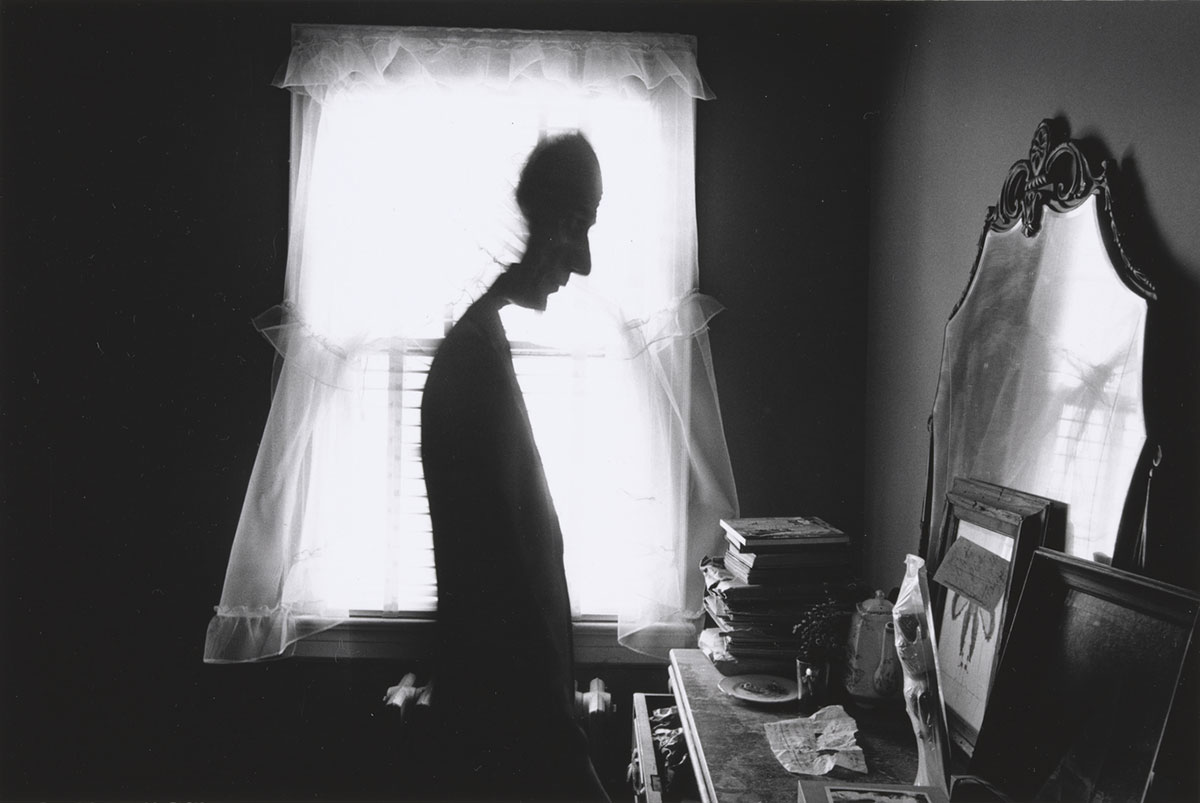
Figure 2: Duane Michals, Joseph Cornell, 1972. The Morgan Library & Museum, Gift of Duane Michals, 2019.79. © Duane Michals. Courtesy DC Moore Gallery, New York
War Series
The Morgan’s holdings of O’Reilly’s work are particularly unique, housing the largest collection of work from his War Series.8 One of O’Reilly’s most provocative bodies of work, War Series is a set of around fifty collages that blend images of war, gay erotica, and Christianity, sometimes with personal photographs from O’Reilly’s family scrapbooks. Each work is numbered and titled with the rank, age, date, and location of death of young World War II soldiers, information that O’Reilly gathered from granite memorials located around Worcester. Created over a brief period (1991–1992), with some collages completed in a single day, War Series culminated in an exhibition at Howard Yezerski Gallery in Boston in spring 1992. The work was displayed over rectangles of gray paint that extended from the bottom edge of the work to the ground, with the anonymized titles of the soldiers inscribed in white to resemble the stone memorials.9 Through the installation, O’Reilly sought to merge the public space of the war monuments with the private memories of his childhood—presenting himself as stand-ins for the deceased.10 Later reflecting on the series, O’Reilly stated: “This is the only public thing I ever did where I really thought in terms of people looking at it.”11
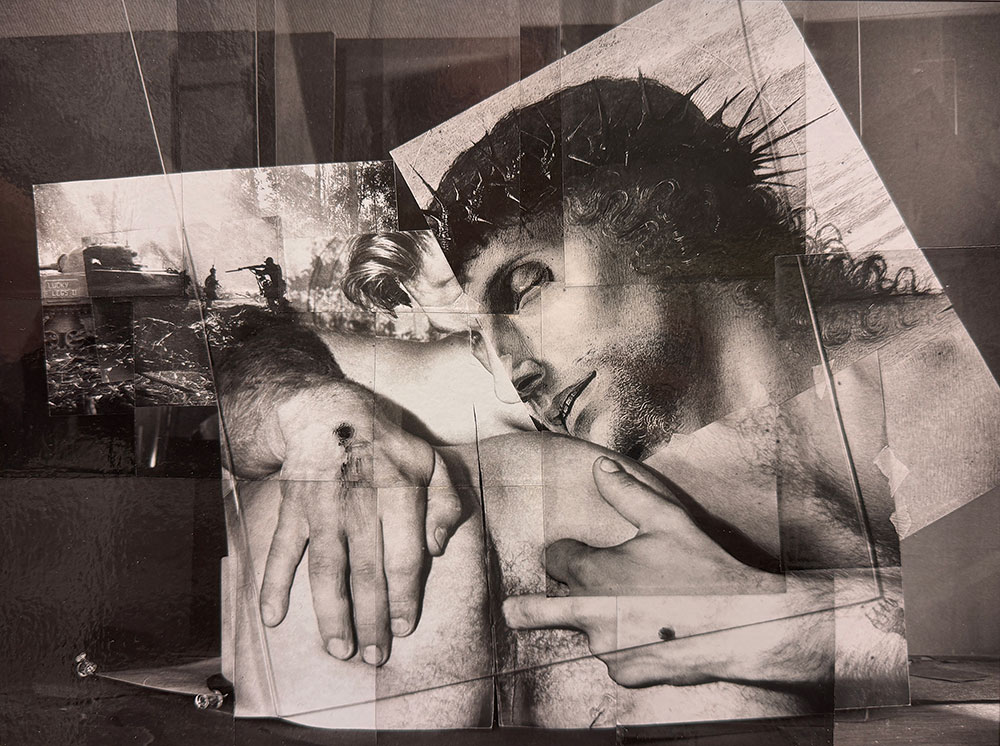
Figure 3: The Morgan Library & Museum, Gift of John Pijewski in honor of the Morgan's Centennial, 2024.192. © 2025 JohnO'Reilly
War Series marks a shift in O’Reilly’s production, as the work reveals subtle details that point to the collages’ construction.12 Pieces of tape, edges of prints, and clear pushpins figure prominently in War Series #24 – Lt. Killed in Action, Germany, 1945 Age 23, a collage in which O’Reilly merges a gay pornographic scene with Bellini’s Brera Pieta and a battlefield photograph of Allied troops during the Bougainville Campaign (Figure 3). Considering that the work was made around the peak of the HIV/AIDS epidemic in the United States, during which homophobic evangelicals mobilized the epidemic as proof of “God’s punishment” in widely broadcasted sermons, O’Reilly provides a nuanced representation of the “war” between homosexuality and religion.13 He subverts the tyranny of the religious Right that condemns his existence by depicting Christ performing not only foreplay, but, if interpreted through a biblical lens, the miracle of the healing touch. Moreover, the painted-on stigmata on the exterior of the model’s hands contrasts with the realness of the tattoo on his forearm, bridging the real and the divine within O’Reilly’s composition.14
When I spoke to the poet John Pijewski, a close friend and collector of O’Reilly’s, as well as the patron who gifted the O’Reilly collection to the Morgan, he singled out War Series #24 as a particularly significant work. During our phone call this past summer, Pijewski pointed out that Christ heals rather than condemns in the work’s allegorical reference to HIV/AIDS. Riffing on the story of the Doubting Thomas, in which the Apostle Thomas would not believe that Christ resurrected until he put his finger in Christ’s side wound, Pijewski called this collage “The Doubting Christ.” Pijewski displayed the work in his home behind a blue velvet curtain with a gold lining that could be opened and closed with a drawstring. For Pijewski, War Series #24 was too intense to display at all times.
The Home as a Collaborative Collage
Although O’Reilly and Tellin did not collaborate on many projects, their home can be thought of as an expanded form of collaboration. As the art historian Tara McDowell writes on Jess and Duncan’s household, their “ongoing collaboration” centered around the curation, protection, and preservation of their home as a living and working space.15 O’Reilly and Tellin’s home also operated as a place for close looking and discussion for various groups of photographers and collectors. The photographer Robert Flynt recalled that he and O’Reilly never directly collaborated on any projects, but spent a lot of time together looking, trading, and conversing over found photographs. One Polaroid photograph by Daniel Rampulla depicts Flynt, O’Reilly, and Tellin gathered around the kitchen table absorbed by a stack of Rampulla’s Polaroids (Figure 4). Upon moving out of Grafton Street, O’Reilly gifted Rampulla a shoebox filled with photographic scraps of male wrestlers—a statement of a project left unfinished.
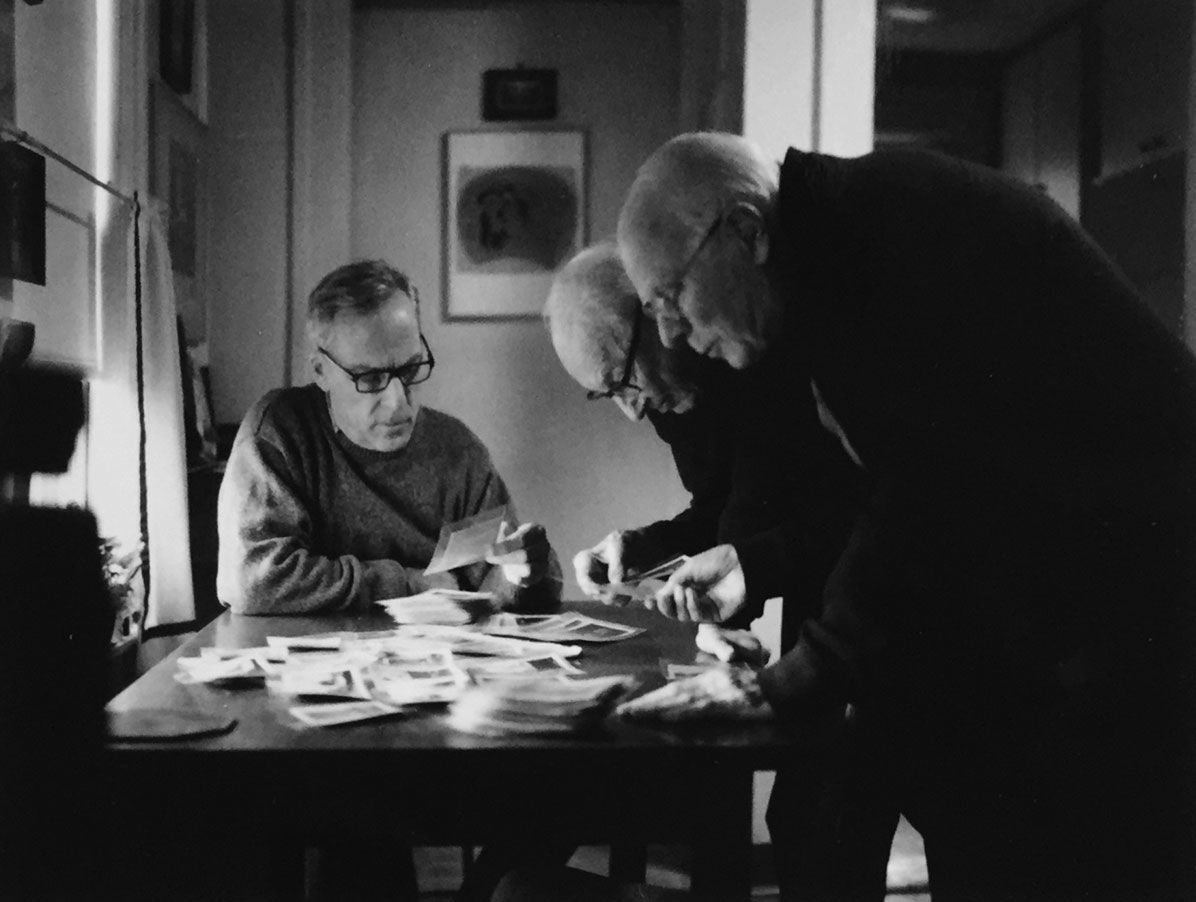
Figure 4: Robert Flynt, John O’Reilly, and James Tellin looking at photographs by Daniel Rampulla.
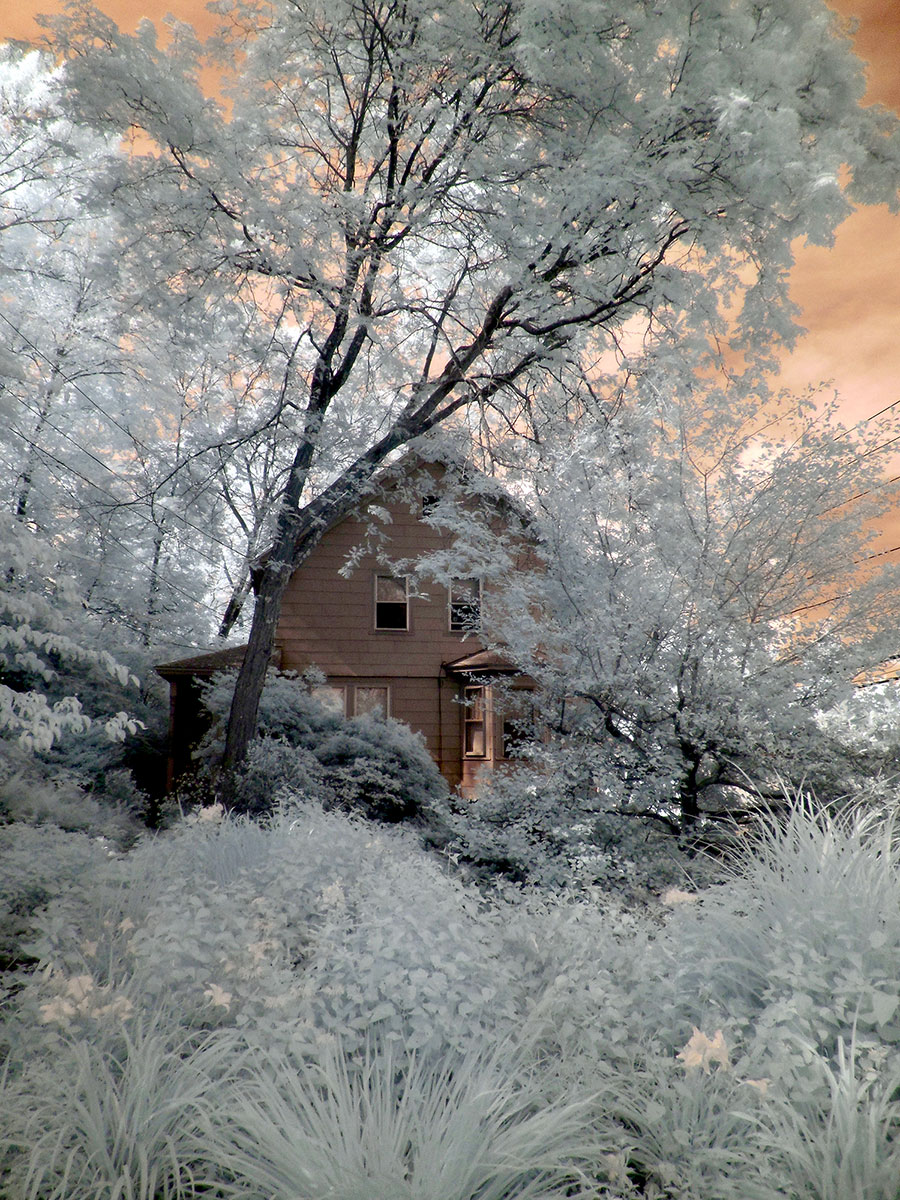
Figure 5: Grafton Street exterior, 2017, infrared photography by Robert Flynt. © Robert Flynt 2017
Flynt photographed the last days of O’Reilly and Tellin in 1168 Grafton Street, capturing the blank walls and nooks previously occupied by their art collection. From the outside, Flynt photographed the home with a point-and-shoot camera on infrared film (Figure 5). The infrared effect transforms the foliage into a mystical fog that creates a dreamlike atmosphere around the home. Flynt’s image recalls the testimonies of the artists who claimed that stepping inside this home was like entering another world. The arc of photographic documentation of the home allows one to get a better sense of the pieced-together world and collage of O’Reilly’s domestic sphere.
Kyle Canter
PhD Student in Art History
CUNY Graduate Center
Endnotes:
- Francine Koslow Miller, “John O’Reilly’s Assemblies of Magic,” in John O’Reilly: Assemblies of Magic by Francine Koslow Miller and Klaus Kertess (Twin Palms Publishers and Addison Gallery of American Art, Phillips Academy, 2002), 127.
- Sarah Rimer, “A Somewhat Reluctant, Sort of Overnight, 65-Year-Old Sensation,” The New York Times Magazine, February 26, 1995, 35.
- The art historian Jackson Davidow was the first to draw attention to the group of artists that came together in O’Reilly and Tellin’s home. See Jackson Davidow, “The House on Grafton Street,” The Boston Globe Magazine, March 12, 2023. Also see Davidow, “Queer Dialogues in Art, Therapy, and Life: On John O’Reilly and James Tellin,” in Modernism, Art, Therapy, ed. Suzanne Hudson and Tanya Sheehan (Yale University Press, 2024).
- Blake Andrews, “Q & A with Yona Zeldis McDonough,” Blogspot, August 10, 2021.
- Five editions of the portfolio exist today. In addition to the edition gifted to Tellin and O’Reilly (now at the Addison), three editions were made for each photographer. Another edition was given to the Worcester Museum of Art. Davidow, “The House on Grafton Street,” 31.
- See Tara McDowell, The Householders: Robert Duncan and Jess (The MIT Press, 2019).
- Rimer, 35.
- The Morgan has fifteen prints from this series; the Addison has about ten.
- John O’Reilly, “Interview and Portfolio,” Jubilat 2 (2000): 90; Kelly Wise, “Adventurous, disturbing photographic collages from John O’Reilly,” The Boston Globe, May 1, 1992, 58.
- O’Reilly, “Interview and Portfolio,” 90.
- O’Reilly, “Interview and Portfolio,” 91.
- Klaus Kertess, “Crucifictions,” in John O’Reilly: Assemblies of Magic, 16–17.
- Kertess also points out the connection between O’Reilly’s War Series and HIV/AIDS. Kertess, 11–12.
- “The pure reality of it [pornography], the ugly people—they’ve got pockmarks and tattoos on their bodies. It’s the ‘real’ that our social life then tries to lay a screen over, a veneer.” O’Reilly, “Interview and Portfolio,” 77.
- McDowell, 21–22.