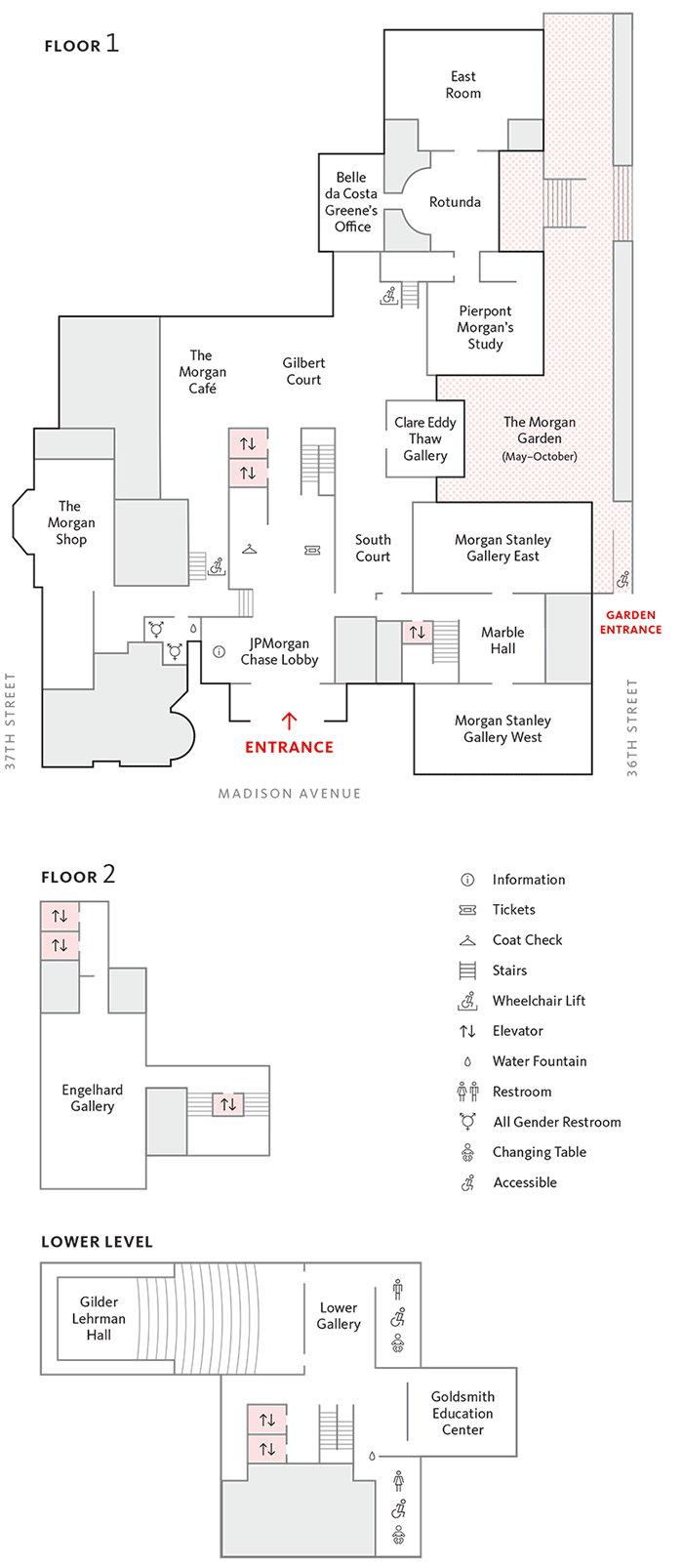
Plan your visit. 225 Madison Avenue at 36th Street, New York, NY 10016.

Plan your visit. 225 Madison Avenue at 36th Street, New York, NY 10016.

Collections Spotlight, Spring 2026

January 13 through May 3, 2026

Objects on view in J. Pierpont Morgan’s library reflect the past, present, and future of the collections in four curatorial departments, comprising illuminated manuscripts from the medieval and Renaissance eras, five hundred years of printed books, literary manuscripts and correspondence, as well as printed music and autograph manuscripts by composers. These selections, which rotate three times a year, provide an opportunity for Morgan curators to spotlight individual items, to consider their historical and aesthetic contexts, and to tell the stories behind these artifacts and their creators. Here are some highlights of the rotation currently on view in the East Room and Rotunda.

Exhibition location:
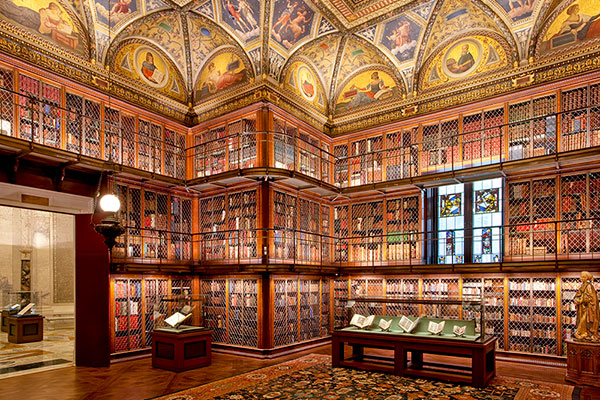
J. Pierpont Morgan’s Library
See map
Collections Spotlight is funded in perpetuity in memory of Christopher Lightfoot Walker.

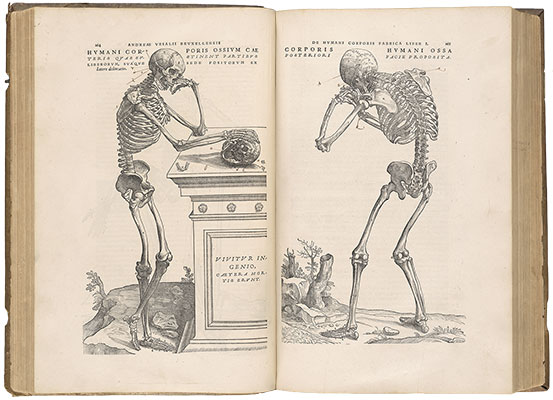
Andreas Vesalius (1514–1564), De humani corporis fabrica (On the Fabric of the Human Body), Basel: Joannes Oporinus, 1543. Purchased in 1927; PML 24798
Selected Images

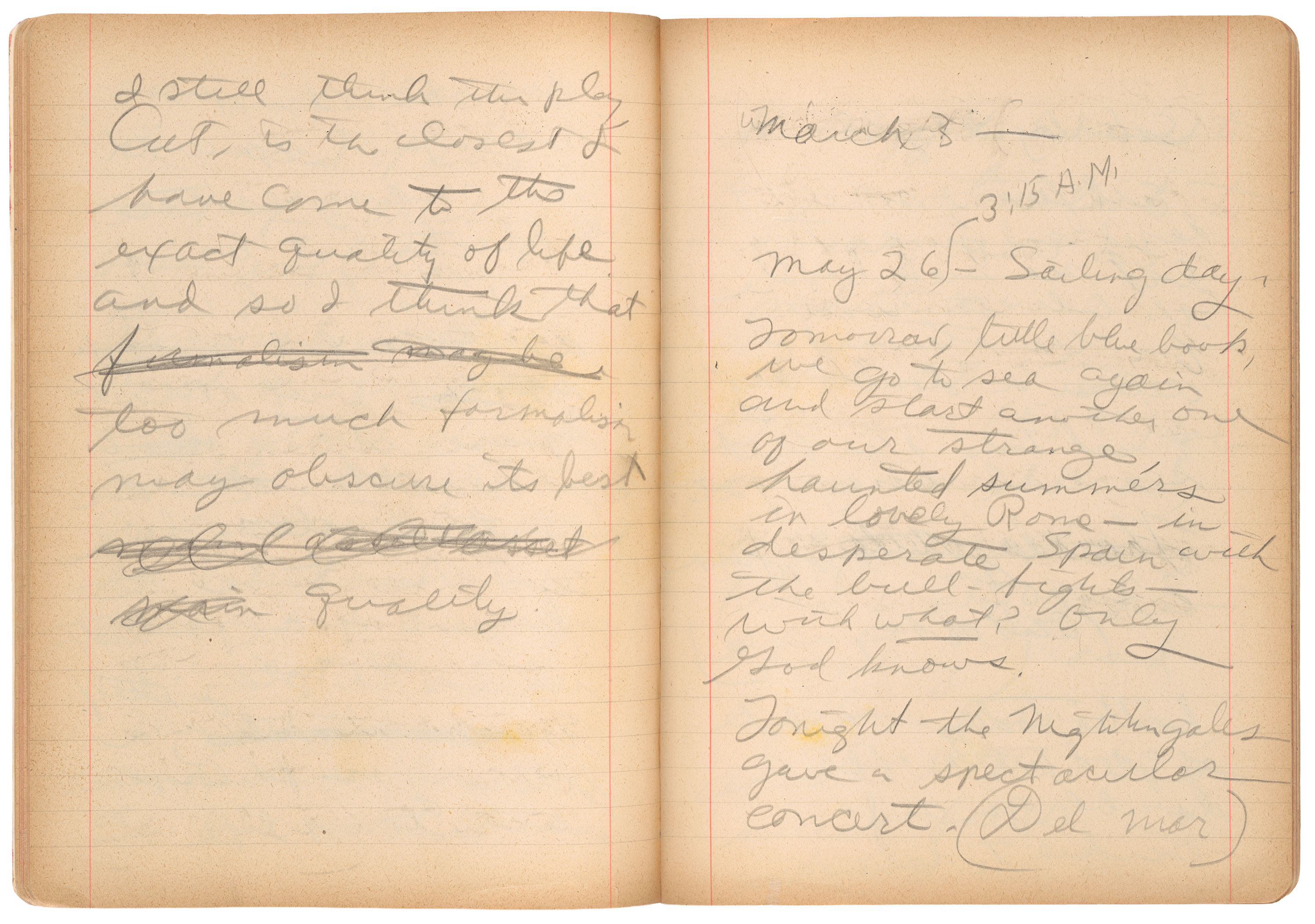
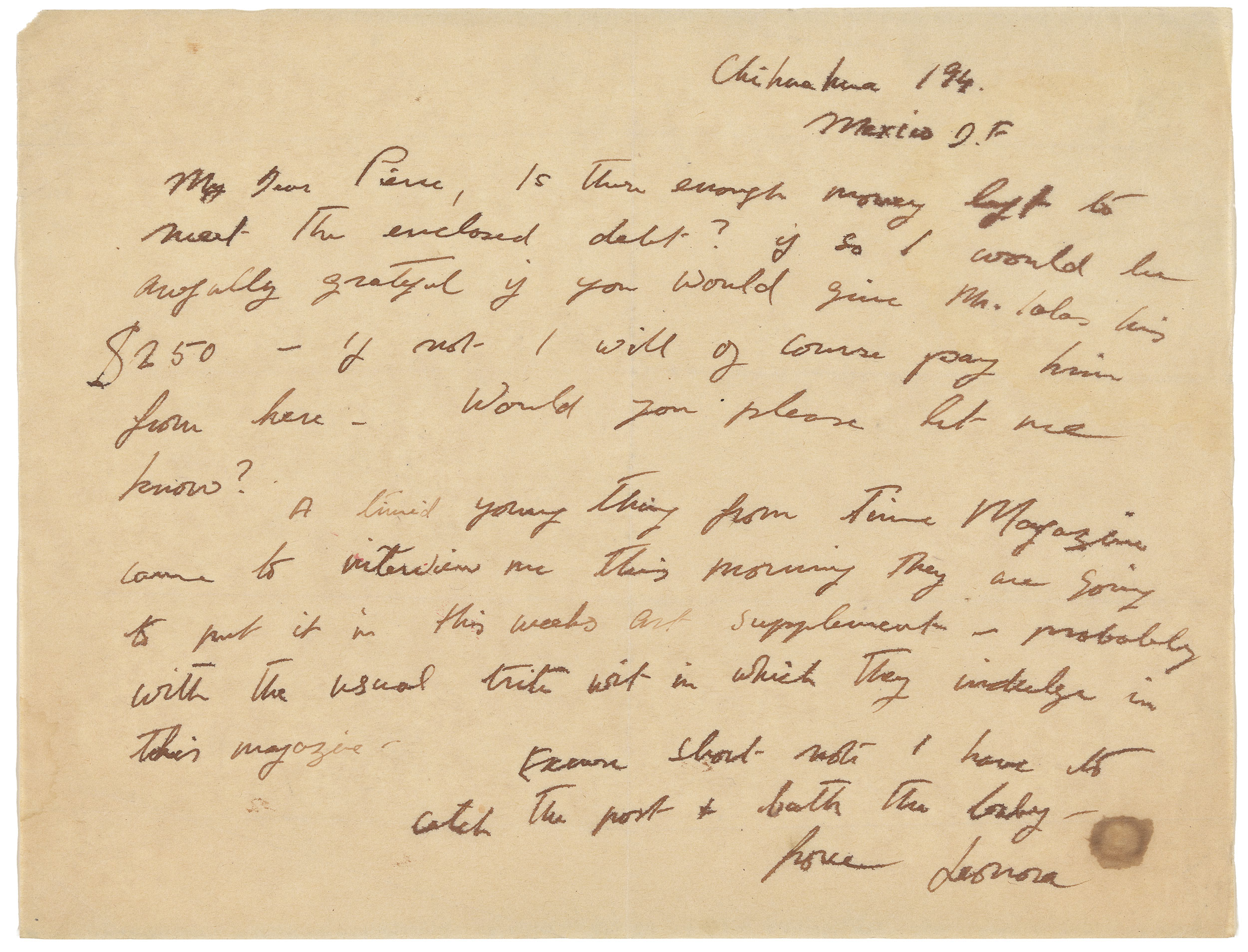
Leonora Carrington (1917–2011), Letter to Pierre Matisse, Chihuahua, [March 1948]. Gift of The Pierre Matisse Foundation, 1997; MA 5020

“EXCUSE SHORT NOTE” 
Disowned by her wealthy father, British-born Leonora Carrington moved in 1942 to Mexico City, where she became a citizen. Although later critics lauded her role as a prominent Surrealist and feminist painter, Carrington’s correspondence with the art dealer Pierre Matisse, who represented her, reveals her struggle for commercial success well into the 1960s—all while balancing the responsibilities of motherhood. In this note, kept brief in order to “catch the post and bath [sic] the baby,” Carrington requests $250 to pay off a debt. Like most of her letters, it also illustrates her acerbic sense of humor: She informs Matisse of an interview with her soon to be published in Time magazine, “probably with the usual trite wit in which they indulge.”

Book of Hours, in Latin, begun by Georges Trubert and the Master of the della Rovere Missals, completed by a follower of Jean Bourdichon, France, Avignon, ca. 1485–90. Purchased by J. Pierpont Morgan, 1909; MS M.348, fols. 105v–106r

THE CORONATION OF THE VIRGIN 
The Hours of the Virgin is the central part of a Book of Hours, a medieval devotional book containing a cycle of prayers as well as psalms, hymns, and readings for the eight canonical hours. This miniature depicts the Coronation of the Virgin, marking the hour of Compline, recited before bed. After her Assumption into Heaven, Mary is crowned Queen of Heaven and Earth. She kneels as an angel places a crown upon her head and Christ bestows a blessing. Angels are depicted in the background of the miniature, which is framed by an architectural border. This imitates green marble and deep purple porphyry, materials associated with imperial majesty and luxury.

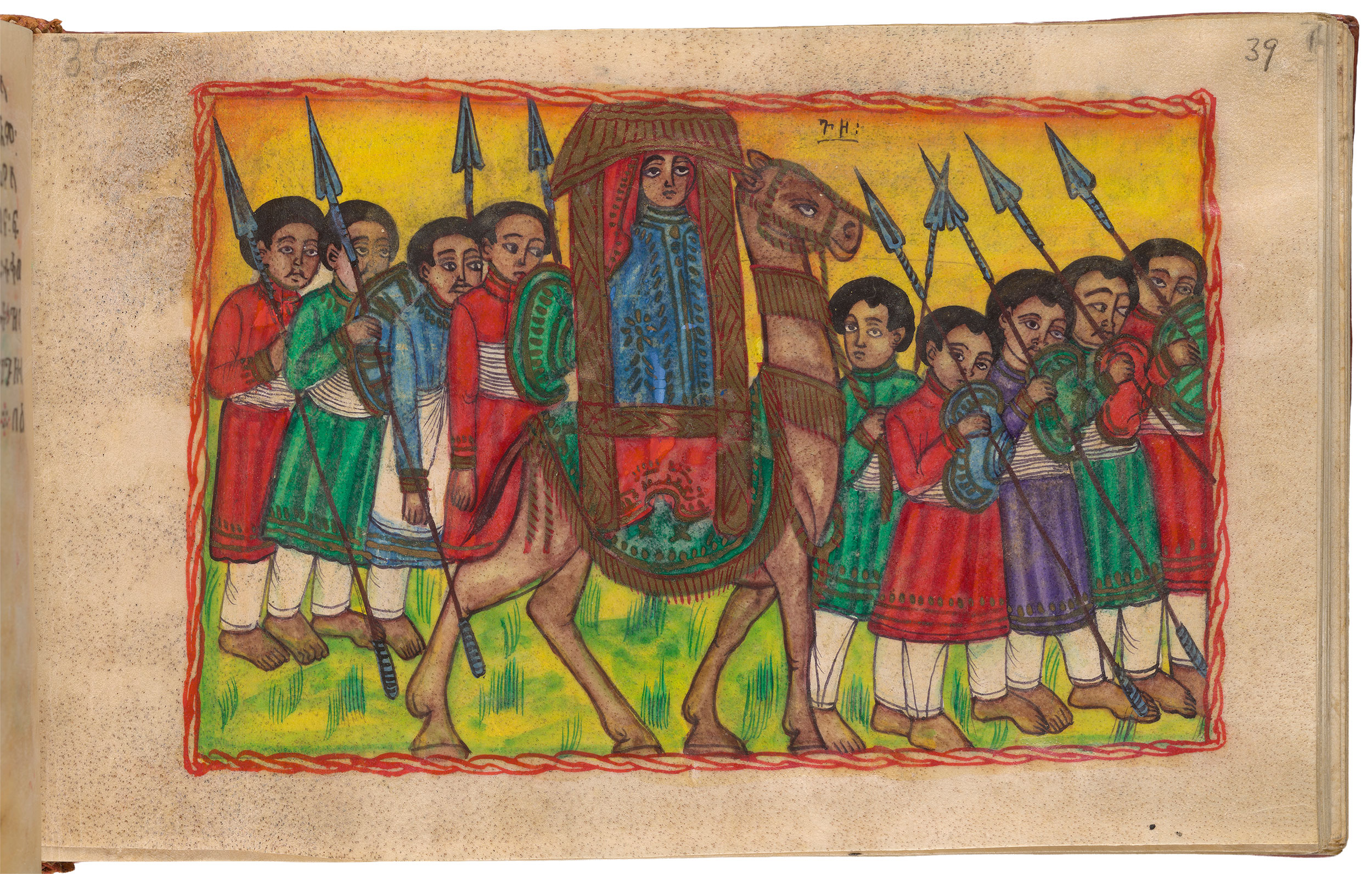
Glory of Kings (Amharic Oral Version), in Ge‘ez, illuminated by Yohannes Tägännä, copied by Çäkol Tägännä, Ethiopia, possibly Addis Ababa, 1952. Bequest of E. Clark Stillman, 1995; MS S.17, fol. 39r

THE KEBRA NAGAST: ETHIOPIA’S LEGENDARY EPIC OF KINGS 
The Kebra Nagast, or the Glory of the Kings, is a national epic of Ethiopia. Written in the fourteenth century, it traces the origins of the Solomonic dynasty to the biblical King Solomon and the Queen of Sheba (Queen Makeda of Ethiopia). The story was passed down in manuscripts and through oral tradition. Panel paintings illustrating the epic were popular with both local elites and foreign visitors until the 1974 coup that overthrew Emperor Haile Selassie I (r. 1930–74), ending the Solomonic dynasty. This vividly illustrated manuscript is notable for preserving a written version of the oral tale. This miniature depicts Queen Makeda traveling by camel to Jerusalem to meet Solomon, having been inspired by tales of his wealth and wisdom.

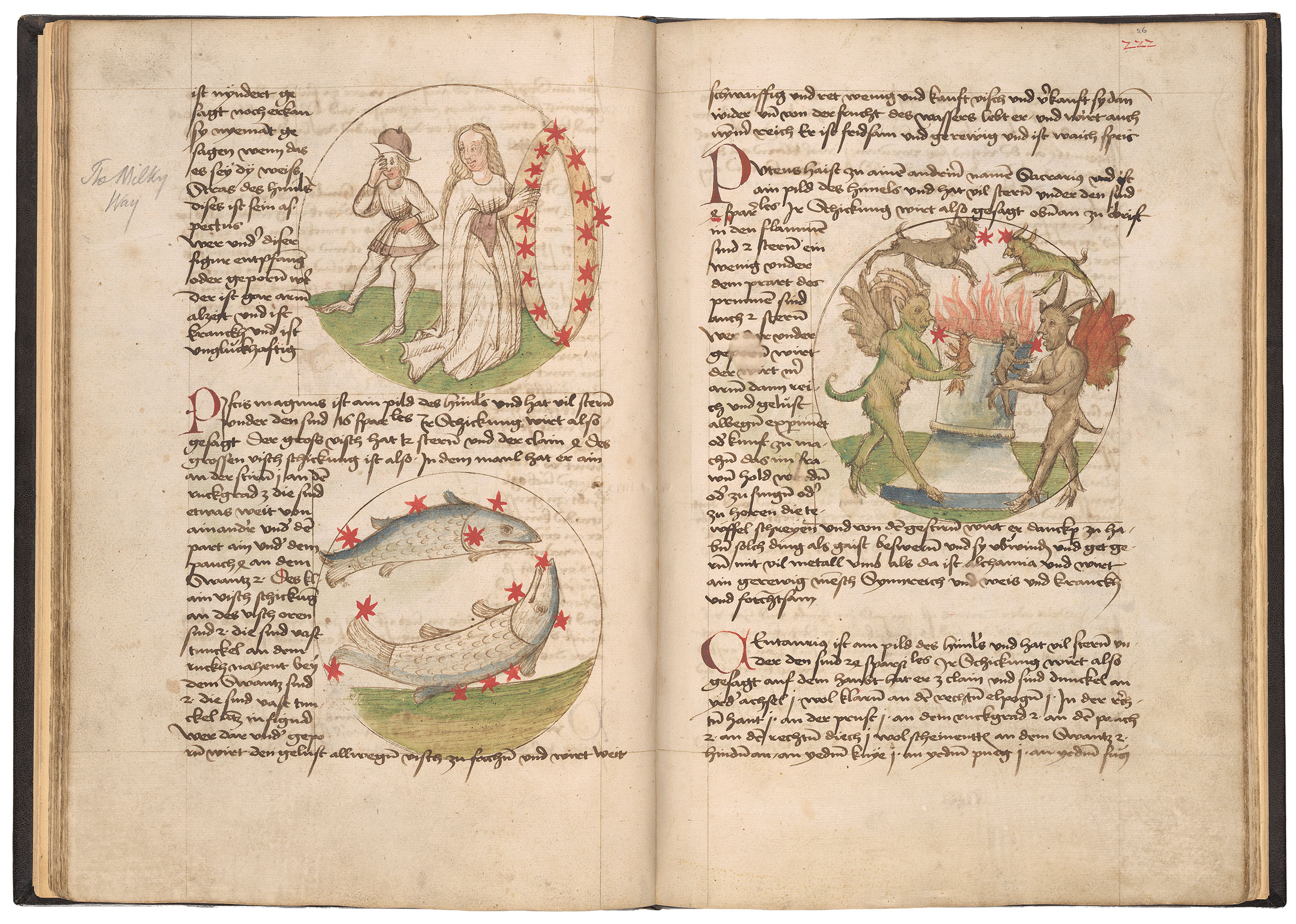
On the Course of the Heavens and the Stars, in German, attributed to Caspar Engelsüss and Michael Scot, Germany, Rhineland, second half of the fifteenth century. Purchased by J. Pierpont Morgan, 1910; MS M.384, fols. 24v–25r

MAPPING THE STARS IN THE MIDDLE AGES 
This fifteenth-century astrological treatise explains star movements, calendars, and computations, and it also records personal observations and anecdotes. While not scientifically reliable, it reflects medieval views of the heavens. Shown here are three constellations: Lupus (the wolf ); Argo Navis, once a vast constellation representing Jason’s ship in Greek mythology that was later subdivided; and Astronochus, a rare depiction of a female centaur. The stars that form each pattern are rendered in red. In the right margin, a former owner penciled a note referring to Astronochus as “an otherwise unknown sign.” Just below, Belle da Costa Greene astutely noted that the figure also appears in another Morgan manuscript as a centaur (MS M.389, fols. 73v–74r).

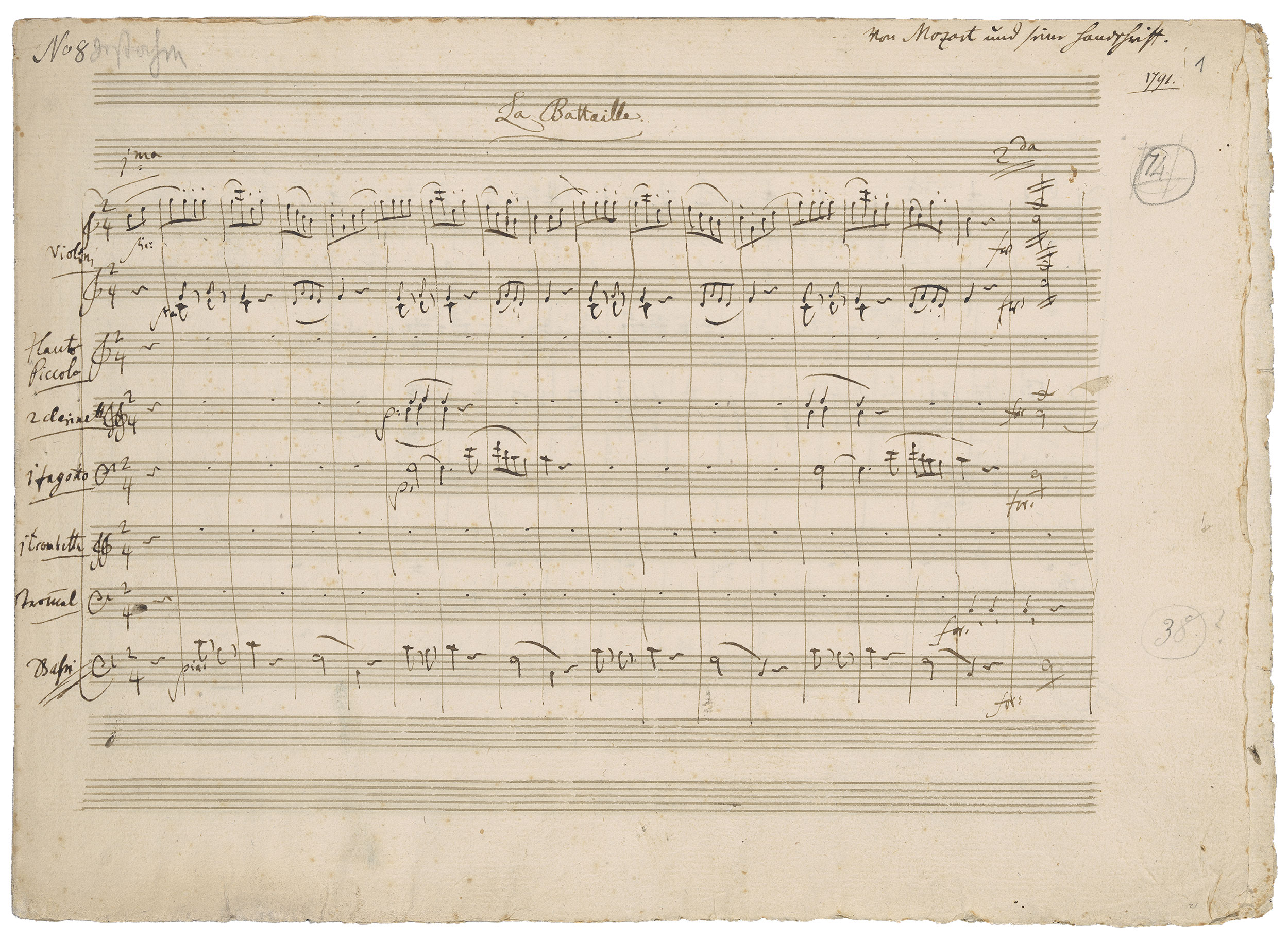
Wolfgang Amadeus Mozart (1756–1791), Contredanse “La bataille” (The battle), K. 535, autograph manuscript, Vienna, January 23, 1788. Robert Owen Lehman Collection, on deposit

MOZART’S MUSIC FOR AN EMPIRE AT WAR
When Emperor Joseph II left Vienna in 1788 to lead Austria’s war against the Ottoman Empire, he left behind an anxious city with a diminished musical life. Heavy war taxes battered the economy, and concerts, commissions, and publications dried up. Bread riots broke out, foreshadowing the unrest that would soon erupt in France. Public enthusiasm for the emperor waned. As Mozart’s income from performing shrank, he supported the ailing war effort—and his finances—with music for the Carnival balls held in Vienna’s Redoutensaal, including this contredanse he titled “The Battle,” drawing on the then-current vogue in Austria for music with Turkish influence.

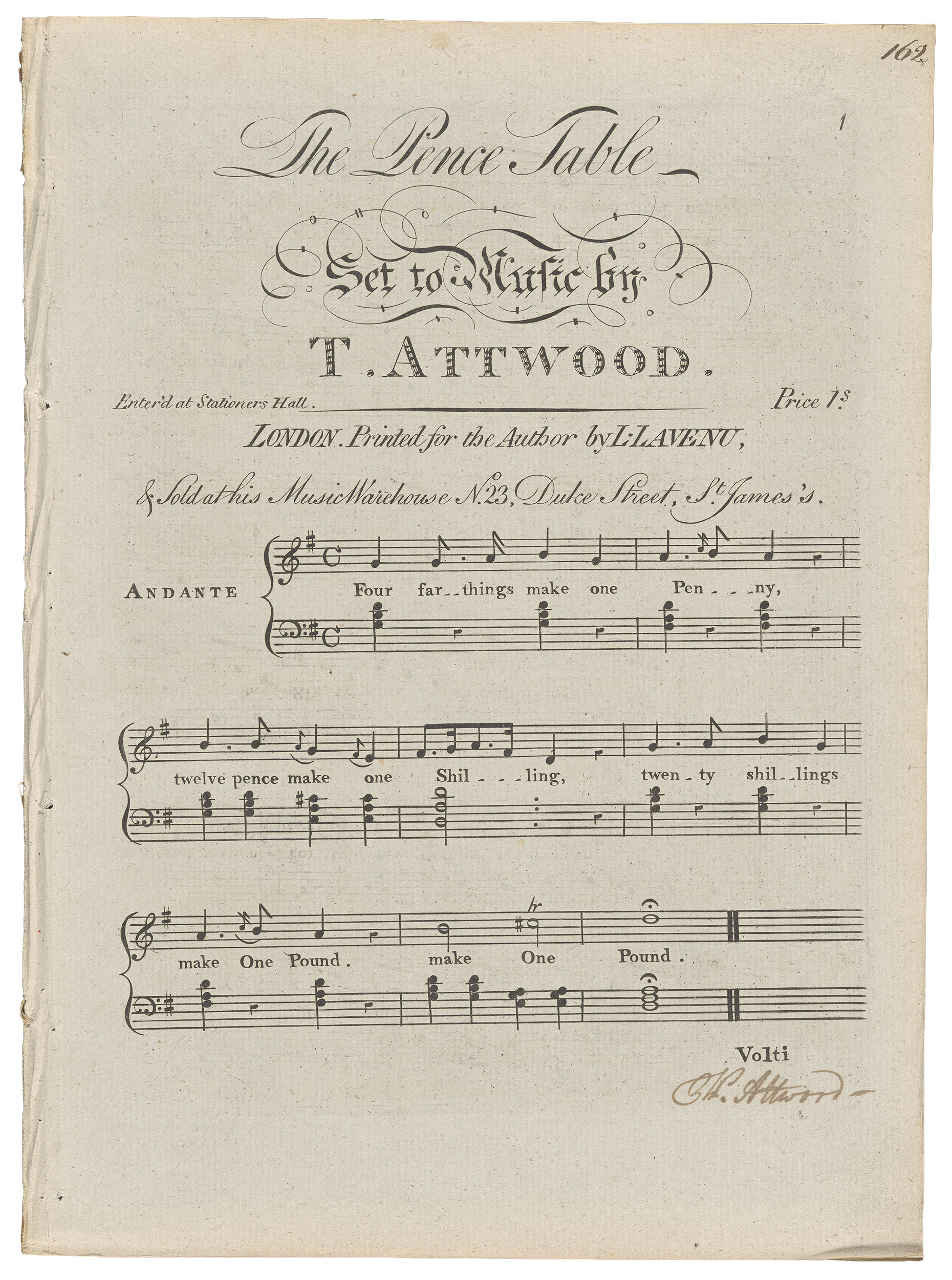
Thomas Attwood (1765–1838), The Pence Table, Set to Music, London: printed for the author by L. Lavenu, [1796–98]. The Mary Flagler Cary Music Collection

MOZART’S STUDENT HELPS CHILDREN MEMORIZE FARTHINGS 
An English composer, Thomas Attwood had the distinction, perhaps unique, of being both a pupil of Wolfgang Amadeus Mozart’s and a close friend of Felix Mendelssohn’s. He studied with Mozart in Vienna in the 1780s and in the 1830s befriended Mendelssohn, who stayed with Attwood on several visits to England. The Pence Table, Set to Music was written to help children memorize monetary denominations at a time when British money, with its farthings and shillings, was more complicated than it is today. Attwood signed the first page at the lower right.

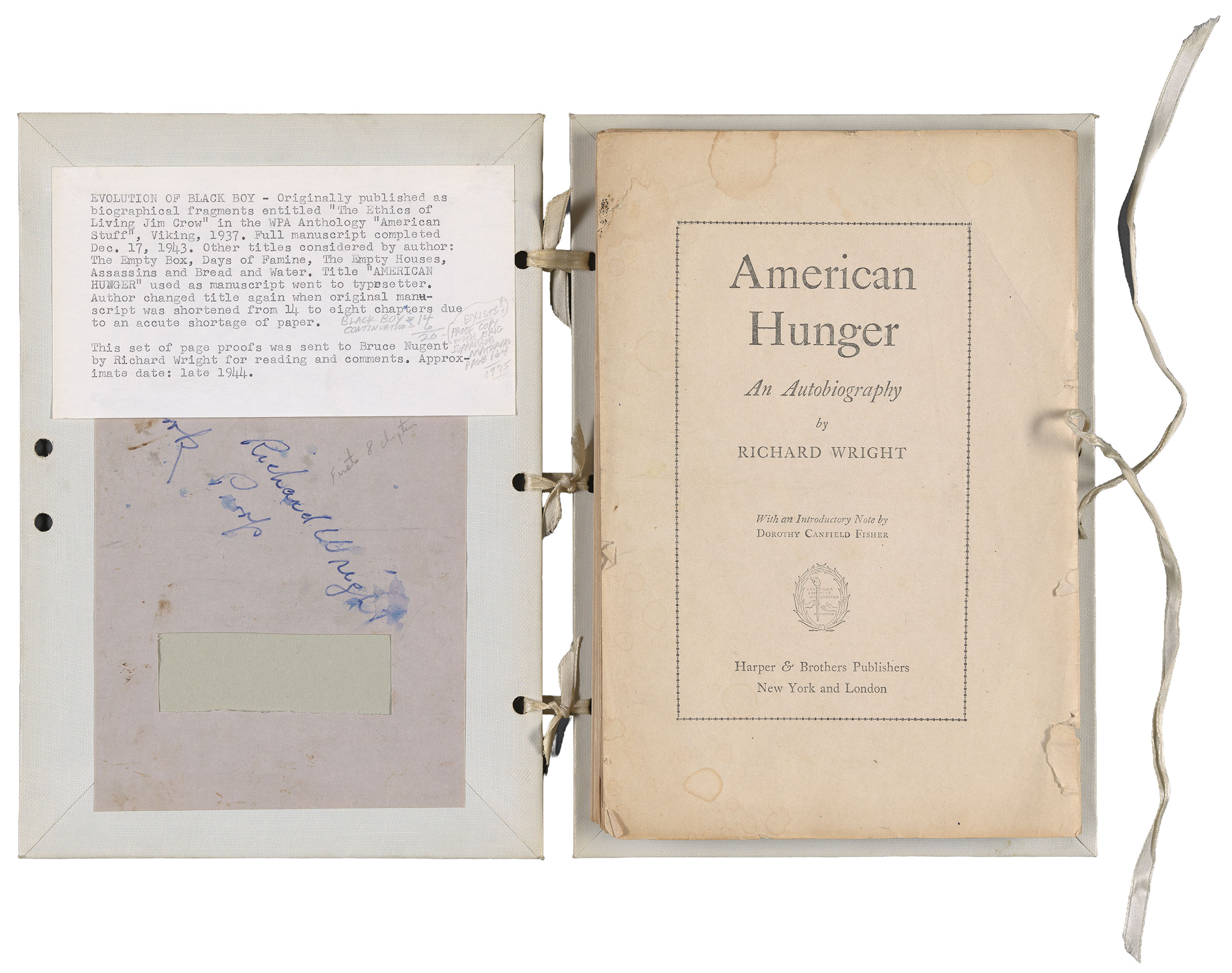
Richard Wright (1908–1960), American Hunger: An Autobiography [proof], [New York, 1944]. The Carter Burden Collection of American Literature; PML 187947

AMERICAN HUNGER BECOMES BLACK BOY 
Richard Wright’s memoir of growing up in the South as a Black American sold half a million copies in its first year. Few people realized how radically the manuscript had changed in the months leading up to publication: Wright had softened the pessimistic tone of certain passages; the second half of the text recounting his years as a young adult living in Chicago was entirely excised; and its bleak title, American Hunger, shown here on the proofs, was replaced with the more neutral Black Boy. Many modifications were the direct result of pressure applied by the Book-of-the-Month Club, whose leadership lobbied for edits to simplify their marketing plans and increase sales. This proof copy was inscribed by one of the club’s most influential judges, the author Christopher Morley (1890–1957).

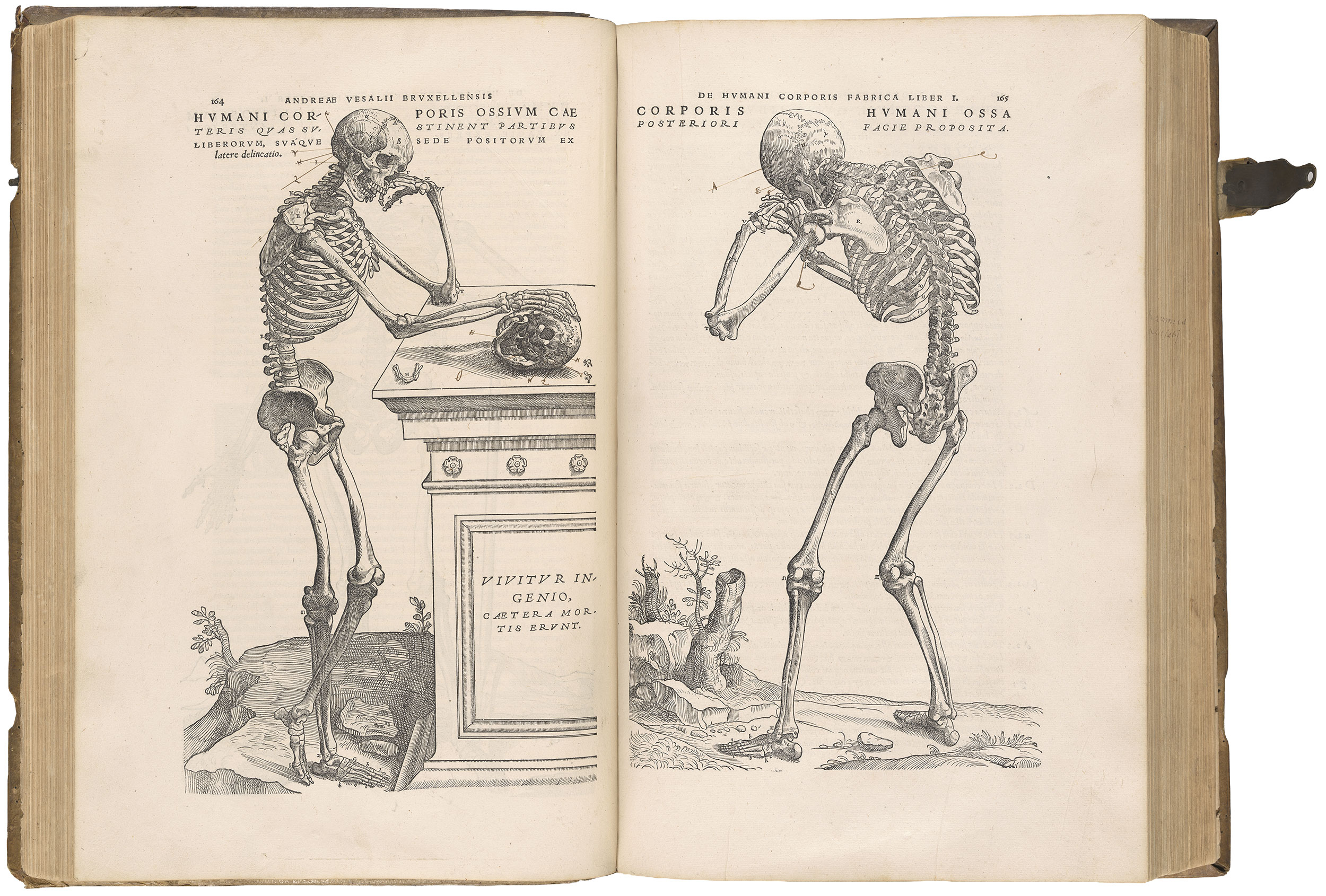
Andreas Vesalius (1514–1564), De humani corporis fabrica (On the Fabric of the Human Body), Basel: Joannes Oporinus, 1543. Purchased in 1927; PML 24798

ALAS, POOR VESALIUS! I KNEW HIM, HORATIO. 
Vesalius revolutionized the study of anatomy by dissecting human bodies during his lectures to medical students. De humani corporis fabrica, illustrated by Jan van Calcar (ca. 1499–1546), a pupil of Titian’s, is the result of these lectures and Vesalius’s careful examination of the skeleton, muscles, nerves, veins, and organs. These images depicting a skeleton contemplating a skull and another in a pose of mourning represent the complex movements of the skeletal system when bending and leaning. Arguably, Shakespeare could have seen a copy of the book while writing Hamlet fifty years later; if he did, this illustration, and another depicting a skeleton with a gravedigger’s shovel, might have inspired Hamlet’s famous soliloquy to the dug-up skull of Yorick.

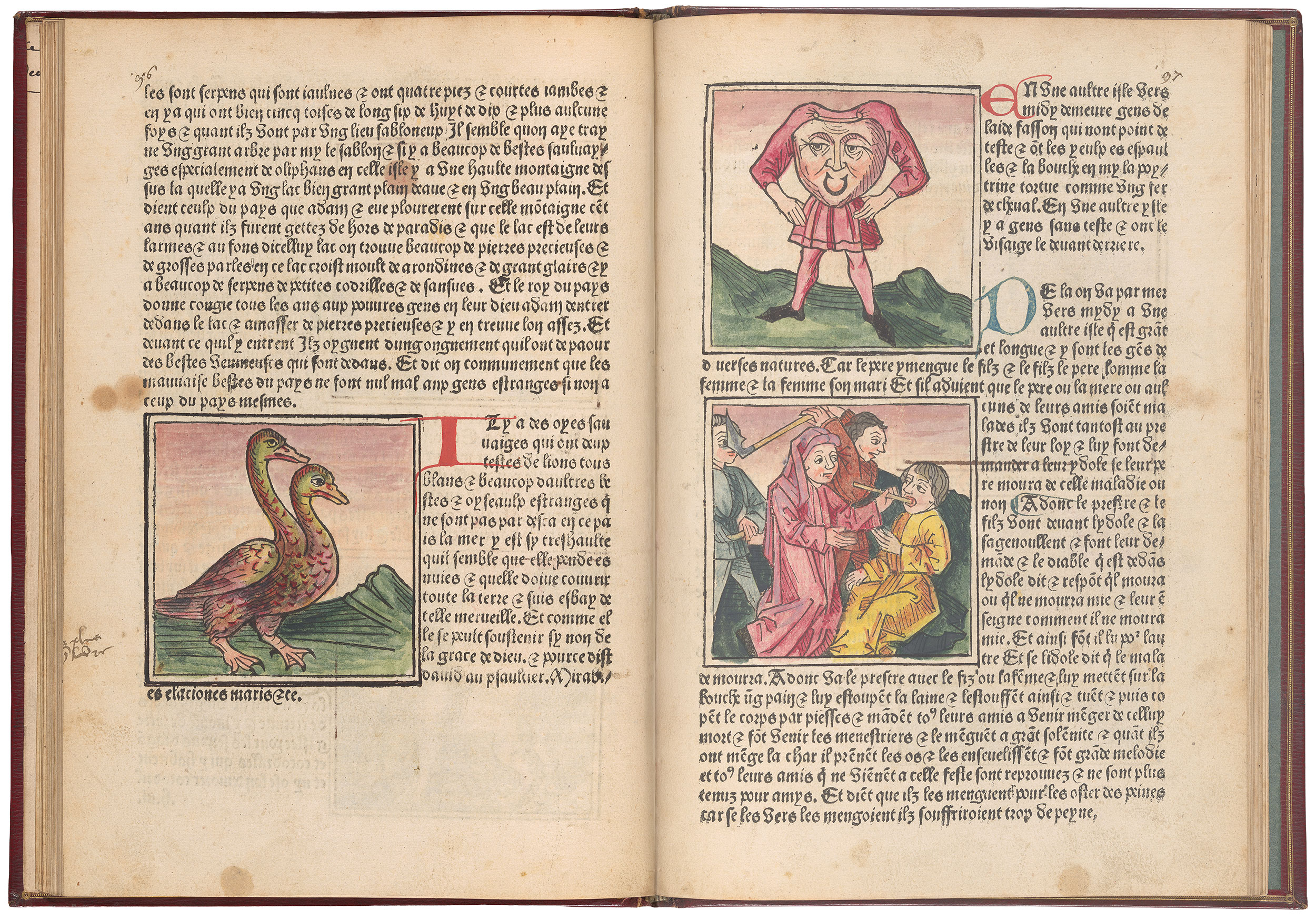
Sir John Mandeville, pseudonym, [Mandeville’s Travels], [Lyon: Pierre Bouttellier, ca. 1490]. Purchased with the Bennett collection, 1902; PML 610

MERGING MAN, MONSTER, AND MYTHOS
First appearing in the mid-fourteenth century, Mandeville’s Travels was a medieval best-seller. The identity of its author, the pseudonymous Sir John Mandeville, is shrouded in uncertainty. There is broad agreement that no one by that name had existed. Others have been posited as candidates for attribution—including Jean le Long, Jehan à la Barber, Jean d’Outremeuse, and Jean de Bourgogne. What is clear, however, is that the author of this curious mixture of classical works, Christian-infused narratives, and legends never journeyed to any of the places described in the text. Seen here, for example, in this hand-colored, early printed edition from Lyon, inhabitants of an exoticized Southeast Asia are depicted as blemmyes, or headless men with roots in the African continent.

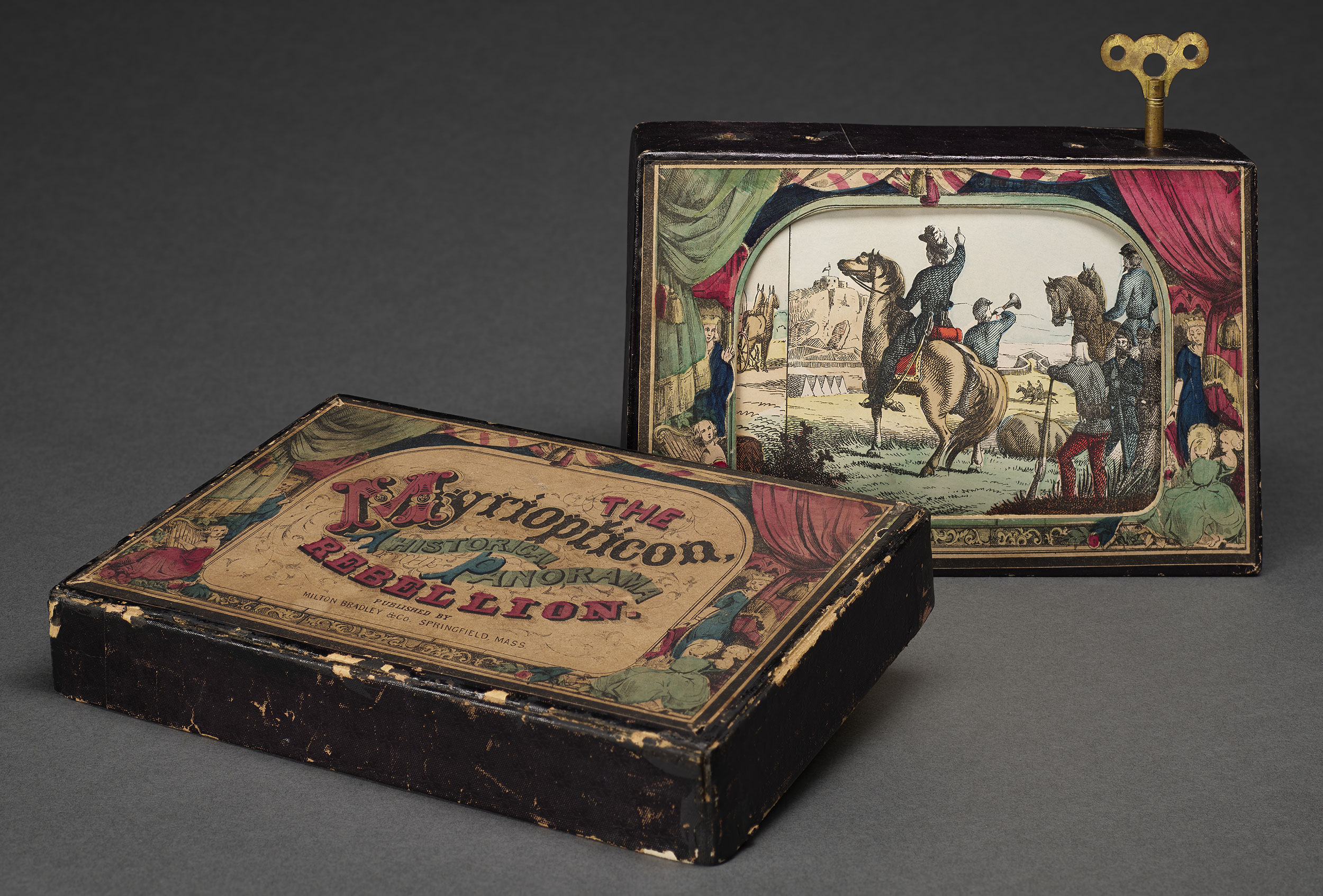
The Myriopticon: A Historical Panorama of the Rebellion, Springfield, MA: published by Milton Bradley & Co., [1866]. Gift of Julia P. Wightman, 1991; PML 88477

WHO NEEDS YOUTUBE?
This toy panorama from 1866 depicts twenty-two printed and hand-painted scenes from the US Civil War, which had ended the previous year. The box, designed like a small stage proscenium, would be placed in a darkened room, lit from behind by a candle. The flickering light would help to enliven the still images, which could be changed by turning the scenic scroll with a metal key. An accompanying booklet described the events depicted and, read in tandem with the panorama, made the experience similar to watching a modern-day news report. This was one of the first toys produced by Milton Bradley (1836–1911), whose company went on to develop such popular board games as The Game of Life, Candy Land, Hungry Hungry Hippos, Yahtzee, and Battleship.