Plan your visit. 225 Madison Avenue at 36th Street, New York, NY 10016.
Plan your visit. 225 Madison Avenue at 36th Street, New York, NY 10016.
Search
-
February 5 through May 15, 2016Warhol by the Book is the first exhibition in New York devoted solely to Warhol’s career as a book artist.

-
January 21 through May 1, 2011Morgan Library & Museum presents over one hundred drawings and photographs from the collection assembled by American fashion designer Herbert Kasper—known simply as Kasper.

-
January 13 through November 15, 2015Exploring France is the second exhibition in a planned series drawn from the collection of oil sketches acquired by Morgan Trustee Eugene V. Thaw, who is also an honorary trustee of the Metropolitan Museum of Art, and his wife, Clare.

-
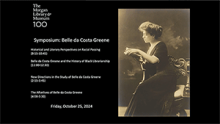
Complementing the opening of the exhibition Belle da Costa Greene: A Librarian’s Legacy, this one-day scholarly symposium will bring together experts working on Belle Greene and/or the fields relevant to our understanding of her life and career, including African American history and lit
Videos -
May 21 through September 8, 2024Objects on view in J. Pierpont Morgan’s library reflect the past, present, and future of the collections in four curatorial departments, comprising illuminated manuscripts from the medieval and renaissance eras, five hundred years of printed books, literary manuscripts and correspondence, as well as printed music and autograph manuscripts by composers.
-
August 29 through November 16, 2008Through nearly fifty manuscripts, first editions, letters, and related materials drawn almost entirely from the Morgan's collections, the exhibition Liszt in Paris: Enduring Encounters celebrates the art and the diverse and fertile artistic world of the virtuoso pianist-composer.

-
Clement Clarke Moore (1779–1863), “A Visit from St. Nicholas,” better known as “The Night Before Christmas.”, 1822, MA 23900
 Digital Facsimile
 -
MARIA L. FREDERICKS APPOINTED DRUE HEINZ BOOK CONSERVATOR AT THE PIERPONT MORGAN LIBRARY
Press release datePress -
-