
The Morgan Library & Museum’s exhibition Tarot! Renaissance Symbols, Modern Visions traces how tarot has been used, adapted, and reinvented from the fifteenth century to the present. Tarot has elicited enduring interest across diverse cultures and time periods, offering a flexible visual and conceptual structure for navigating moments of uncertainty. Addressing this legacy is no small task: nearly five hundred years of history, layered with the deeply personal relationships practitioners have formed with the cards, resists easy summary.
The work of Spanish-born Mexican artist Remedios Varo (1908–1963) finds a natural companion in tarot. Varo’s paintings often blend spiritual and scientific inquiry, presenting both as part of the human need for understanding. She entered the Surrealist milieu in the late 1930s as the group’s occult interests grew in opposition to the rationalist thinking they associated with the rise of Fascism. Varo, stimulated by her social circle, consumed a wide range of books on spiritual, scientific, psychological, and philosophical concepts – all of which coalesced in her approach to tarot.1
In her interest in spiritual practice and psychological theory, Varo was joined by her close friend Leonora Carrington (1917–2011), with the two taking a particular interest in tarot between the years of 1955 and 1957. In 1955 Carrington created a deck of Major Arcana cards, which drew on traditional iconography from decks like the Tarot de Marseille and the Rider-Waite-Smith deck. In contrast, Varo’s tarot-inspired works are highly original, resulting in large, narrative paintings as well as drawn figure studies. Although she did not produce a traditional deck, Varo did create two card-sized oil-on-bone tarot figures. Rather than using traditional imagery, they instead depict androgynous, human-owl hybrid personages. One might wonder: how do these figures relate to tarot, and what does it reveal about Varo’s approach to tarot more broadly?
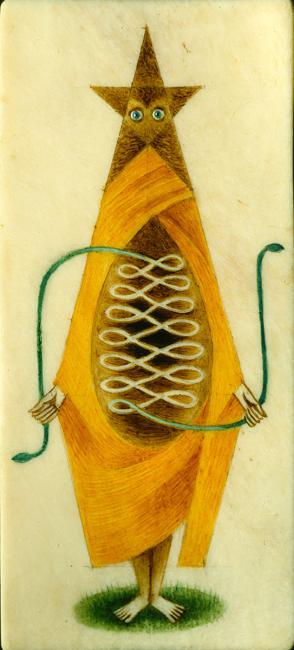
Figure 1. Tarot Card, 1957. Oil on bone. Museo Arte Moderno, Mexico City
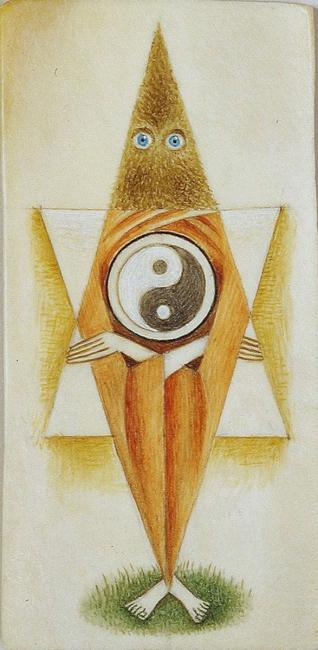
Figure 2. Yin and Yang Figure, ca. 1957. Oil on bone. Private Collection(?)
In preparation for the two works on bone, Varo produced numerous sketches of invented figures. She used a range of symbols from Western esotericism, including pentagrams (five-pointed stars) and hexagrams (six-pointed stars), which are incorporated into the bodies of each figure.2 The sheer number and variety of these sketches suggest Varo may have planned to create a full deck of hand-painted bone cards.3
One design in particular seems to have held Varo’s attention: a figure grasping a double-headed serpent, which cascades in seven twists down the figure’s torso. Varo went on to depict the same character again the same year in the gouache-on-cardstock work, The Other Clock. While one surviving sketch shows the same figure with a single figure-eight at its center, Varo quickly abandoned this design and worked through numerous sketches incorporating the seven twisting figure-eights seen in the final work. While the pentagram can be found in decks like the canonical Rider-Waite-Smith deck, this looping serpent does not appear in traditional tarot iconography.
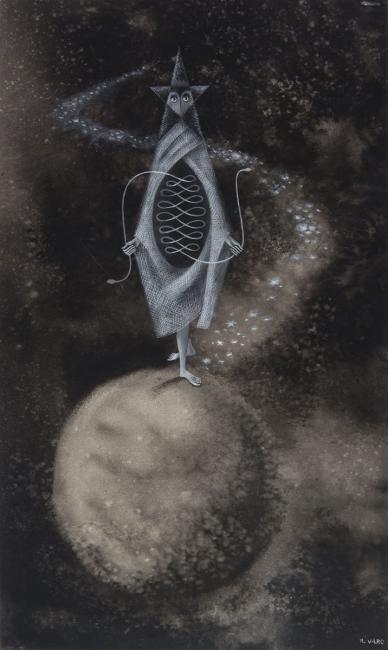
Figure 3. The Other Clock, 1957. Ink and gouache on medium weight cardstock. Private Collection.
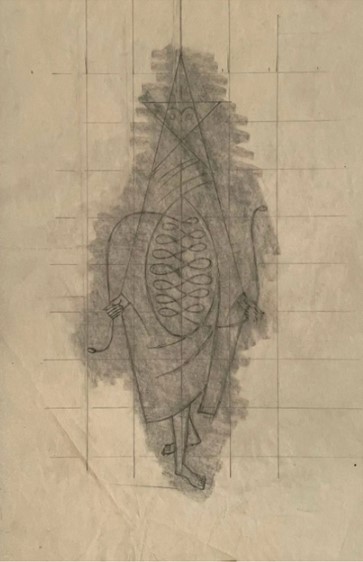
Figure 4. Preliminary Drawing for The Other Clock, 1957. Graphite on tracing paper. The Morgan Library & Museum, gift of Irene A. Wang and Yingkai Xu, 2025.77.
One way to consider the discrepancy between Varo’s tarot figures and standard extant decks is to consider tarot’s conceptual structure beyond its typical iconographic program—particularly as it pertains to spiritual practice and psychology. The Swiss psychiatrist Carl Jung (1875-1961), for example, was a known influence on Varo. His theory of archetypes and the collective unconscious proposes that the psyche is structured by inexhaustible patterns that recur across dreams, myths, and mystical traditions, becoming tangible through conscious experience.4 Tarot operates on a similar logic: long used as a meditative tool for accessing the subconscious, it fosters self-reflection and charts the recurring patterns that connect the inner, psychological self with broader questions of meaning and spiritual experience. Cards like the Fool or the Empress, for example, embody the archetypal Innocent or Mother, presenting psychological and metaphysical inquiry as fundamentally intertwined concepts.
A related perspective appears in the work of Maurice Nicoll, a Scottish psychiatrist who studied under Jung. Nicoll’s book Living Time and the Integration of the Life (1952) examines the relationship between time, consciousness, and spiritual development. He argues that humans are trapped in the illusion of “passing time,” or the linear flow of sensory experience that severs the individual from a higher, spiritual self. In contrast, awakening to what he calls “living time” unites earthly and spiritual existence, connecting the individual to the recurring cycles of the universe.5
To illustrate this idea, Nicoll uses a diagram of the Egyptian serpent-god Apophis. He writes: “Apophis is the destroyer that has to be overcome… As mere passive creatures of passing-time, we are continually destroyed by time...” 6 For Nicoll, overcoming the condition of “passing time” depends not on force but a shift in consciousness that makes “living time” accessible. Human existence, he concludes, remains suspended between the earthly and spiritual realms, but the possibility of transcendence remains.7
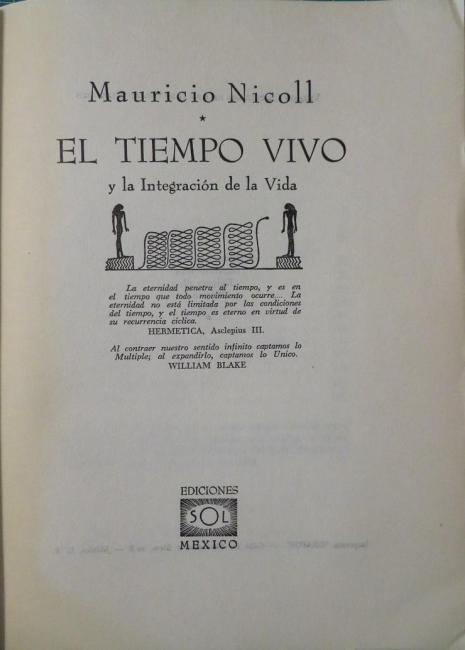
Figure 5. Maurice Nicoll, El tiempo vivo y la integración de la vida (Living Time and the Integration of the Life). Tlalpan: Ediciones Sol, 1953.
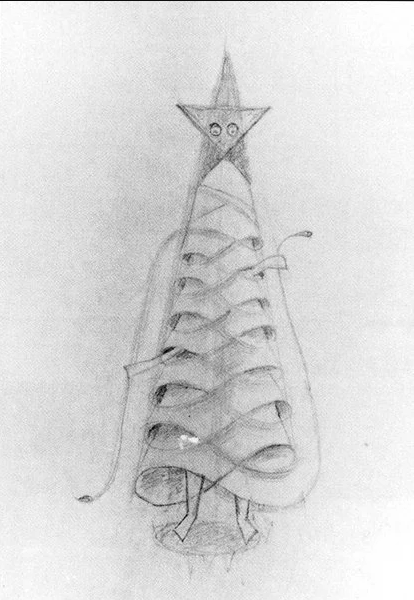
Figure 6. Sketch for Tarot Card, ca. 1957. Pencil on paper. Private Collection.
Varo was familiar with Nicoll’s argument, and a copy of his book—including the Apophis diagram—survives in the remains of her library at the Museo Arte Moderno in Mexico City. Based on this observation, the cascading infinity symbol formed by a double-headed snake in Varo’s sketches almost certainly references Nicoll’s diagram. By incorporating this symbol in both Tarot Card and The Other Clock, Varo reframes tarot as a model of universal cycles that synthesizes Nicoll’s idea of “living time” with the archetypal recurrence that structures tarot imagery. In Varo’s world, rather than adhering to a chronological progression of past, present, and future, tarot forges connections between disparate temporal moments, producing a web of meaning that transcends chronology. Read in conjunction with Varo’s use of pentagrams and hexagrams, she suggests that the integration of the spiritual and material self is found in connection to these universal patterns .
Varo’s “other clock” in question is one of cycles: not the linear march of hours but the continuous spiral of transformation through which primordial, recurring patterns are made visible. In recognizing these patterns, individuals are connected to a broader, cosmic order that guides human nature and experience. In times of uncertainty—whether it be the post-war world of Varo or the geopolitical uncertainty of 2026—tarot provides a sense of connection to the underlying human tendencies that impact us all, providing a sense of solidarity across time and place.
Esther Levy
Curatorial Assistant, Modern and Contemporary Drawings
The Morgan Library & Museum
Endnotes
- For a selection of books from Varo’s library testifying to her diverse interests, see “Varo’s Library” in Remedios Varo: Science Fictions, Tere Arcq and Caitlin Haskell, eds. (Chicago: Art Institute of Chicago, 2023).
- Art historian Tere Arcq has linked Varo’s use of pentagrams and hexagrams to the teachings of Armenian mystic, G.I. Gurdjieff and his disciple P.D. Ouspensky. See Tere Arcq “In Search of the Miraculous” in The Five Keys to the Secret World of Remedios Varo. (Mexico City: Artes de México, 2008)
- María José González Madrid “On the True Exercise of Witchcraft” in Surrealism, Occultism and Politics: In Search of the Marvellous (Oxfordshire, England: 2017) 205.
- See Carl Jung, Collected Works of C.G. Jung: Archetypes and the Collective Unconscious. Vol. 9, (New Jersey: Princeton University Press, 2014.) 4–5.
- Maurice Nicoll, Living Time and the Integration of the Life. (Boulder & London: Shambhala, 1984) 229-230.
- Ibid
- Ibid, 245