Plan your visit. 225 Madison Avenue at 36th Street, New York, NY 10016.
Plan your visit. 225 Madison Avenue at 36th Street, New York, NY 10016.
Search
-
View a selection of works from the exhibition that explores the evolution of courtly clothing from around 1330 to 1515.
Online Exhibitions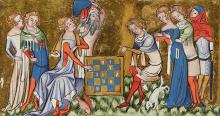
-
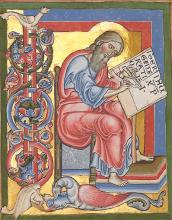
October 15, 2021 through January 23, 2022Imperial Splendor offers a sweeping overview of manuscript production in the Holy Roman Empire, one of the most impressive chapters in the history of medieval art.
-
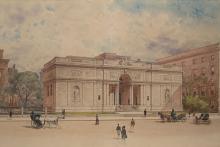
June 10 through September 18, 2022With rarely seen architectural drawings, period photographs, and significant rare books and manuscripts from Morgan’s collection, this exhibition traces the design, construction, and early life of J. Pierpont Morgan’s Library.
-
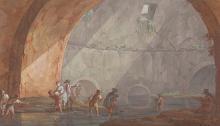
January 10 through June 4, 2023By the mid-eighteenth century, the Grand Tour, a study trip through Europe with a period of residence in Italy, had become a fixture in the education of European aristocrats and the training of artists.
-
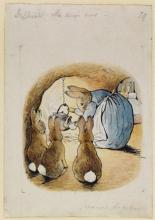
February 23 through June 9, 2024Creator of unforgettable animal characters like Peter Rabbit, Jeremy Fisher, and Mrs. Tiggy-Winkle, the beloved children’s book author and illustrator Beatrix Potter (1866–1943) rooted her fiction in the natural world.
-
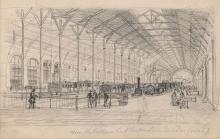
Charles François Daubigny (1817–1878), Sketchbook, ca. 1847, 2010.105.
 Digital Facsimile
 -
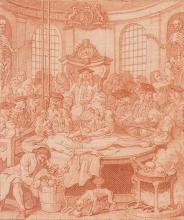
May 24 through September 22, 2019The satirical scenes of the celebrated English artist William Hogarth (1697–1764) are iconic representations of eighteenth-century urban life at a time of great socio-economic disparity.
-
The Librarian's Office is the smallest of the McKim rooms and was the office of Belle da Costa Greene (1879–1950), Morgan's personal librarian.
-
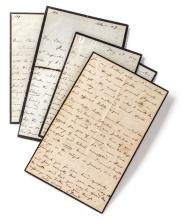
Brontë’s personal letters, a selection of which is presented here, reveal the doubt, pain, hope, and confidence she voiced before emerging as one of the world’s most successful novelists.
 Digital Facsimile
 -
September 30, 2016 through January 2, 2017A leading French artist of the twentieth century, Jean Dubuffet (1901-1985) eschewed traditional notions of beauty in art in favor of what he perceived as more authentic forms of expression, inspired by graffiti, children’s drawings, and the creations of psychiatric patients.