Plan your visit. 225 Madison Avenue at 36th Street, New York, NY 10016.

Plan your visit. 225 Madison Avenue at 36th Street, New York, NY 10016.

Collections Spotlight, Summer 2026

May 5 through September 13, 2026

Objects on view in J. Pierpont Morgan’s library reflect the past, present, and future of the collections in four curatorial departments, comprising illuminated manuscripts from the medieval and Renaissance eras, five hundred years of printed books, literary manuscripts and correspondence, as well as printed music and autograph manuscripts by composers. These selections, which rotate three times a year, provide an opportunity for Morgan curators to spotlight individual items, to consider their historical and aesthetic contexts, and to tell the stories behind these artifacts and their creators. 

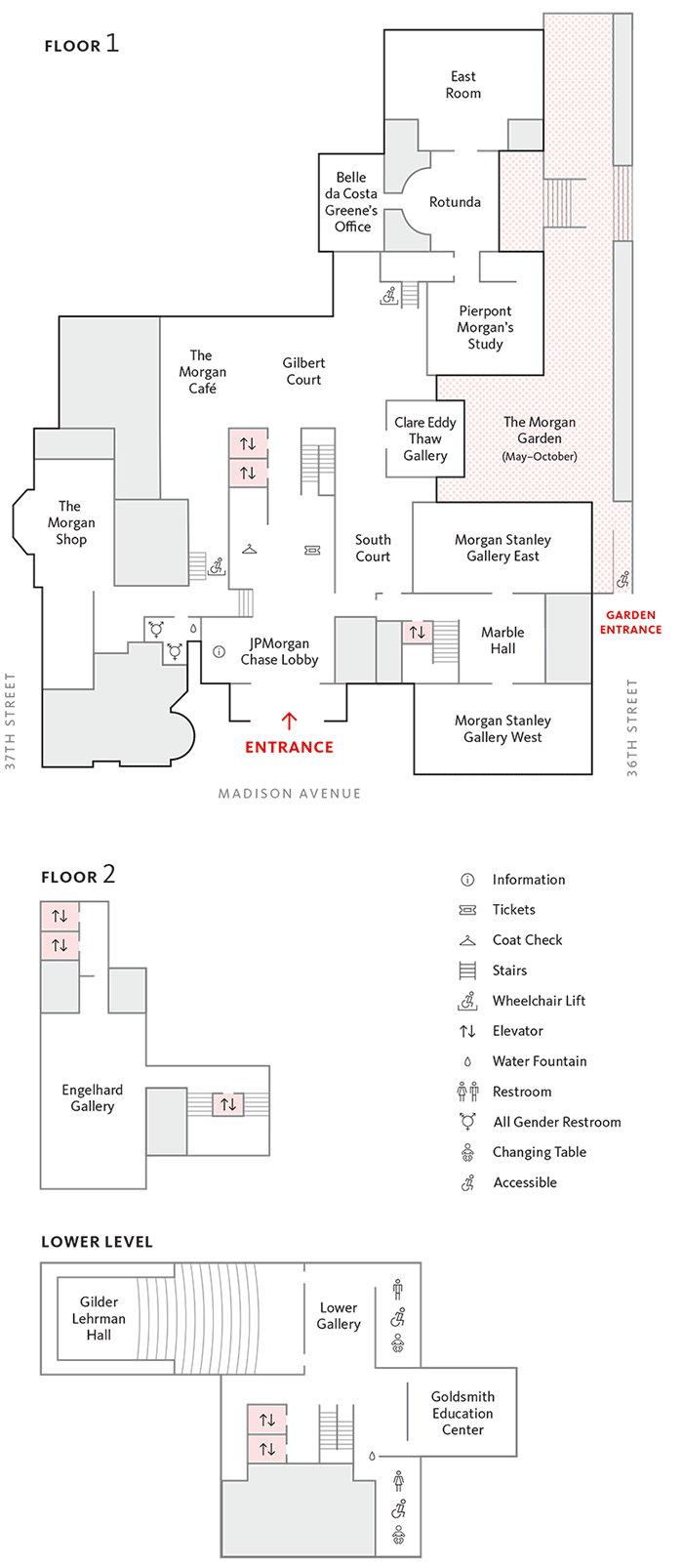
Exhibition location:
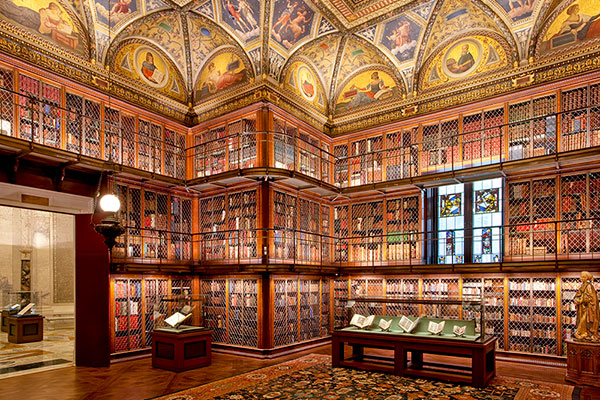
J. Pierpont Morgan’s Library
See map
Collections Spotlight is funded in perpetuity in memory of Christopher Lightfoot Walker.

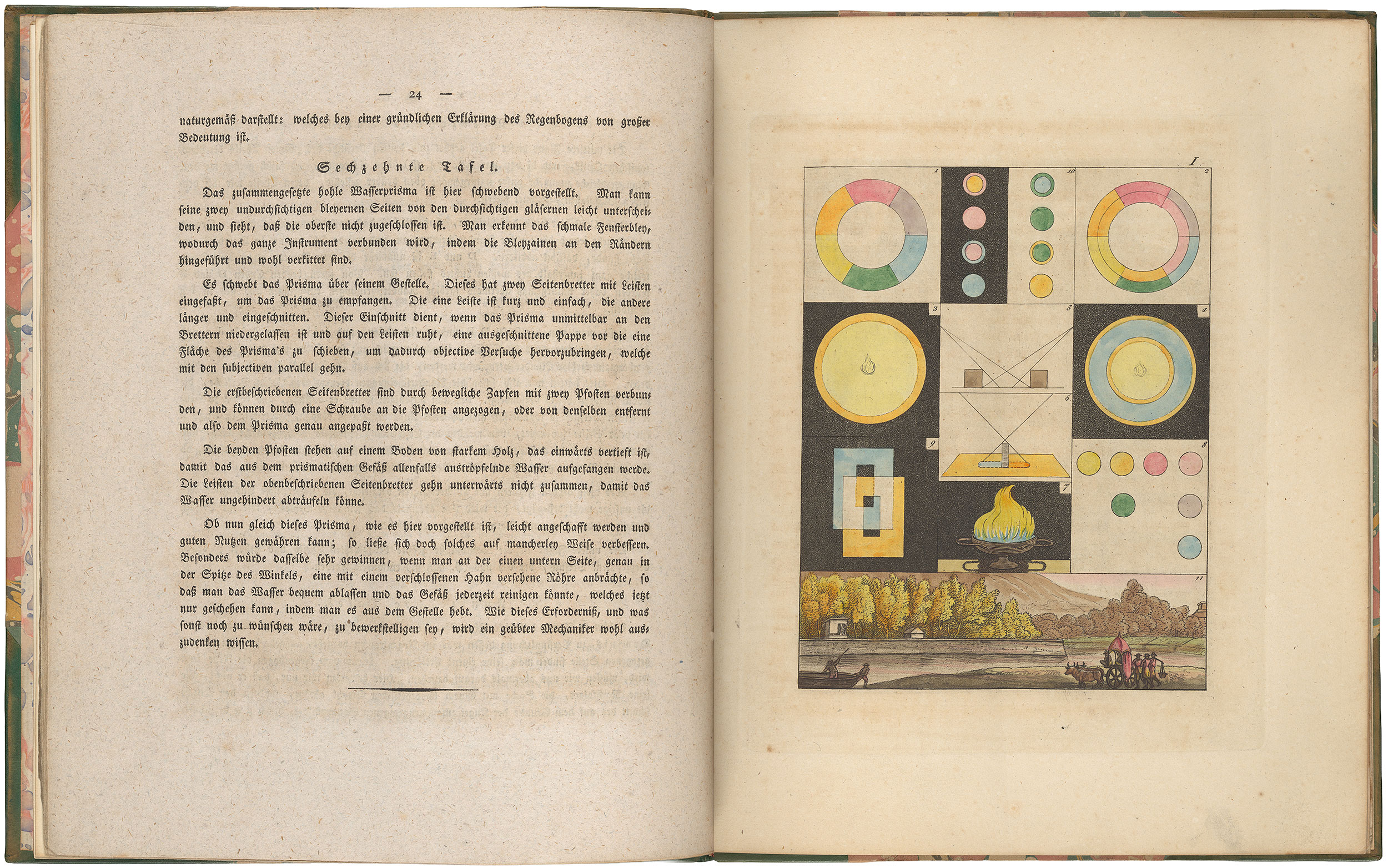
Johann Wolfgang von Goethe (1749–1832) 
Zur Farbenlehre (On the theory of colors) Tübingen: In der J. G. Cotta’schen buchhandlung, 1810 
The Dannie and Hettie Heineman Collection, gift of the Heineman Foundation, 1977; Heineman 664 (Atlas)
Selected Images

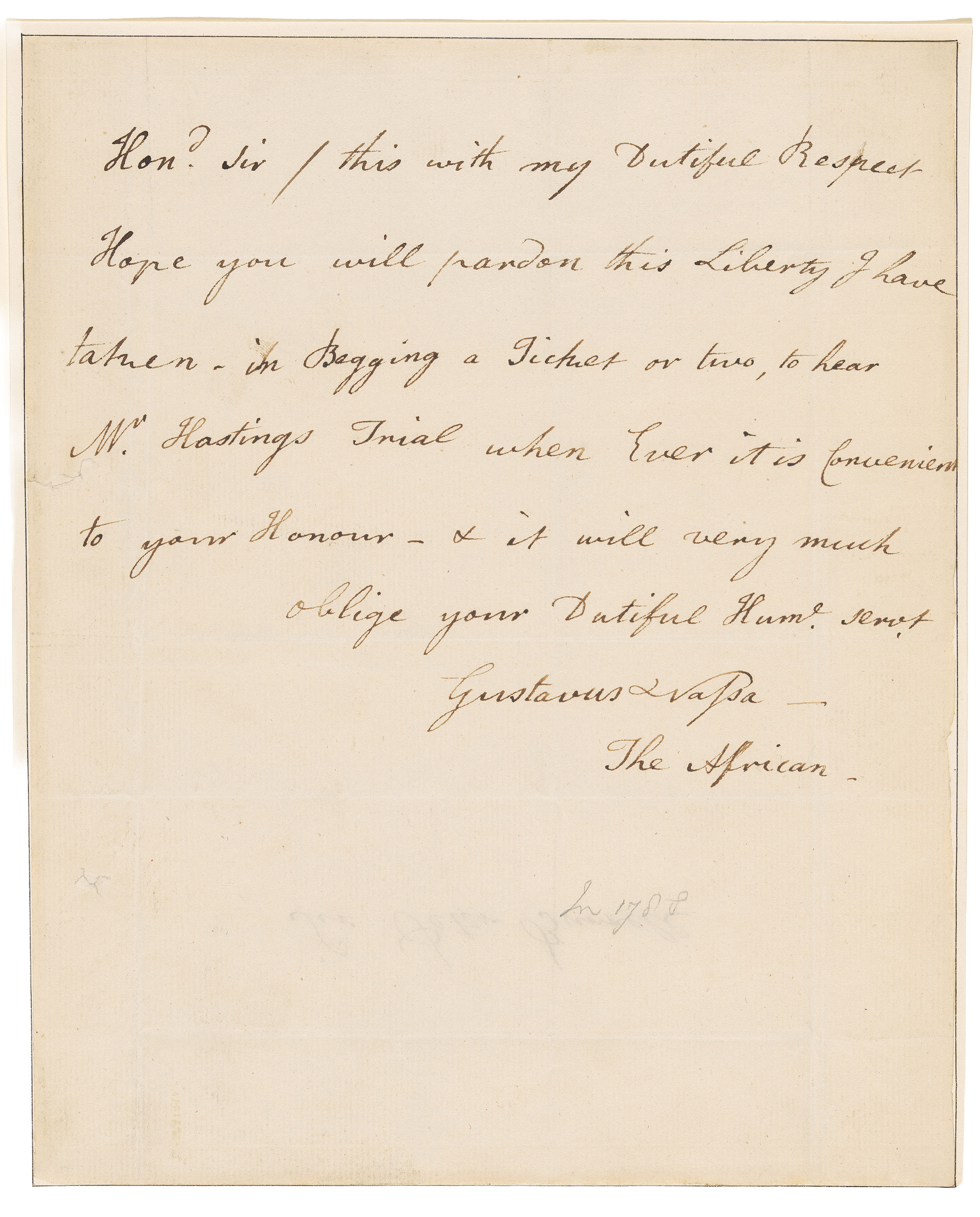
Olaudah Equiano (aka Gustavus Vassa, 1745–1797) 
Letter to Sir Peter Burrell, London, [1788–95] 
Purchased by J. Pierpont Morgan, 1890; MA 177.165

“ONE OR TWO TICKETS” 
In this letter Olaudah Equiano, then known as Gustavus Vassa, asks for tickets to the impeachment trial of Warren Hastings, a colonial administrator of the British East India Company. Hastings stood accused of a litany of misdeeds, from bribery to warmongering, but his case also served as a referendum on the broader project of colonization. This would have been significant to the West African–born Equiano, who was enslaved in the Americas, purchased his freedom, and published an abolitionist autobiography in 1789. While it is not known whether Equiano received “one or two tickets,” his presence would have been meaningful at Westminster Hall, especially during a period in which non-­white people were not accepted as valid witnesses in British colonial courts.

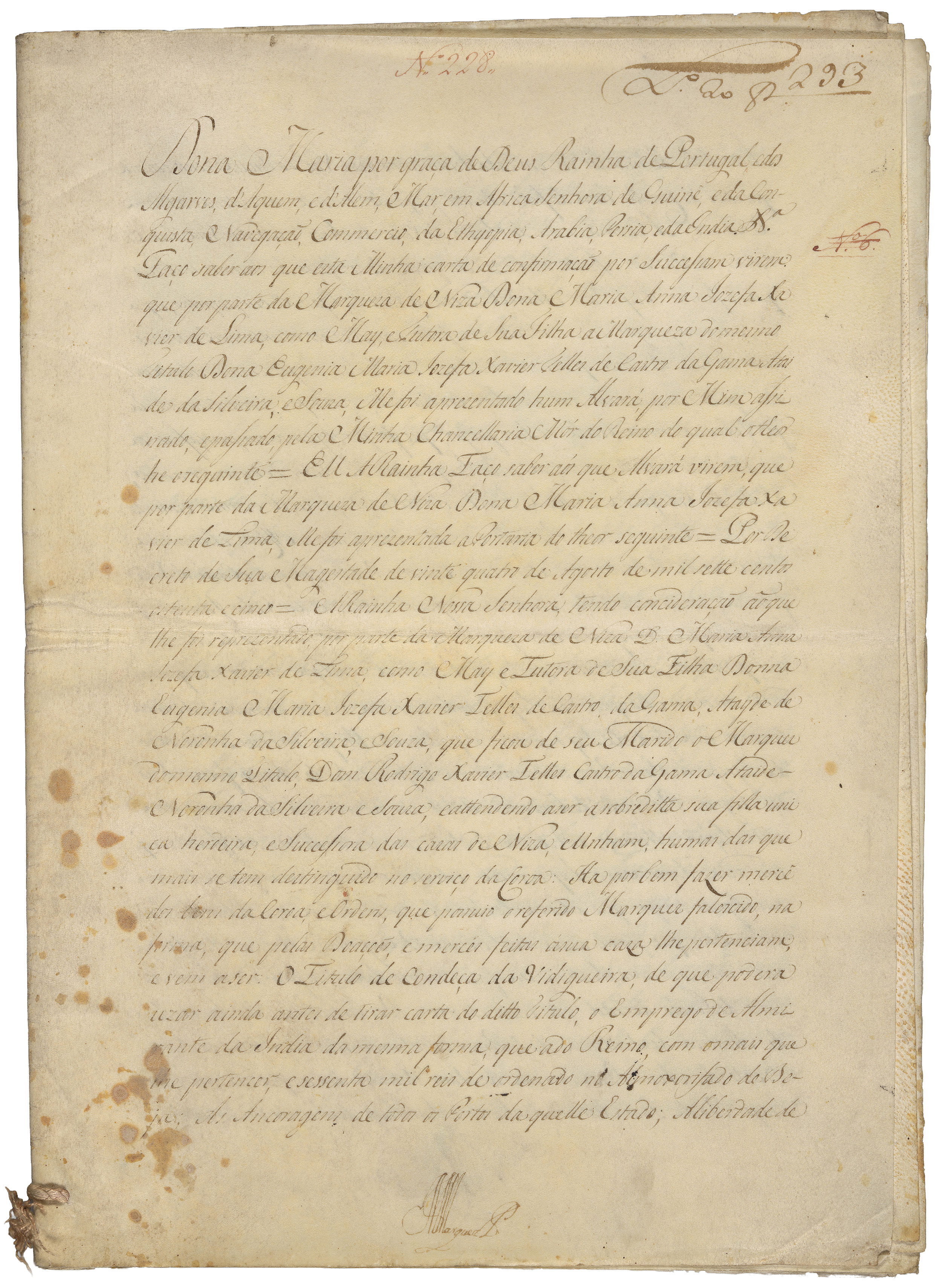
Maria I, Queen of Portugal (1734–1816) 
Document, Lisbon, October 9, 1786 
Gift of Mr. Nathaniel Spear Jr., 1985; MA 4348 (155)

WOMEN AT WORK 
Signed by Queen Maria I of Portugal in 1786, this document confirms the succession of estates and titles from a mother, Dona Maria Ana de Lima, to her daughter, Dona Eugenia Telles de Castra de Gama. These large sheets of sturdy parchment represent the unique authority of two women: the queen and a young aristocratic woman, both of whom claimed the full power of their inherited titles (Queen Maria served as absolute monarch, and her husband, Pedro III, served as king by marriage). This document shows eighteenth-­century women at work, as administrators, matriarchs, and individuals responsible for managing weighty titles and significant estates.

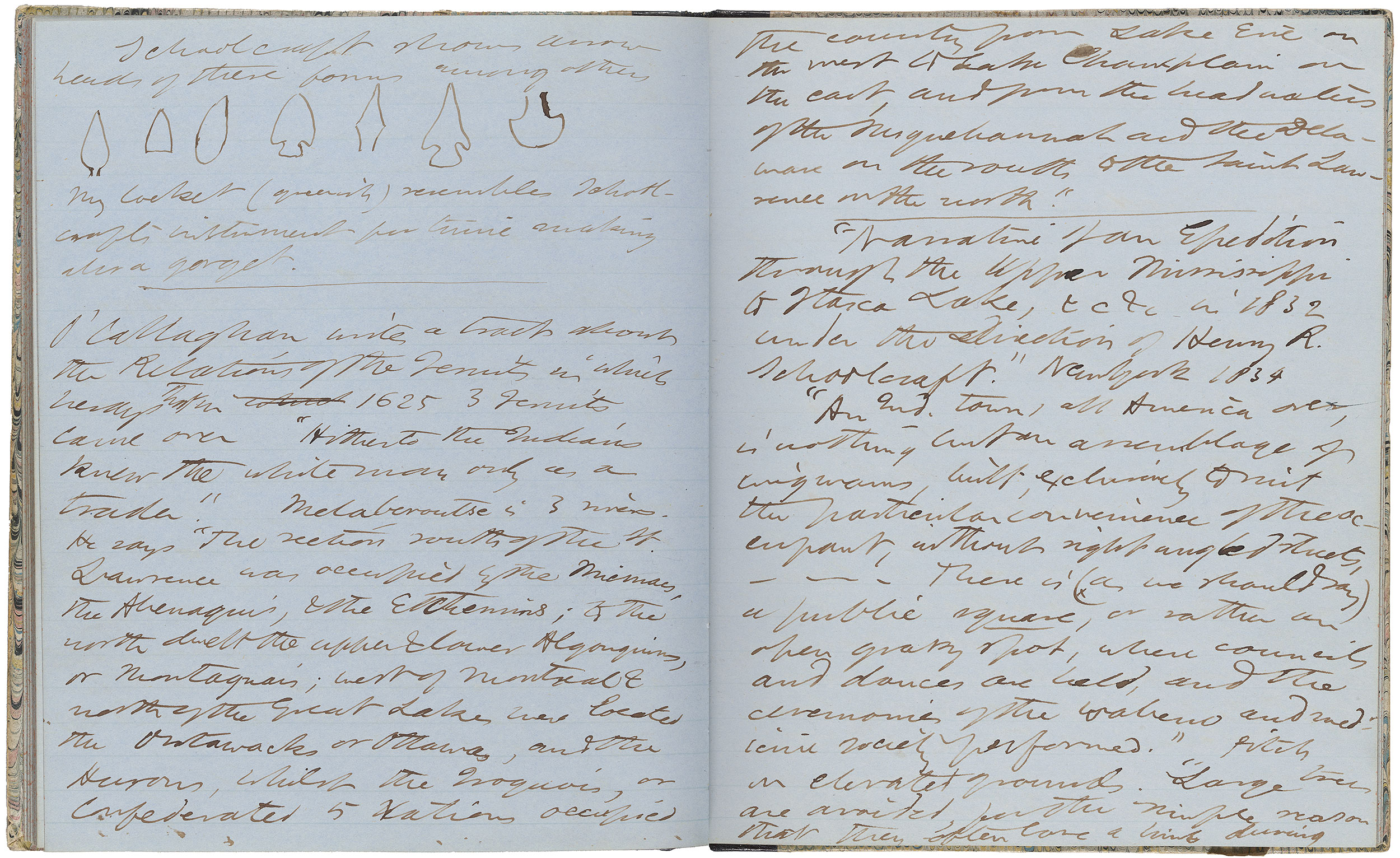
Henry David Thoreau (1817–1862) 
Manuscript notebook, Cambridge and Concord, ca. February–­ October 1852 
Purchased by J. Pierpont Morgan with the Wakeman Collection, 1909; MA 600

DOCUMENTING NATIVE TECHNOLOGIES 
For more than a decade, the writer and naturalist Henry David Thoreau kept a series of notebooks in which he copied passages from his extensive reading on one of his abiding interests, Native Americans. What he intended to do with this material has remained a matter of debate, in part because it is so motley and broad: He took notes on every aspect of Native life and history, and his sources range from Native people’s own accounts to the most racist and ill-­ informed ethnographers, missionaries, and “Indian agents.” One of the consistent threads is an interest in Native technologies, like the arrowheads Thoreau drew on this page, echoing the arrowheads he often found in the woods and fields around Concord.

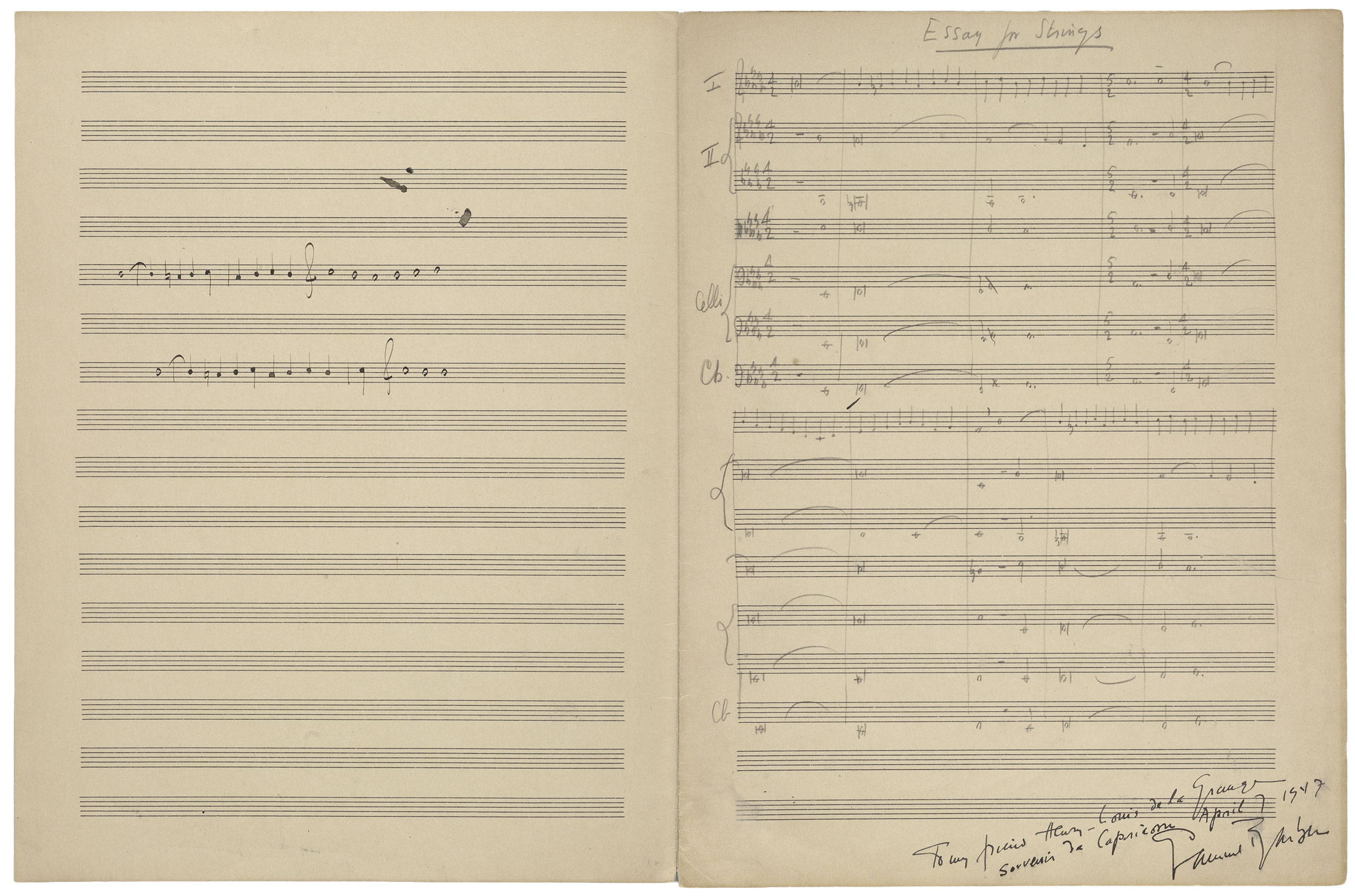
Samuel Barber (1910–1981), Adagio for Strings, autograph manuscript, April 7, 1947, inscribed with dedication to the musicologist Henry-Louis de la Grange. Gift of Robert Owen Lehman, 2009. Copyright © 1939 (Renewed) by G. Schirmer, Inc. Used by permission.

BARBER’S ADAGIO FOR STRINGS
Barber composed Adagio for Strings in 1936, originally as the slow movement of his String Quartet No. 1, Op. 11. His arrangement for string orchestra was premiered two years later by the NBC Symphony Orchestra, with Arturo Toscanini conducting. Barber later created a choral setting of the piece as well, using the Latin text of the Agnus Dei from the Christian Mass. With its emotional power, the Adagio has been a touchstone for public mourning, heard at the funerals of Franklin D. Roosevelt, John F. Kennedy, and Grace Kelly. It also has appeared in numerous films, including The Elephant Man (1980) and Platoon (1986). During the Cold War, it was among the rare American works performed regularly in the Soviet Union.

Virgil Thomson (1896–1989) and Gertrude Stein (1874–1946) 
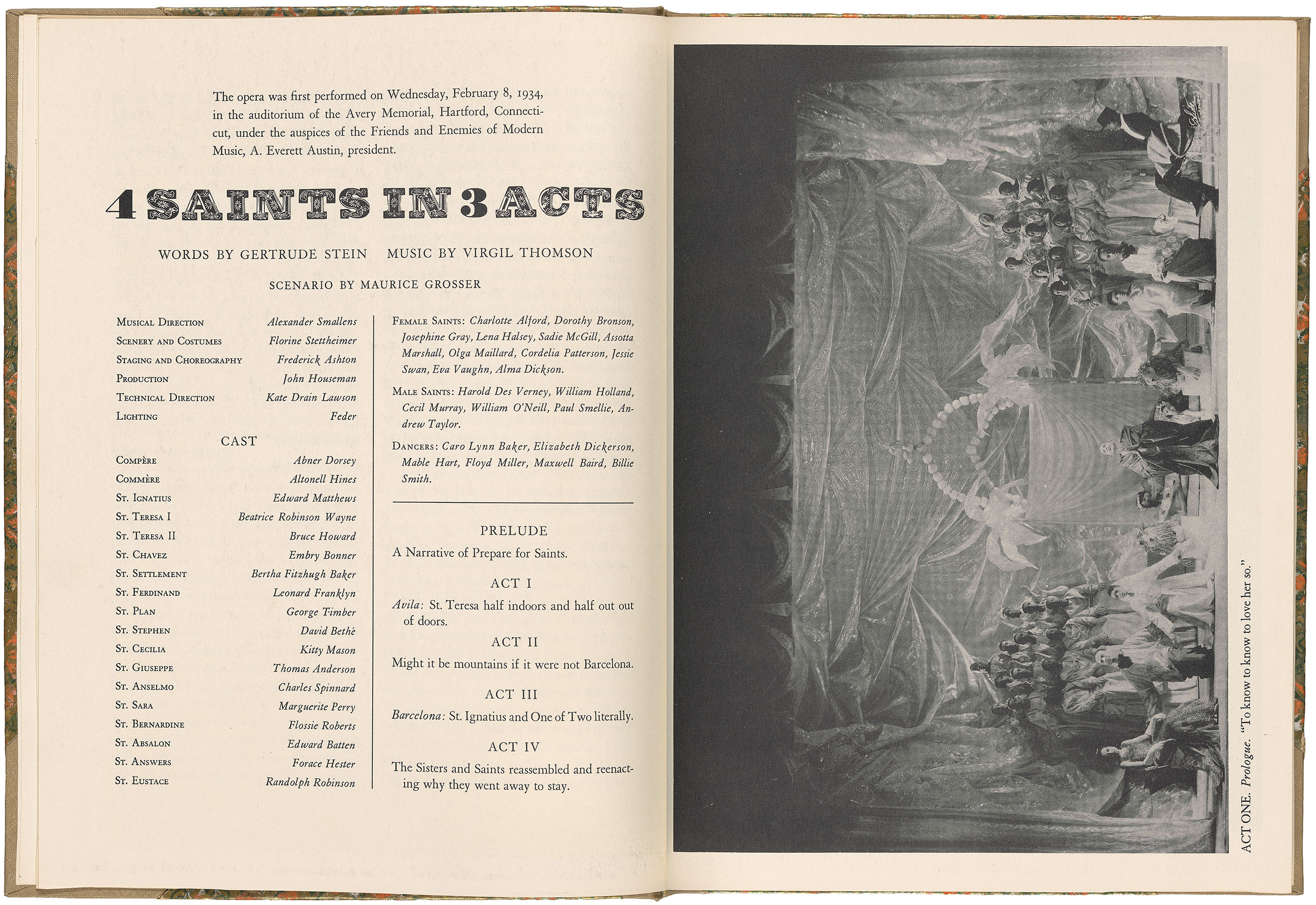
Four Saints in Three Acts: An Opera
Vocal score
New York: Arrow Music, ca. 1948
Purchased as the gift of James Fuld, 1987

GERTRUDE STEIN WRITES AN OPERA
Composer Virgil Thomson met Gertrude Stein in Paris in 1926. He set her texts to music, and they wrote “portraits” of each other, printed in the souvenir program for their first operatic collaboration, Four Saints in Three Acts. Set in Spain simply because Stein loved it there, her surreal, plotless libretto offered no narrative, only puns, free association, and word play; a scenario had to be devised after the fact. She mixed invented saints—far more than four—with historical figures such as St. Ignatius Loyola and St. Teresa of Avila (cast as two singers to duet with 13.75 inches wide herself ). Thomson’s music matched Stein’s absurdist sensibility, both sophisticated and homespun. 

The premiere took place in 1934 at the Wadsworth Atheneum in Hartford, organized by its director, A. Everett “Chick” Austin Jr. for the Friends and Enemies of Modern Music. Thomson hired an all-­ Black cast, led by the prominent Black choral director Eva Jessye and choreographed by a young Frederick Ashton. The production drew widespread coverage, moved to Broadway for sixty performances, and toured nationally.

Billy Strayhorn (1915–1967) 
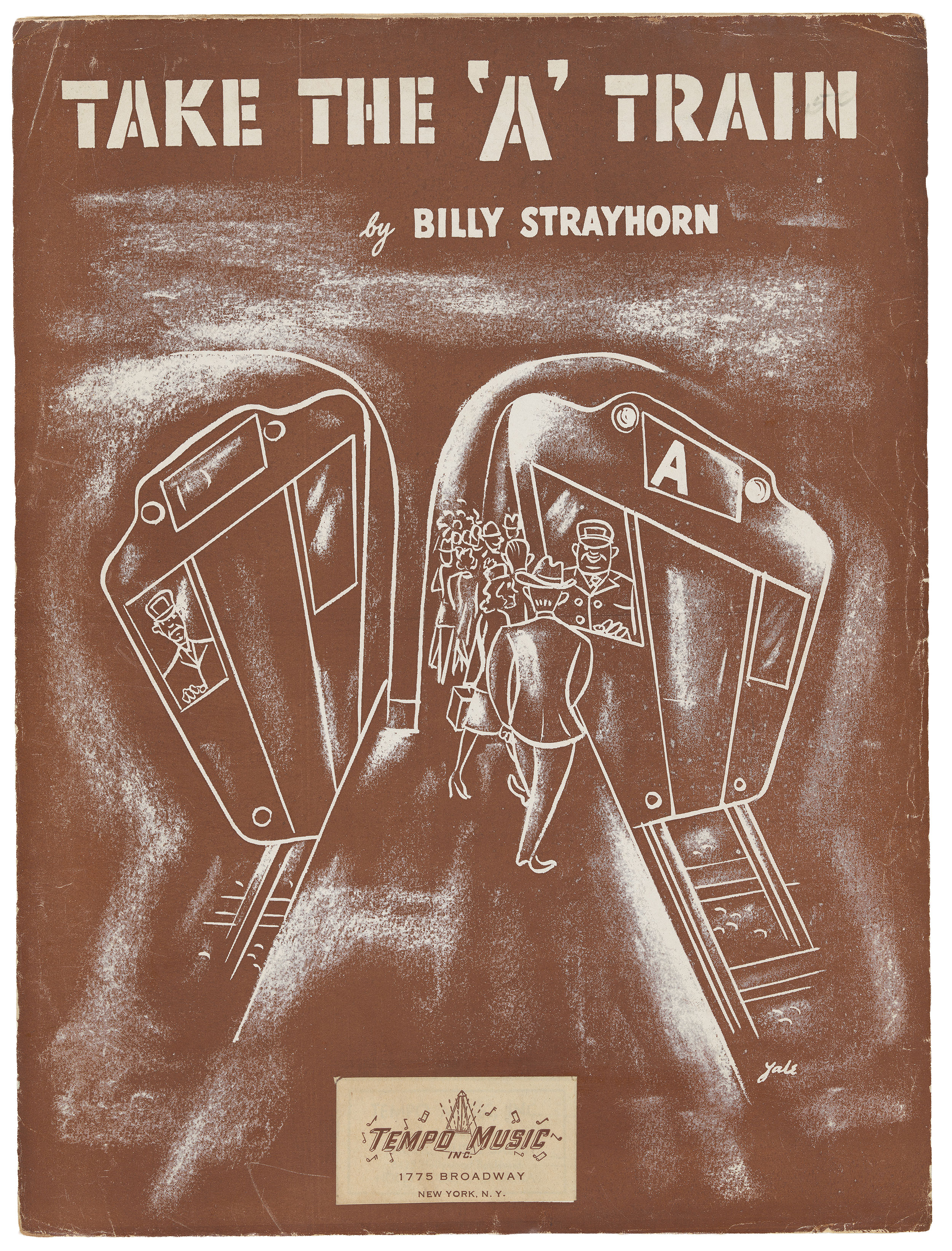
Take the “A” Train 
New York: Tempo Music, ca. 1941 
James Fuld Music Collection, 2008

TAKE THE “A” TRAIN . . . TO DUKE ELLINGTON’S HOUSE 
Strayhorn, a jazz composer and pianist, collaborated with Duke Ellington for nearly thirty years. His best-­ known composition, “Take the ‘A’ Train,” became the Ellington orchestra’s signature tune. The song originated in 1939 from directions Ellington gave Strayhorn to reach his Harlem home: Take the A subway line, which had opened earlier that decade. Strayhorn initially threw the composition in the trash, but it was rescued by Ellington’s son Mercer. “Take the ‘A’ Train” brought crucial financial success to Tempo Music, Ellington’s pioneering publishing venture. By owning his music and royalties, Ellington broke free from industry practices that exploited Black musicians, setting a precedent followed by Miles Davis, John Coltrane, Herbie Hancock, and others.

Ulrich von Richental (ca. 1365–1437[?]) 
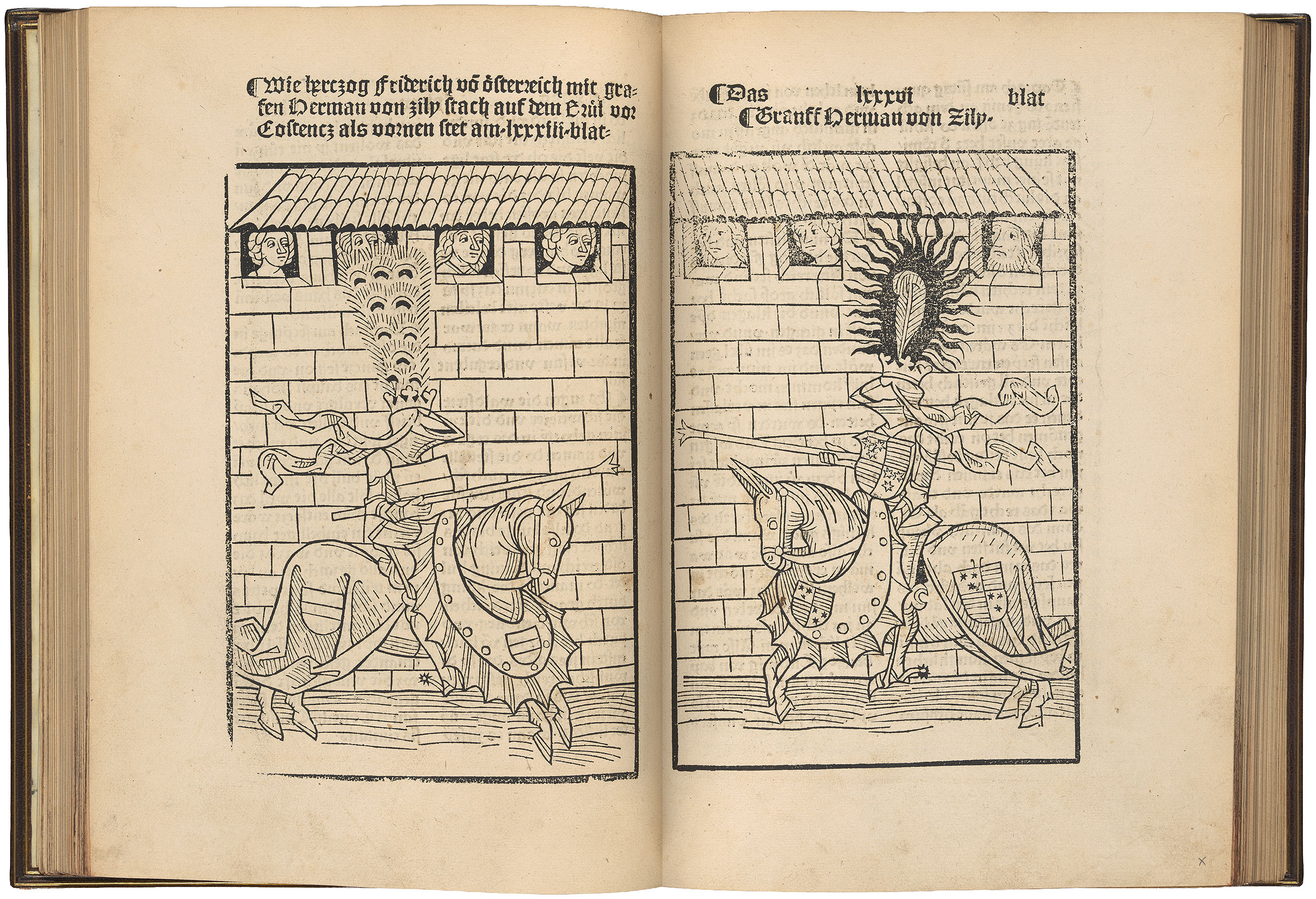
Das Concilium bůch geschehen zů Costencz 
Augsburg: Anton Sorg, September 2, 1483 
Purchased by J. Pierpont Morgan with the Bennett Collection, 1902; PML 151 

NOT ALL FUN AND GAMES 
Richental’s chronicle of the Council of Constance (1414–18) is the first substantial woodcut-­ illustrated heraldic work. Its profuse imagery includes more than one thousand shields bearing the arms of council attendees. The purpose of the council, held in present-­ day Germany, was to resolve the papal schism, end religious dissension, suppress heresies, and reform abuses within the Church. Richental described many light moments—processions, knightings, and the jousting tournament, shown here—but the council was not all fun and games. Books were burned, the Church reformer Jan Hus was executed, and three anti-­ popes were deposed. In 1417, with the election of Pope Martin V, the great schism effectively ended.

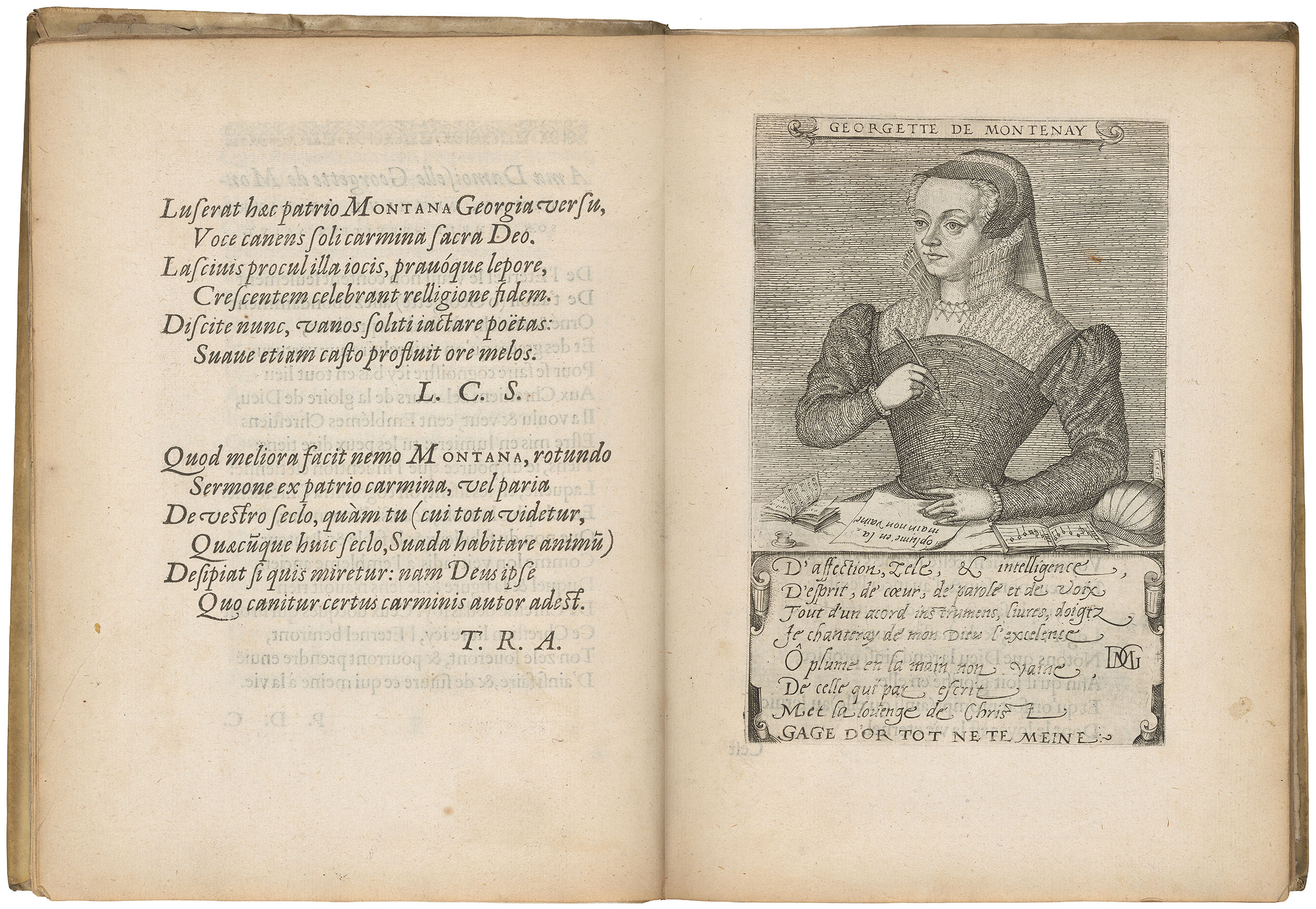
Georgette de Montenay (1540–ca. 1581) 
Emblematum Christianorum centuria cum eorundem Latina interpretatione (One hundred Christian emblems with Latin explanations) 
Engraving by Pierre Woeiriot (1532–1599) 
Heidelberg: Johann Lancellot for Andreas Cambier, 1602 
Bequest of Julia P. Wightman, 1995; PML 151450

AN EMBLEMATIC AUTHOR 
Emblem books combine images with mottos and moralizing verses to convey abstract ideas, such as virtue and vice. This is the first such book written by a European woman—a fact her publishers emphasized by the inclusion of Montenay’s portrait in so many editions of her work in the sixteenth and seventeenth centuries (the date of the first edition, 1567, can be seen on the neck of the lute at Montenay’s left elbow). Montenay, though married to a Catholic, was an ardent Calvinist, and many of the emblems she created had strong Reformed, or Evangelical, meanings. She dedicated this work to Queen Jeanne d’Albret of Navarre (present-­ day northern Spain), a fellow Protestant for whom Montenay may have been a lady-­in-­waiting.

Johann Wolfgang von Goethe (1749–1832) 
Zur Farbenlehre (On the theory of colors) 
Tübingen: In der J. G. Cotta’schen buchhandlung, 1810 
The Dannie and Hettie Heineman Collection, gift of the Heineman Foundation, 1977; Heineman 664 (Atlas)
GOETHE’S COLOR THEORY 
In this, his most extensive scientific work, Goethe asked, “What can be accomplished in the sciences by someone who cannot devote his entire life to them?” Goethe, the German Romantic poet, novelist, and author of Faust, produced fourteen volumes of scientific writings, believing that any observant man, woman, or child could contribute to the advancement of knowledge by engaging with natural phenomena. His color-­ theory illustrations were intended to encourage readers to perform experiments of their own. Scientists were dubious, but Goethe’s ideas on the emotional effects of color and the interaction of light and shadow later resonated with such disparate painters as J. M. W. Turner and Vasily Kandinsky.