
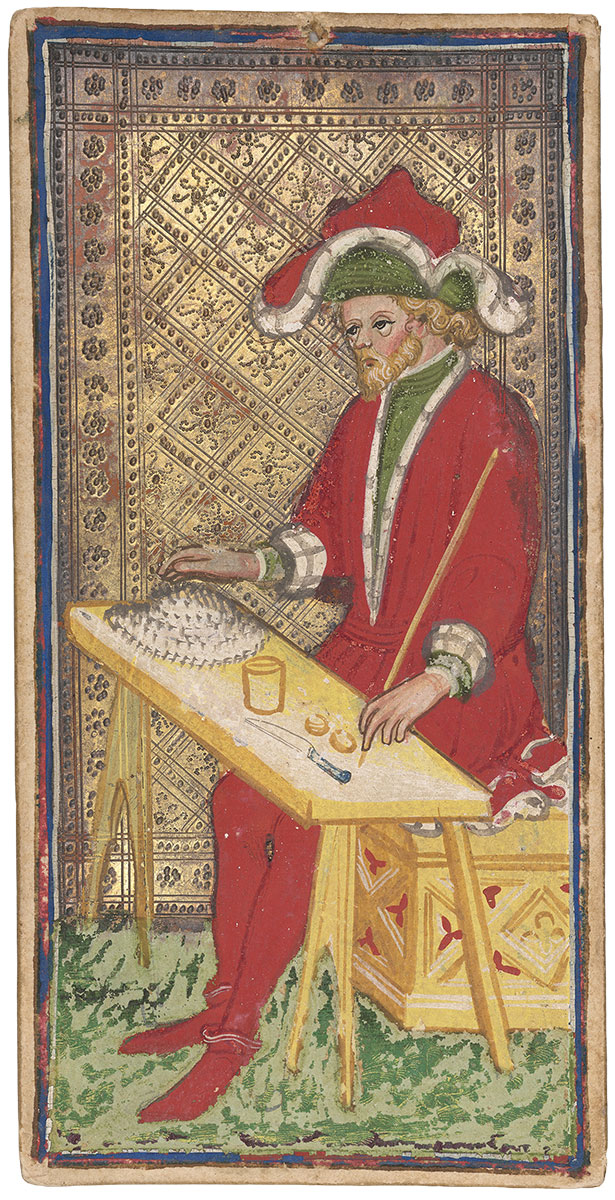
The Juggler or Bagatto card, later referred to as “the Magician.” Laid out on his table are the symbols of the suits in the deck: a cup, coins, a knife (or sword), and, in his hand, a baton. Bonifacio Bembo, The Juggler (Bagotto), Visconti-Sforza Tarot, Italy, Lombardy; New York, The Morgan Library & Museum, MS M.630.1
In 2019, long before plans for Tarot! Renaissance Symbols, Modern Visions fell into place, a group of conservators and conservation scientists convened in the Morgan Library & Museum’s Thaw Conservation Center to discuss the possibility of conducting a material analysis of the Morgan’s Visconti-Sforza tarot cards (c. 1456–58) and Yale’s Visconti di Modrone cards (c. 1447). At the time, I was a fellow here, just out of grad school. I remember, soon after the scientists arrived, the hush that fell over the room as everyone turned their eyes to the colorful and detailed cards neatly laid out across the table— a silence that was suddenly followed by the bubbling up of voices sharing observations and questions. Soon after, analysis began in earnest, and I had the privilege of being able to spend time with the scientists as they worked. Even with familiarity of analytical techniques, the scientists' work sometimes seemed to me almost divinatory. With microscopes and analytical equipment, they coaxed out information from the cards, which, though silent, had lots to tell us.
Although it may seem miraculous, the work of conservation scientists is anything but mystical. They are methodical, cautious, precise, and the insights they achieve are the result of hours of close examination, data collection, and processing. But with each data point and material identification, they build a fuller story of an object’s history. As Federica Pozzi, one of the scientists who worked on the project, explained, “Scientific analysis allows us to see what lies on and beneath an object’s surface—details that are invisible to the naked eye and often not documented in historical records. We can identify the exact materials used, including pigments and binders, sometimes even tracing their botanical or mineral origin. In some cases, we can reconstruct how materials were produced, distinguishing between natural and synthetic sources. We can also differentiate between original paint layers and later retouching, detect past treatments, and uncover subtle traces of tools, brushwork, or preparatory drawings that shed light on the artist’s working process. But beyond the technical insight, what is most powerful is that scientific analysis helps us tell the story of an object’s many lives: how it was created, used, altered, and how it survived to reach us today. In this sense, objects are no longer static, but become living material histories—shaped, transformed, and continuously rewritten over time.”
I wanted visitors of the exhibition to learn a little more about their process and contribution, so I sat down with each of the scientists to talk about the tarot project.
Meet the Scientists
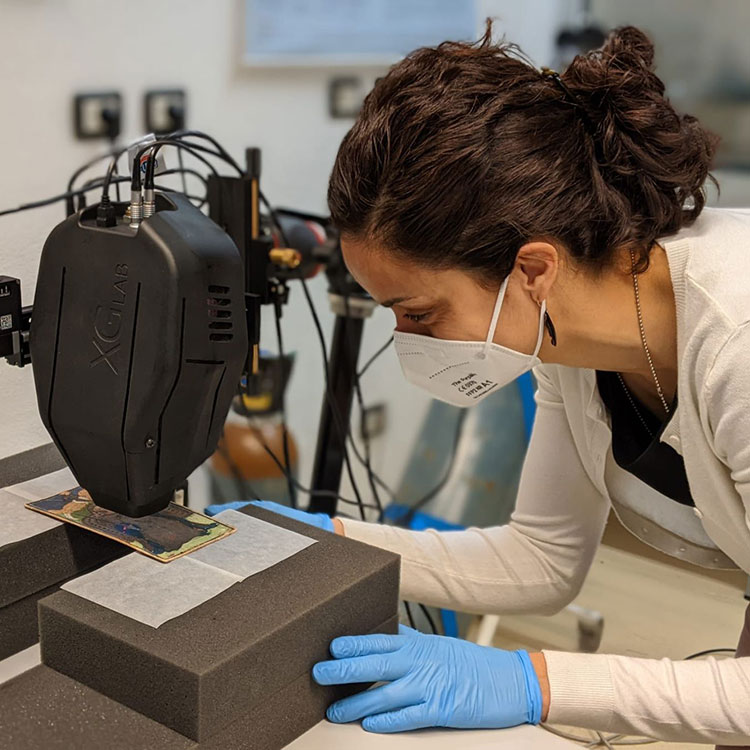
Federica Pozzi
Director of the Scientific Laboratories, Centro per la Conservazione ed il Restauro dei Beni Culturali “La Venaria Reale”
Specializations: Characterization of organic and inorganic materials using spectroscopic and chromatographic techniques, with particular expertise in Raman and surface-enhanced Raman spectroscopy (SERS) for the ultra-sensitive detection and identification of dyes and pigments.
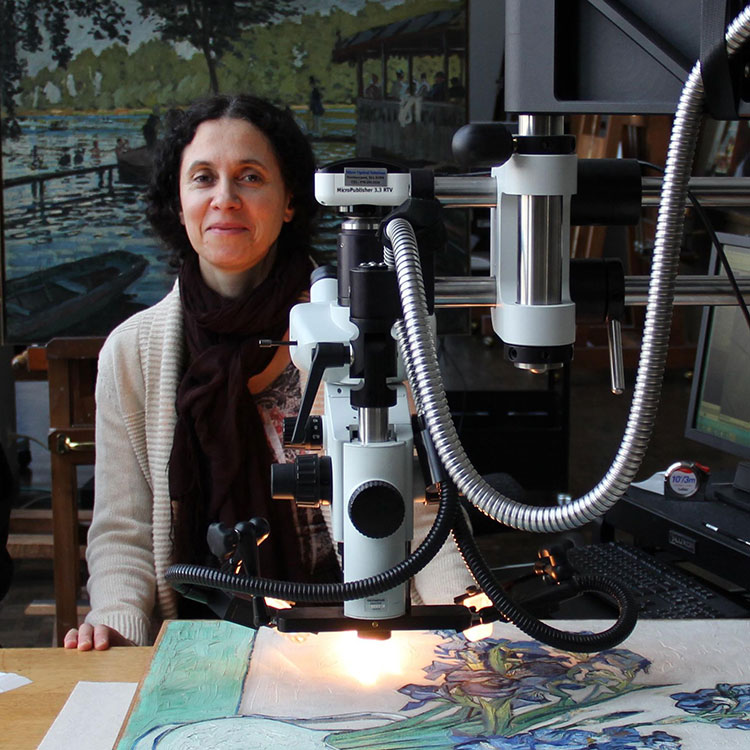
Silvia Centeno
Research Scientist, Department of Scientific Research, The Metropolitan Museum of Art
Specializations: Paintings, works of art on paper, and photographs. Inorganic materials, pigment-binder interactions, organic pigments. Raman spectroscopy, FTIR, XRF.
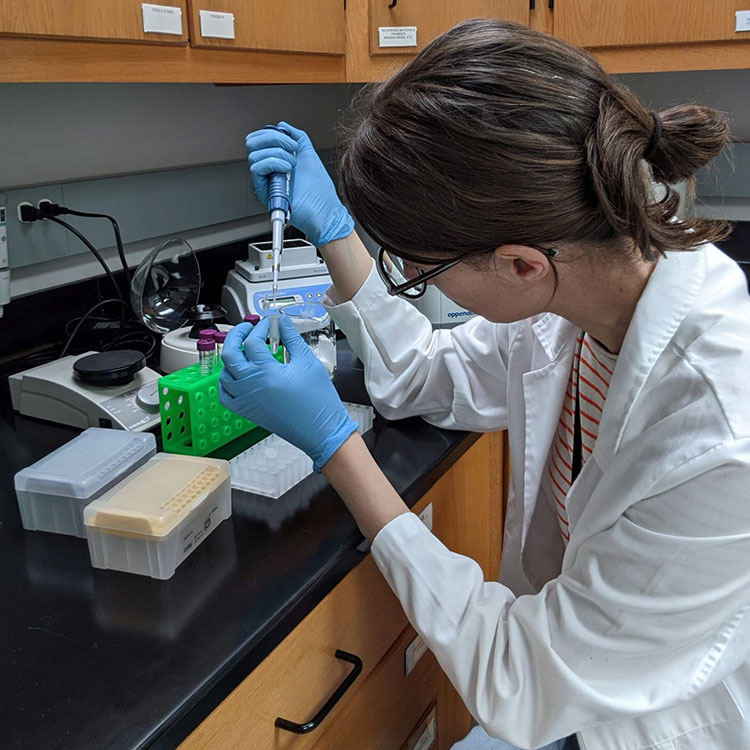
Clara Granzotto
Conservation Scientist, The Art Institute of Chicago
Specializations: Organic materials, specifically binding media, that is, anything that is used to bind pigment particles to paint.
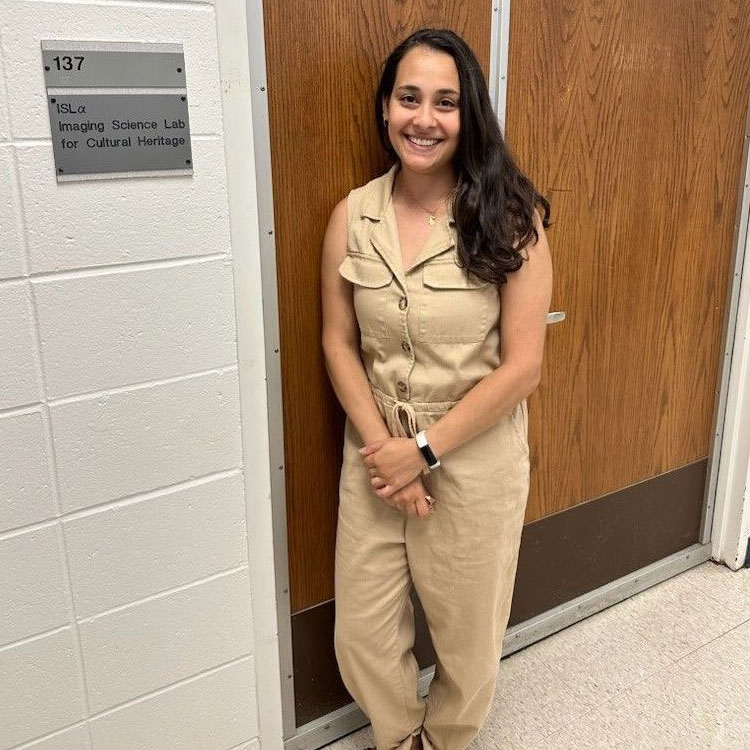
Roxanne Radpour
Assistant Professor at the University of Delaware, Art Conservation Department, with joint appointment in Electrical and Computer Engineering
Specializations: Imaging and spectroscopic techniques to study the surface and structure of decorated cultural heritage.
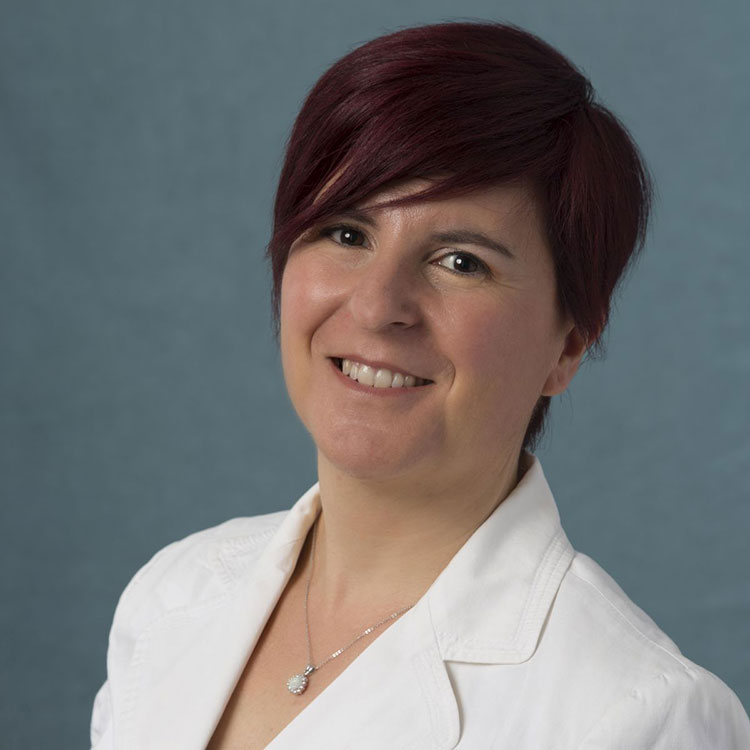
Elena Basso
Research Scientist, Department of Scientific Research, The Metropolitan Museum of Art
Specializations: Characterization of inorganic materials (i.e., stone sculpture, ceramics, glass, metal alloys, mineral pigments), using microscopic and spectroscopic techniques, including scanning electron microscopy, X-ray fluorescence spectroscopy, X-ray diffractometry, and Raman spectroscopy.

Richard Hark
Senior Conservation Scientist, Heritage Science Research Laboratory, Institute for the Preservation of Cultural Heritage at Yale University
Specializations: Raman and scanning XRF spectroscopy, organic analysis using mass spectrometry.
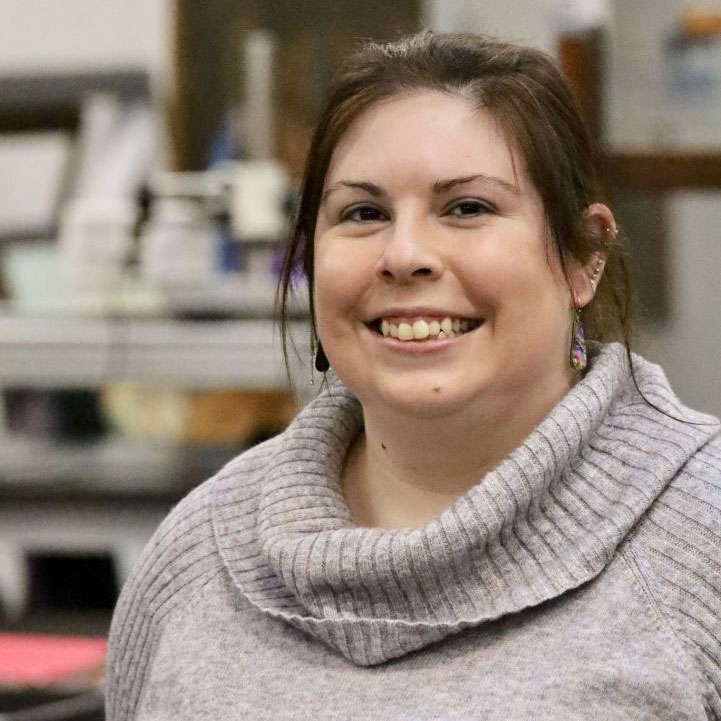
Marcie Wiggins
Sharr Family Associate Research Scientist, The Museum of Fine Arts in Boston
Specializations: Inorganic materials, XRF and Raman spectroscopy.
Glossary of terms
Inorganic materials are derived from rocks and minerals and include stone, metal alloys, ceramics, concrete, glass, and many pigments. Organic materials are derived from plant- and animal-based sources and include wood, paper, textiles, plastics, waxes, resins, oils, gums, dyes, and some pigments. X-ray fluorescence (XRF) spectroscopy is an elemental analysis technique primarily used for characterizing inorganic materials. Scanning X-ray fluorescence spectroscopy (MA-XRF) is a method used for visualizing and characterizing the distribution and relative amounts of inorganic materials across the scanned area. Reflectance imaging spectroscopy (RIS) is an imaging technique that collects hundreds of images in narrow, adjacent spectral bands, which are combined into a three-dimensional data cube consisting of two spatial dimensions and one spectral dimension. Each pixel in the data cube is a diffuse reflectance signature that can be analyzed to map both inorganic and organic colorants and other materials across an object’s surface.
Before scientists can piece together the larger story of an object’s history, they begin by zooming in and looking at the object under the microscope. Many of the scientists mentioned that their eyes are first drawn to the colors that are present. “If there is a bunch of green, are there multiple greens?” Marcie Wiggins said, describing the questions she asks herself when examining an object for the first time. “Is it a green that's a mixture of yellow and blue?” Under magnification, scientists can distinguish different pigment particles, suggesting a mixture of colors, or discern that one color has been layered over another. Clara Granzotto told me that she looks for areas of damage, which can expose underdrawing or hidden layers. Though damage is “sad for the artwork and for the conservator, it is a paradise for the scientist.” Damage also provides scientists the opportunity to remove microscopic samples. This in turn allows for a wider range of analytical techniques to be used, providing additional information that can complement or clarify the data gathered through non-invasive techniques. Scientists, of course, still take time to appreciate the object as a work of art, too. “Working in a museum, I have the privilege of looking at art closely outside of the galleries, and I take advantage of that,” said Elena Basso. “So I enjoy the view, the beauty, the craftsmanship, the emotions that artwork is giving to me.”
What first stood out when you looked at the tarot cards?
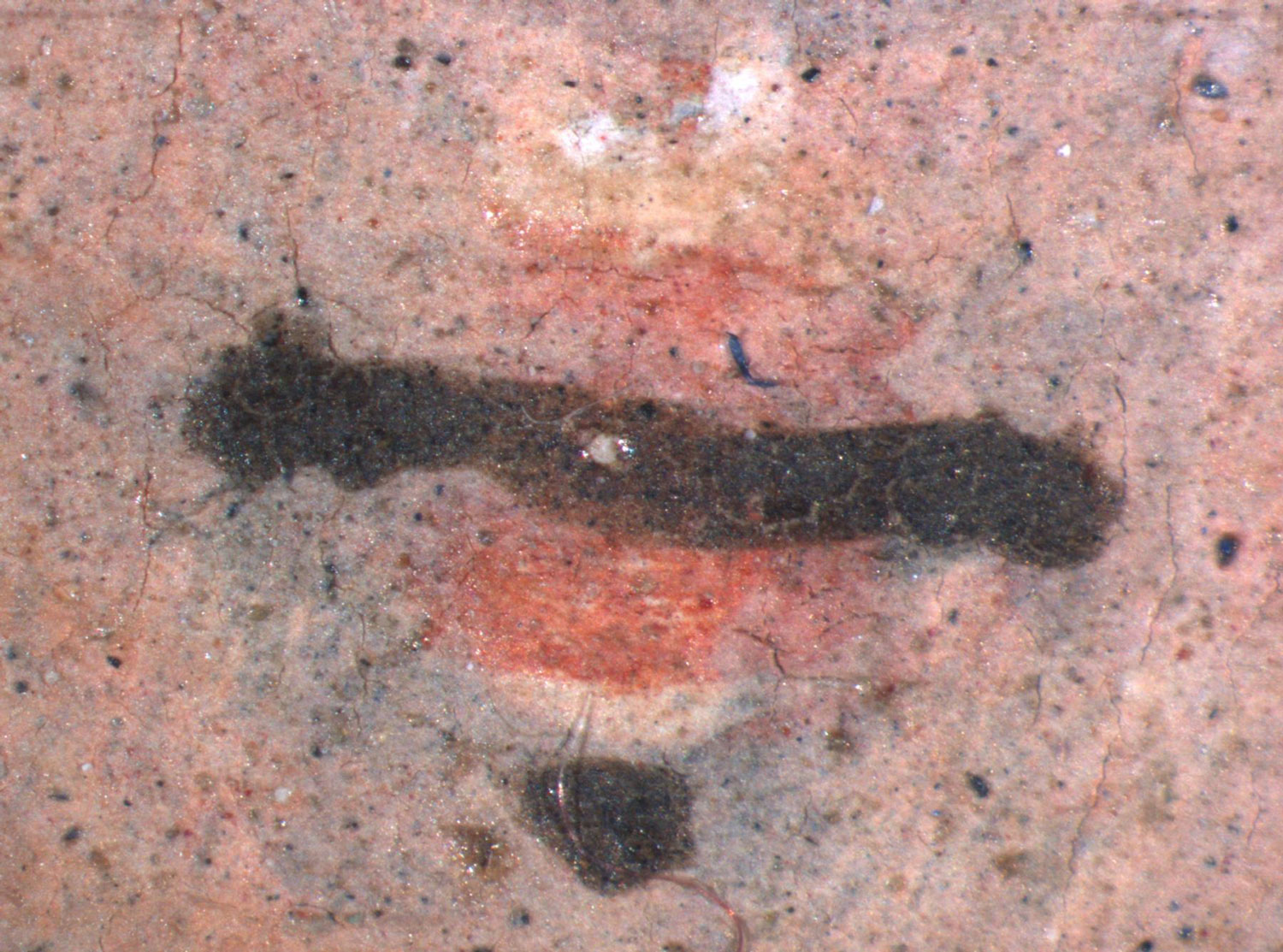
Photomicrograph showing the complex pigment mixture in the face of the Visconti-Sforza Knight of Swords
Federica: What struck me most was how deceptive the colors were. Areas that appeared to be painted with a single, flat tone revealed something far more complex under magnification and upon analytical investigations.
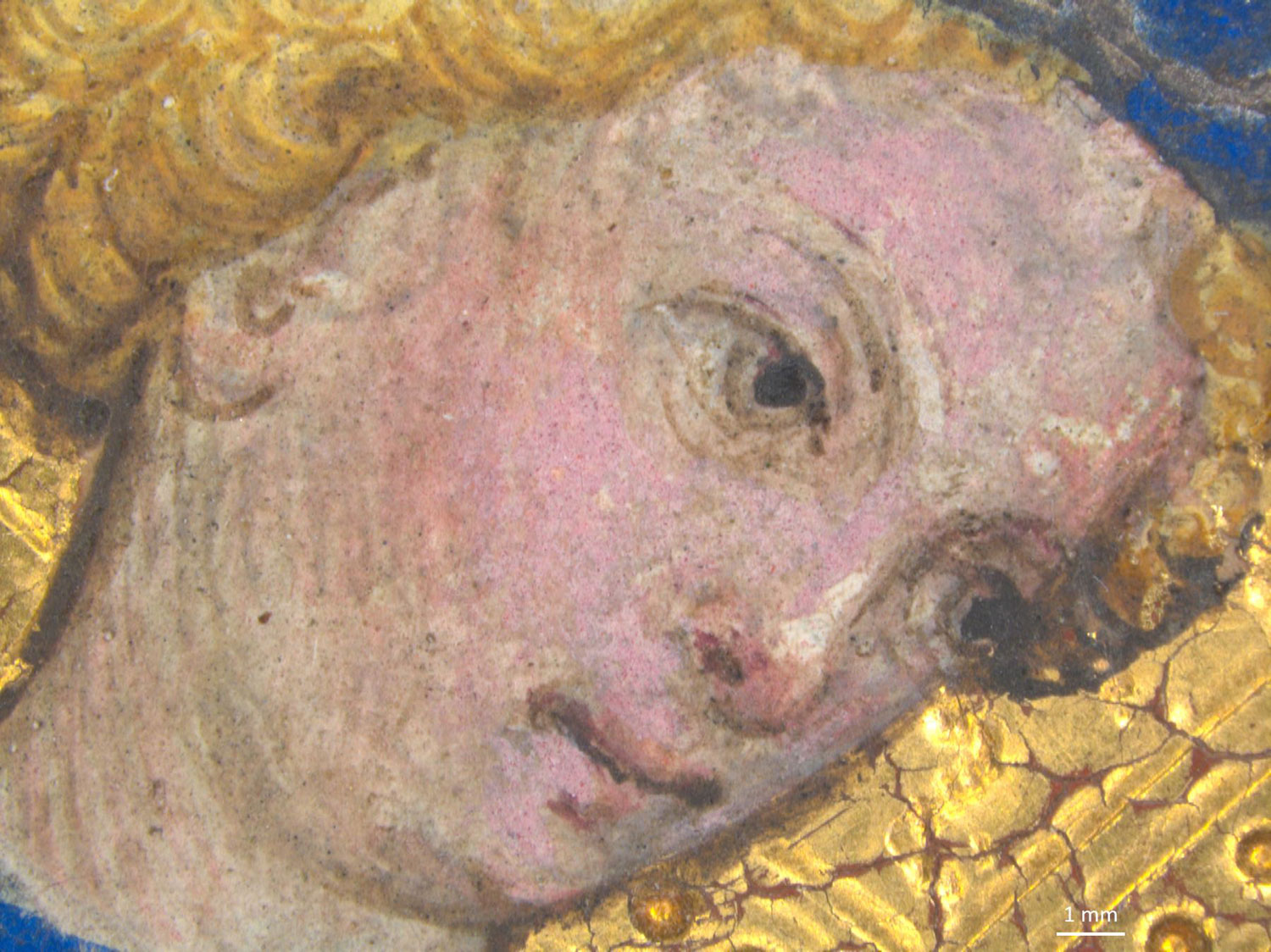
Photomicrograph of the face of the Modrone Male Page of Cups
Richard: I was captivated by their incredible beauty and intricacy, and by how impressive it was to see so many of these small objects together. One area I have a particular interest in, and have done a lot of work with, is portrait miniatures on ivory, and so I'm familiar with looking closely at relatively small, highly detailed objects. And that's exactly what these are.
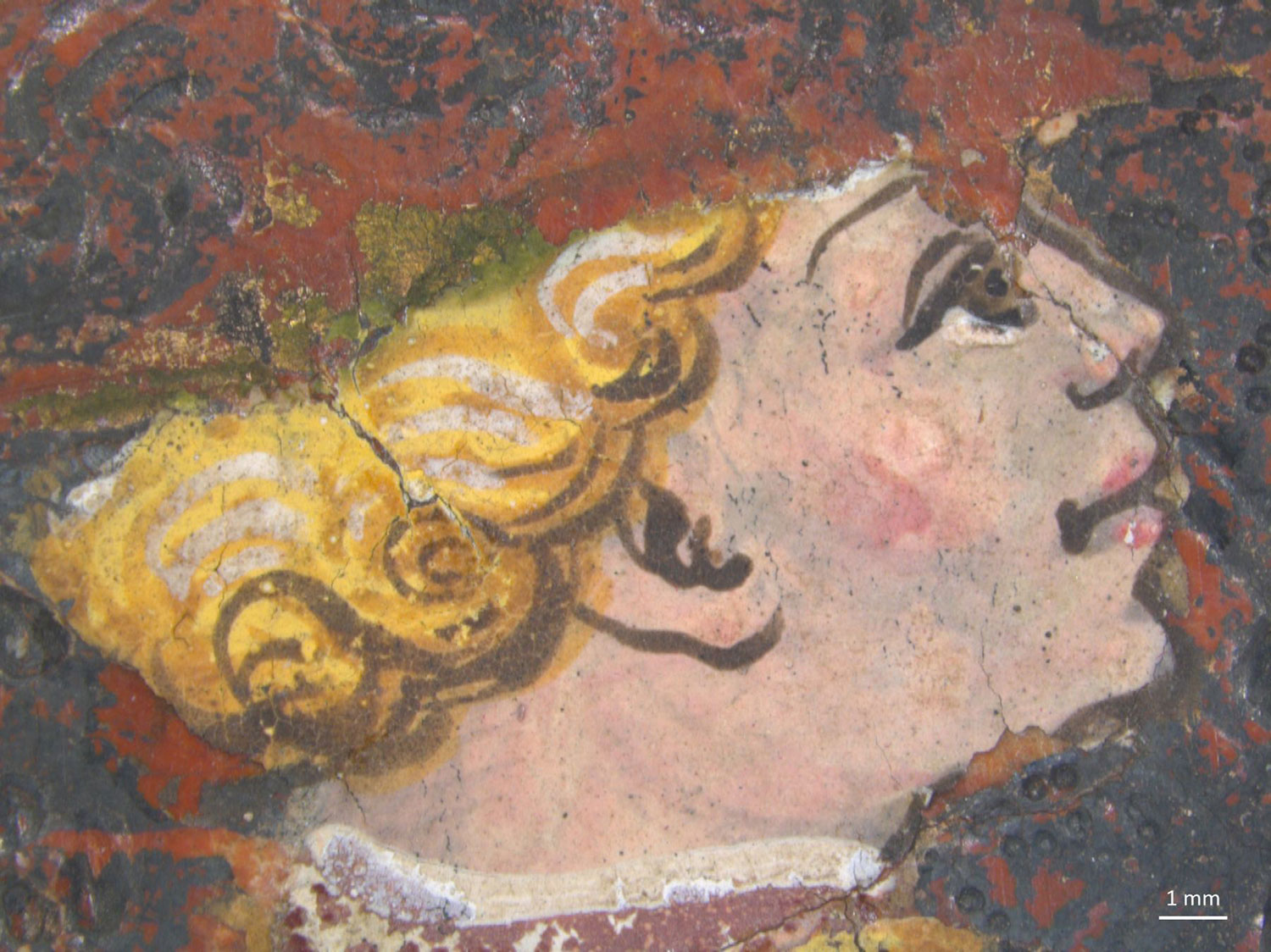
Photomicrograph showing the different paint layers in the face of a figure in the Visconti-Sforza Love card
Roxanne: When I first looked at the tarot cards, I was looking at them under a microscope, and I couldn't believe just how detailed the faces were. Just incredible detail in the way they were executed, in terms of all the different subtle colors they were using to create the flesh tones.
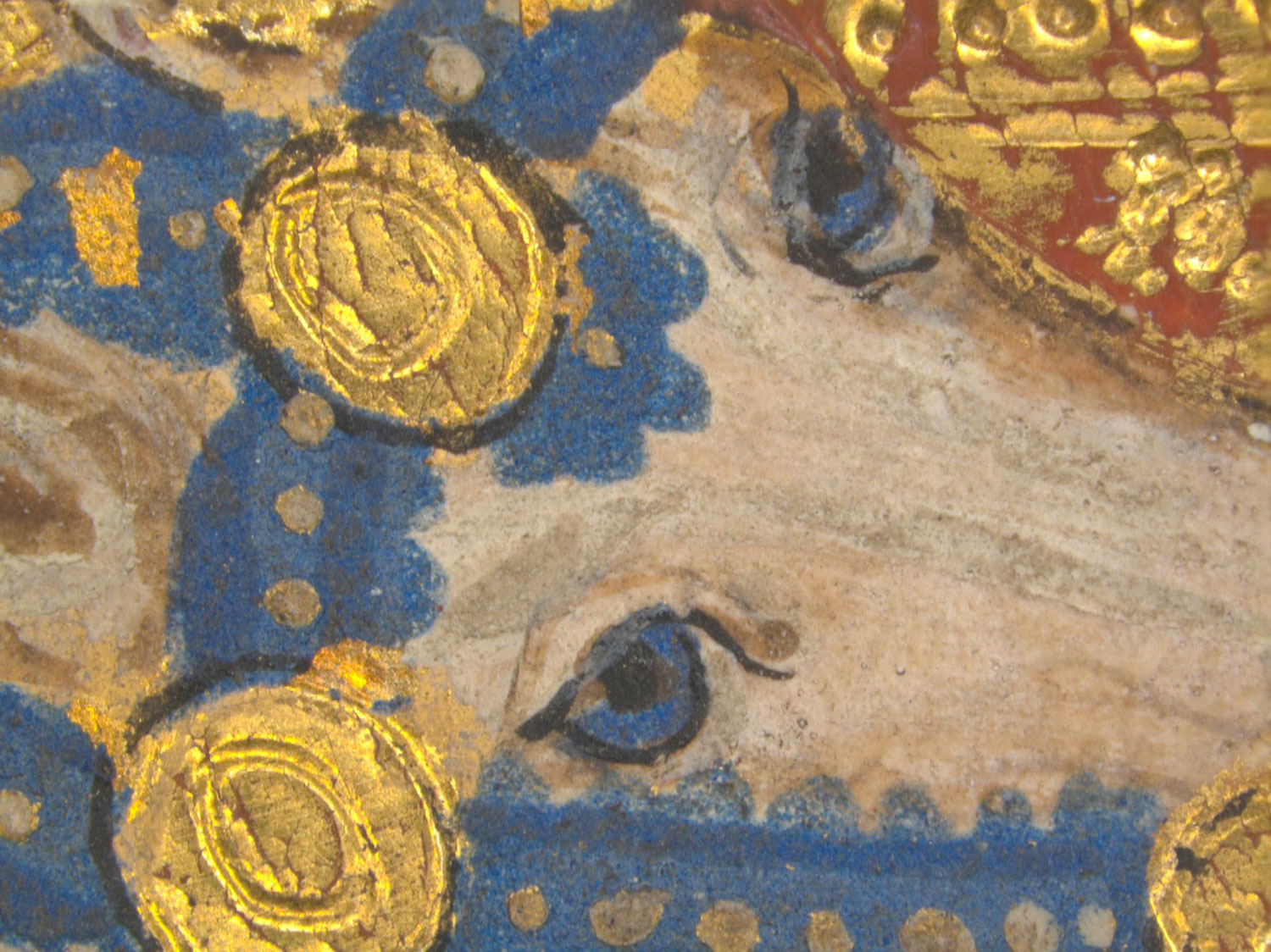
Photomicrograph detail of the blue harness on the horse of the Modrone Female Knight of Swords
Marcie: I see the tarot card, I see the image, I see Strength holding the lion's mouth open, I see the Female Knight of Swords with her sword and the horse. But I also can't help looking at that blue harness and thinking of those beautiful blue particles, or the pomegranates on the dress of the Female Knight of Swords, and how there's really a red glaze that's kind of hard to see unless you kind of have those close-ups. So to me, it was the microscopic detail of those materials. There's just so much detail.
Working collaboratively across institutions, Team Tarot scientists employed a variety of analytical techniques to study the cards. They often describe the work as “iterative,” meaning that after one technique is used and data is processed, they return to visual examination or turn to additional techniques to clarify or confirm a finding. Richard Hark explained that, when beginning a project, “You don't know what you don't know. When you begin analysis, you might find something that is, perhaps, unexpected. And then you have to follow up on that in order to be certain that you know what you have. Confirmation usually [requires] using multiple techniques, and the whole idea of doing something in an iterative fashion is the nature of science in general. You do an experiment, you get a result, and that usually leads to more questions.”
In the case of the tarot cards, close looking was followed by non-invasive techniques that provide maps that visualize the distribution of different materials across the surface of an object, like scanning XRF and reflectance imaging spectroscopy (RIS). RIS, an imaging technique, captures data in just a few minutes, as the instrument is a camera with a spectrometer inside. A technique like scanning XRF—in which an XRF spectrometer on an automated arm slowly moves just beyond the surface of the artwork, collecting elemental information at each microscopic point—requires hours and hours of data collection and processing. A scan of a single card could take as long as 16 hours, with the instrument running overnight. These techniques capture huge amounts of data, and making sense of it is no small task. “Collection of the data is actually the relatively easy part,” explained Richard. “Making that into useful information is more challenging and takes much more time because the information that we get is complex.”
Once processed and interpreted, the visual elemental or pigment maps can guide scientists in determining points for further analysis, using techniques like Raman spectroscopy to characterize specific pigment particles, SERS to characterize organic pigments, or Fourier transform infrared spectroscopy (FTIR) and liquid chromatography tandem mass spectrometry to characterize organic binders.
Participating in this project, which has spanned nearly seven years, I have been struck by how collaborative scientific analysis is. Scientists are in regular conversation with curators and conservators to discuss and confirm findings, and they collaborate with one another, working within and across labs to share their different areas of expertise. The human work involved in the analysis of objects is enormous. Conservation scientists do not point an instrument at an object and get an instant answer; rather, as Federica explained, “We compare our data with reference databases, historical sources, and conservation insights, and we always cross-check results across multiple techniques before drawing conclusions. It is a process of collective interpretation—moving from raw data to shared understanding.”
Which finding about the tarot cards was most exciting?
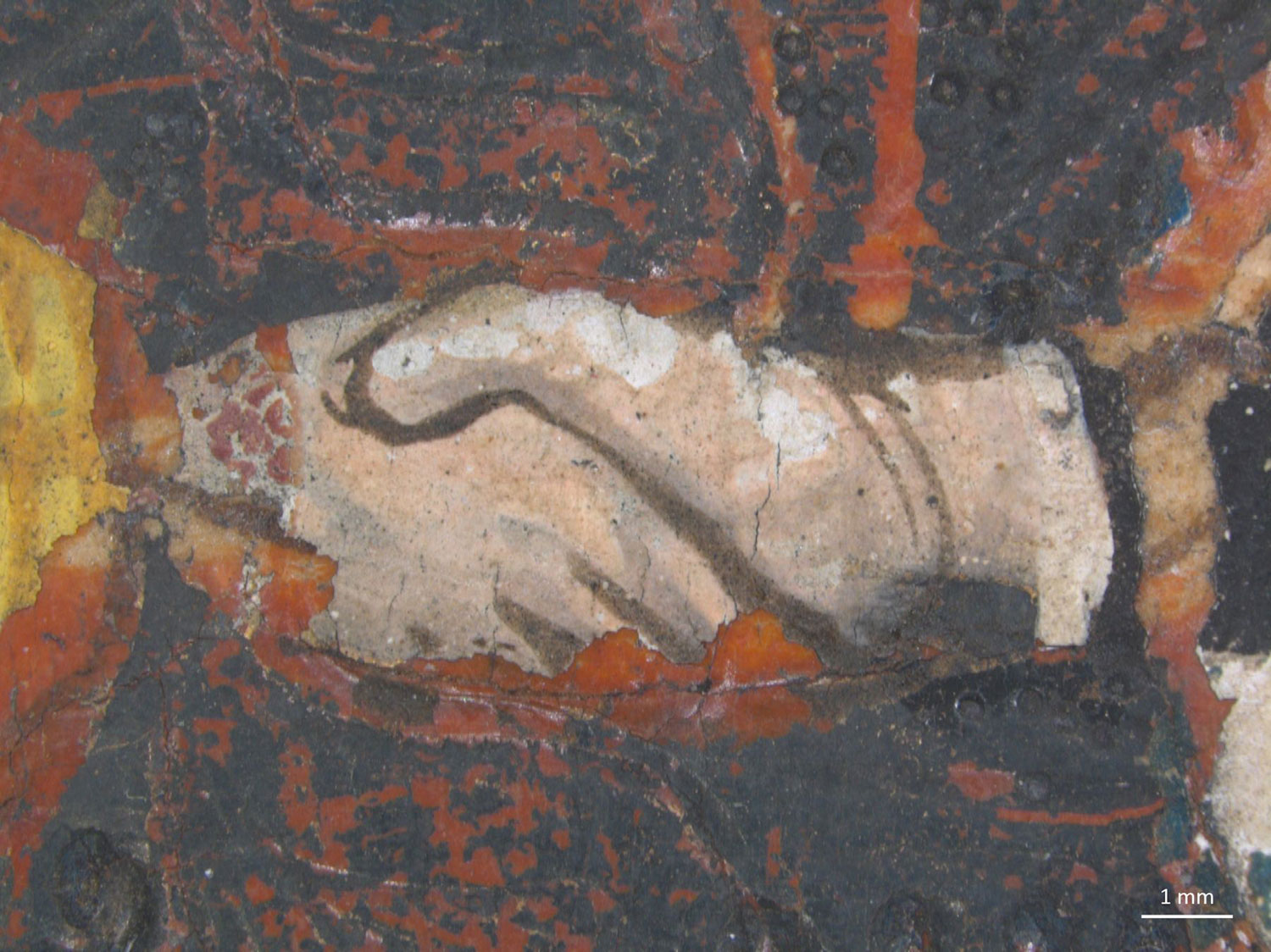
Photomicrograph of the Visconti-Sforza Love card with painted detail of hands and tooled metal leaf over red bole.
Elena: We were looking at something created in a highly organized workshop that had access to highly valuable materials in terms of pigments, organic dyes, and lake pigments as well, but also to metal foils, to gesso materials, to the bole for the metal foils.
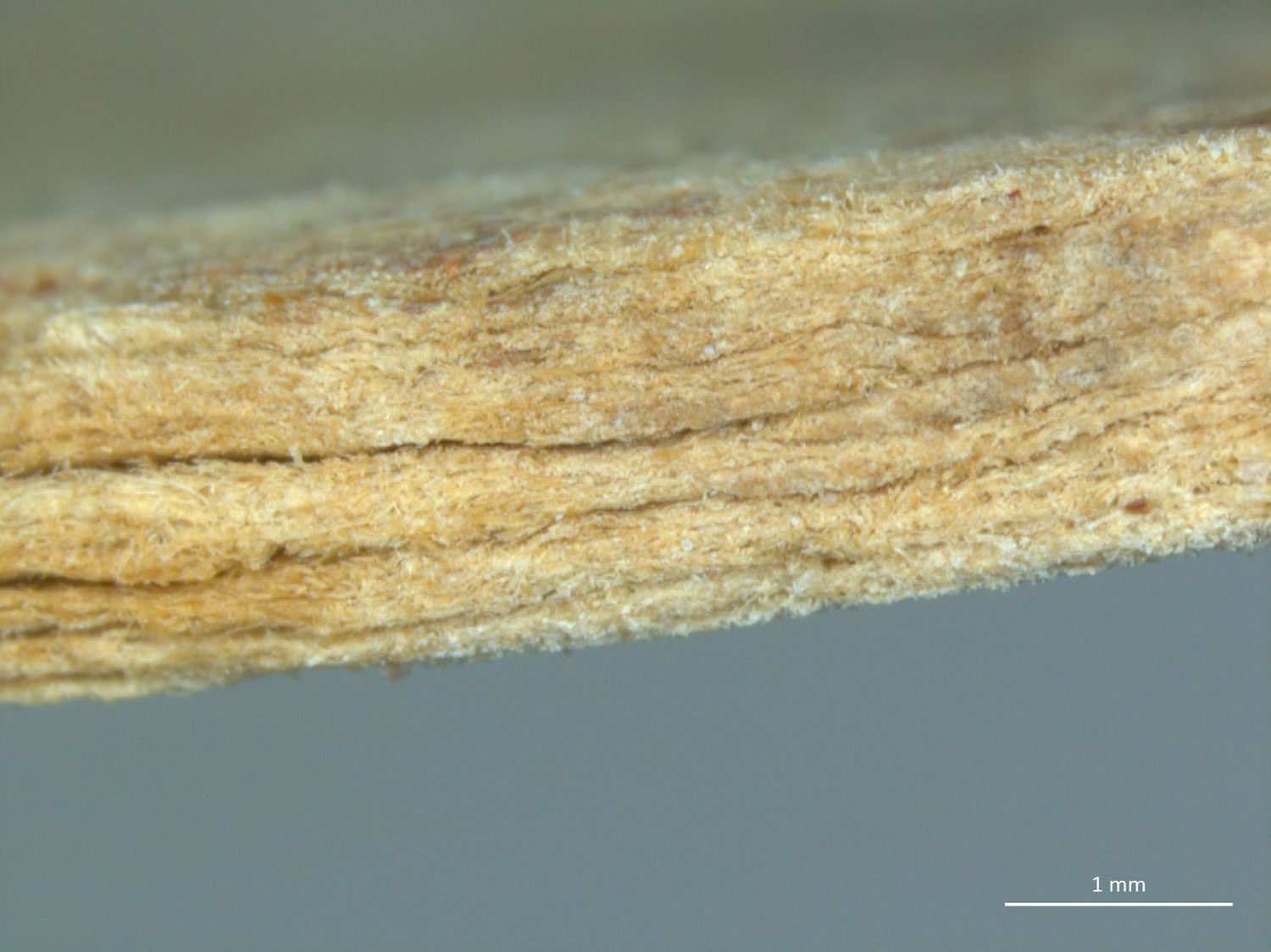
Photomicrograph of the edge of the Modrone Ace of Coins card showing the laminated structure of the pasteboard support.
Clara: We saw the use of animal glue prepared from different animals [to adhere the layers of the laminated paper support]. That's extremely fascinating, because you can start imagining, like, okay, they went to the butcher, and that's the leftovers they had. They had cow one day, and they had sheep and goat another day. And they took the leftovers, boiled them, and made collagen and animal glue. You can really say a lot from this kind of analysis, and put everything together from art history and conservation and build a full story.
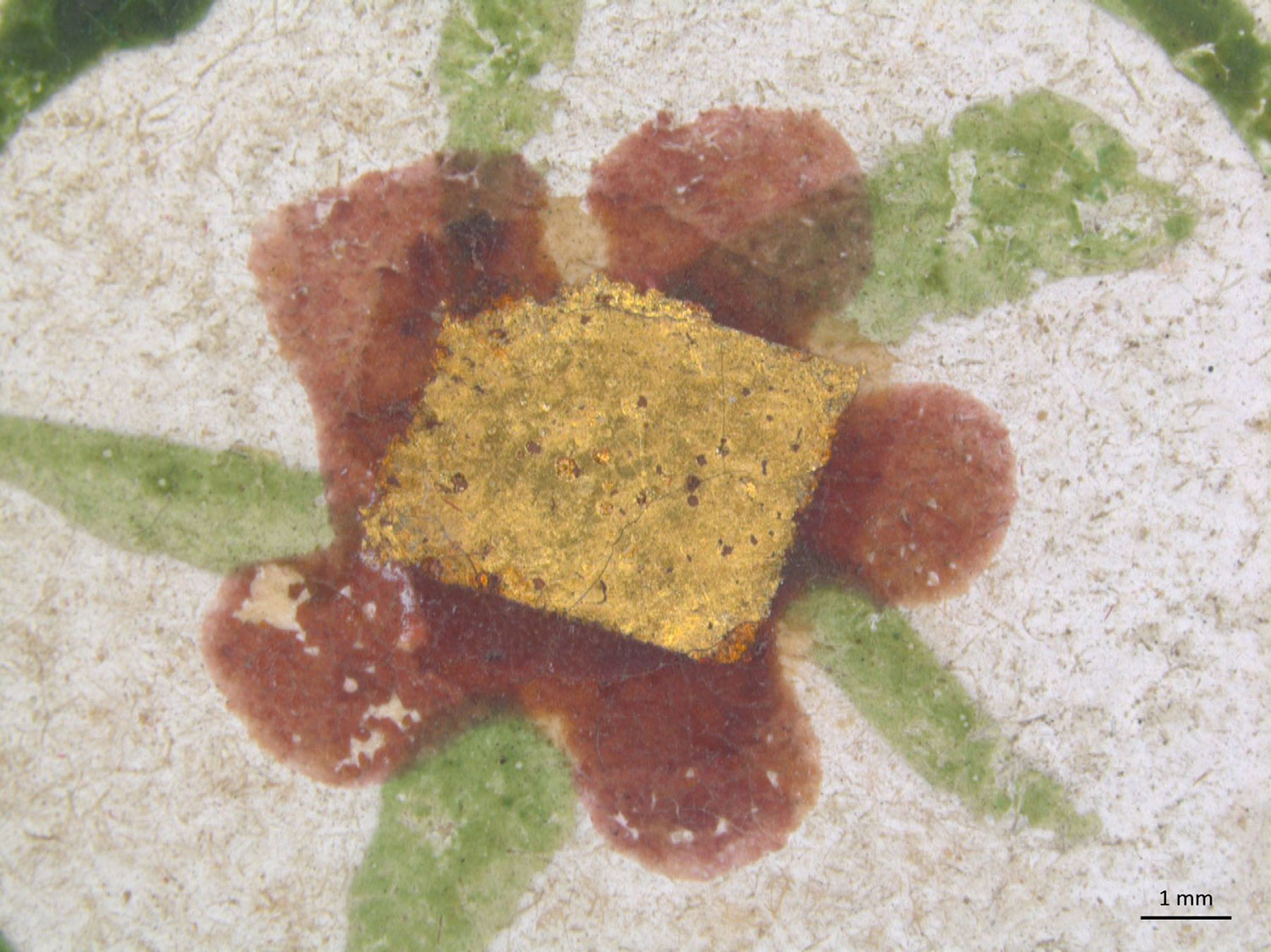
Photomicrograph of a flower painted with an organic red glaze on the Visconti-Sforza Ace of Staves card.
Silvia: I'm always surprised by how much ingenuity went into trying to extract those natural colorants from plants or insects, and what you can do with those colorants. With inorganic pigments, more or less, the hue is fixed. But with natural organic pigments, how you extract them, which material you precipitate them on can produce different hues. So, you can get a range of colors and paints that you cannot get using inorganic pigments alone.
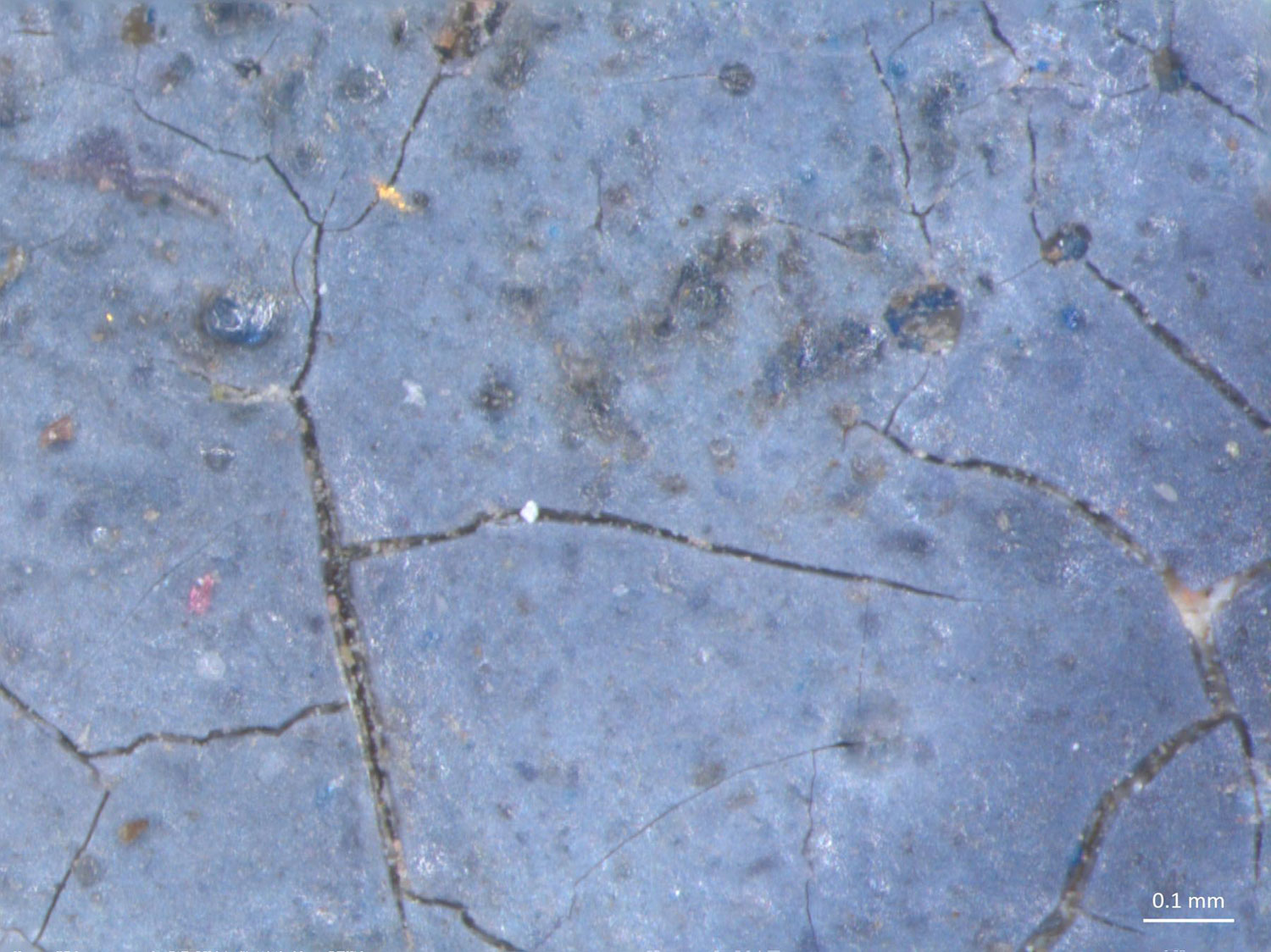
Photomicrograph showing a paint layer of folium, a natural plant dye extracted from the Chrozophora tinctoria plant, in the Visconti-Sforza Page of Cups card.
Roxanne: When we took a hyperspectral reflectance data set of one of the tarocchi cards, it was of purple pigment, and I naturally had thought that it was a mixture of, let's say, azurite and red lake, or ultramarine with a red lake. But the spectral features just didn't quite fit. I just kept checking and checking until I said “Okay, maybe there's something else, maybe there's a different purple that exists out there.” [In the scientific literature] I saw some spectra of purples used in manuscripts, and they seemed to match more closely the spectra I was seeing. I told my colleagues at the Met that I thought I was seeing a certain type of purple, but I needed their help to confirm it. They took very small samples and were actually able to finalize the identification of folium in the tarot cards, which was a really exciting discovery.
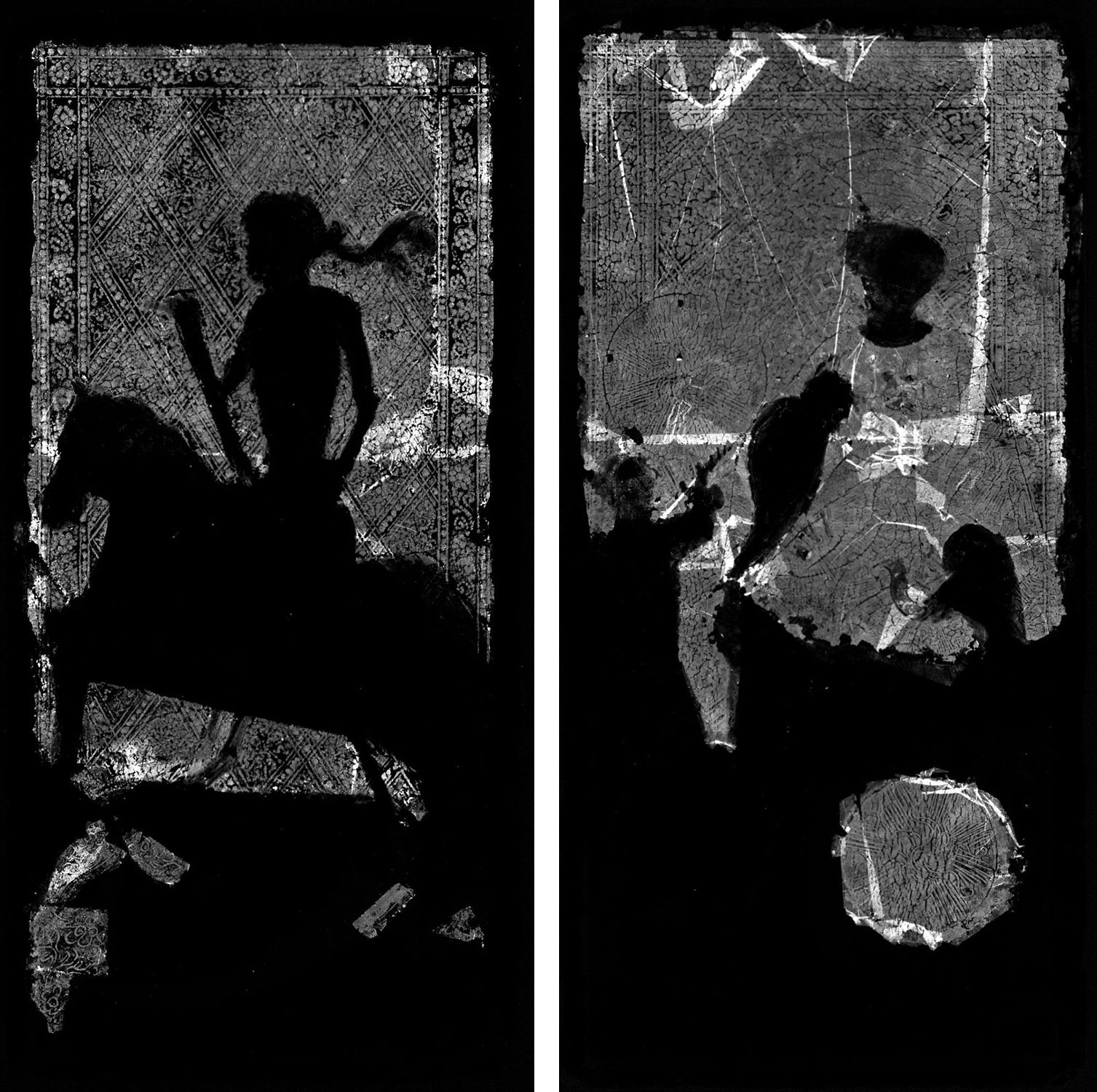
XRF maps of gold (Au) that show differences in the application of metal leaf, which is applied in large, neat pieces in the Modrone Death card (left) and smaller, creased and overlapping pieces in the Modrone King of Coins card (right).
Marcie: I always find the gold [elemental maps] really interesting, at least in the Yale deck. There are just some cards where they are very neatly applied sheets of gold. And then there are others that are not neatly applied sheets of gold. And I don't think you would realize by just visually looking at them how different that application could be between them.
Even after years of research and the application of numerous analytical techniques, the tarot cards hold onto some of their mysteries. There is a particular green pigment that the scientists have not been able to characterize, for instance, and we still can’t say for certain whether these decks were actually handled and used for gameplay. But, as Federica reminded me, “Uncertainty is an inherent part of working with cultural heritage. We deal with complex materials, ongoing degradation processes, and objects that often cannot be sampled extensively, so results are rarely absolute.” Richard added though that “Science in general is always tentative in the sense that you get a result, you say ‘this is what we think,’ and then you count on other people to do additional experiments. So, I'm very comfortable with [uncertainty], though I don't always like it.” Federica suggested that uncertainty might not be seen as a limitation, but instead as “a driving force—it pushes us to be rigorous, transparent, and collaborative in how we interpret data. It also reminds us that every artwork is a complex system, and our role is to reconstruct its story as carefully and responsibly as possible.”
Scientific study of the tarot cards continues with the hope that some of our lingering questions may be answered. The cards have proved to be so interesting, so unusual and complex, and, because there are so many surviving cards in each deck, rich with information. Roxanne ended our conversation with a discussion on this push and pull between how much information has been revealed and how much there’s left to discover. “I've just been so surprised at what these cards keep showing us,” she said. “Even today, I've been thinking about some of the pigments in the cards that I haven't figured out, or why they were painted the way they were, when I've never seen a certain element used in that spot before. And so we're not done. This project isn't done. The analysis isn't done. We've only made a small dent in how the tarot cards were painted. And I think that's the exciting part of conservation science and studying art in general; there's never a final answer, and you'll always discover something new.”
Lydia Aikenhead
Assistant Book Conservator
The Morgan Library & Museum