
This post was created by Clara de la Pena, Sherman Fairchild Post Graduate Fellow in Paper Conservation, in consultation with Reba Fishman Snyder, Paper Conservator.
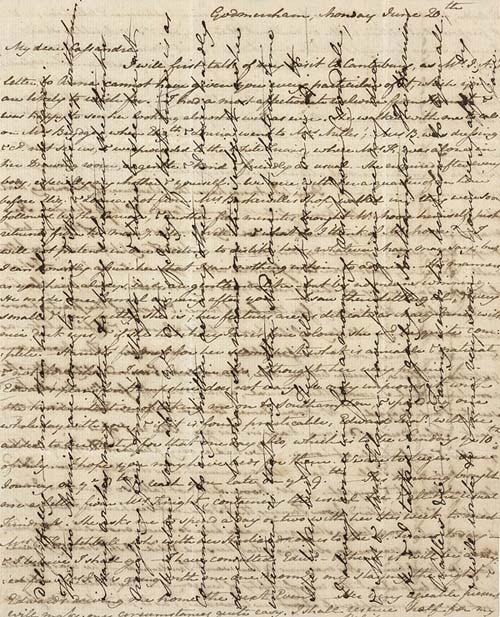
While it is conjectured that Jane Austen wrote over 3,000 letters, only 160 have survived. Of these, the Morgan owns fifty-one—more than any other institution in the world. After examining this extensive resource, the conservators of the Morgan's Thaw Conservation Center were able to make several general observations regarding the materials used to produce handwritten manuscripts and letters in early nineteenth-century England.
Pens and Ink
Austen's letters and manuscripts were all written in her own hand, using a quill pen periodically recharged with ink from an inkwell. The quill pen, most often made from goose feathers, was in common use during Austen's life (1775–1817); the steel-nibbed pen was not mass produced until the 1830's. Contrary to later nineteenth-century depictions of quill pens as full-length, elegantly curved feathers, the barbs—the soft "feathery" part—were usually removed either partially or entirely as they served no function and interfered with the action of writing. The character of lines written with a quill pen differs from those produced using a metal-nibbed pen. Because the quill is more flexible and responsive to slight changes of pressure and is also less abrasive when dragged across the paper surface, lines written with a quill appear less confined, frequently tapering off into elegant and graceful filigree as the fine nib separates and is starved of ink.
As for ink, Austen used the most commonly available ink of the nineteenth century—iron gall ink. It is composed of tannin (gallic acid), iron sulfate (known as vitriol in the nineteenth century), gum arabic, and water. Because it is indelible, it was used for official documents from the Middle Ages onward. The ink is easy to make, inexpensive, and can be transported as a powder and mixed whenever needed. When first applied to paper, the ink appears pale gray; as it is exposed to air, the ink darkens to a rich blue-black tone. Eventually, most iron gall ink changes to a brown color, as is evident in Austen's letters and manuscripts. Depending upon their original formulation, these inks can become increasingly acidic and eventually damage the paper. Many of Austen's letters in the exhibition remain in excellent condition and do not suffer from iron gall ink damage. However, some are composed of acidic ink and others show signs of frequent handling (tears, creases, and breaks along the original folds). All of the Austen manuscripts and letters were carefully examined and, if necessary, stabilized in preparation for A Woman's Wit: Jane Austen's Life and Legacy.
Papers
Paper played a critical role in Austen's daily life, especially as a vehicle for written communication, as is obvious from her frequent references to letter writing and the eagerly awaited arrival of the postman. In her writings, one finds descriptions of paper that would be immediately recognized by her contemporaries as bearing significant meaning. For example, the small dimensions and smooth texture of stationary described in Pride and Prejudice immediately indicates that its sender was a woman: "The envelope contained a sheet of elegant, little, hot-pressed paper, well-covered with a lady's fair, flowing hand . . . " Likewise, the appearance of a letter in Sense and Sensibility hints at its writer: "... its size, the elegance of the paper, the handwriting immediately gave her a suspicion." Austen's contemporary readers would immediately visualize the notebook that Harriet, in Emma, constructed by hand for her collection of riddles: "a thin quarto of hot-pressed paper." Sometimes, these descriptive terms in common parlance in the nineteenth century have lost their meaning for today's readers. For example, in Sense and Sensibility, when Mr. Willoughby purportedly kissed and then folded up a lock of Marianne's hair in a piece of "white paper," Austen's contemporaries would not only have noted the paper's color, but also its high degree of refinement, which would have been in keeping with its precious contents.
Several of the letters on display in A Woman's Wit are "crossed" or "cross hatched," a common convention of the time if a writer ran out of writing space. Rather than use another piece of costly paper, Austen would turn the page sideways and continue writing at right angles. The resulting densely spaced writing is described in Emma as "checker-work". For example, Emma's aunt apologizes for Jane Fairfax's letter, which is "so short . . . only two pages you see, hardly two, and in general she fills the whole paper and crosses half." Fine paper was a highly prized commodity in Austen's day. It was used not only for writing, but also manufactured specifically for artists and the burgeoning popularity of watercolors, as well as for young ladies' handiwork, described in Mansfield Park as "making artificial flowers or wasting gold paper."
Austen's letters were composed on both laid and wove papers and are all cream colored, thin, strong, and most likely composed of recycled cotton and linen rags. Because they are almost exclusively writing papers, when manufactured they are tub sized after drying with gelatin and hot pressed to produce a smooth, non-absorbent surface, ideal for receiving ink.
Austen's letters display an array of watermarks, indicating that she purchased papers produced by various English paper mills and distributed through local stationers. This is logical considering that Austen traveled only in England and corresponded with her family frequently from every locale she visited. At that time, England was an important source for high-quality paper, with many paper mills located in Kent.
Watermarks in Jane Austen's Papers
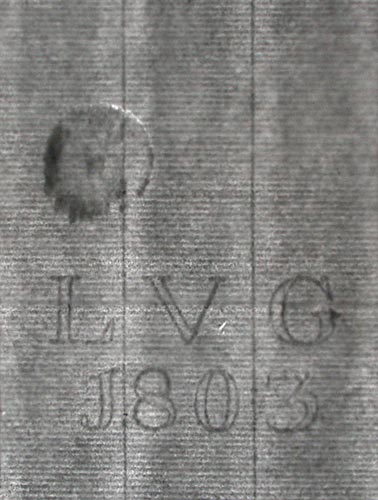
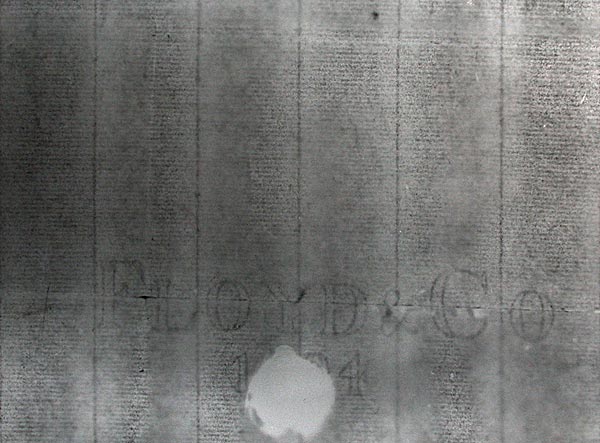
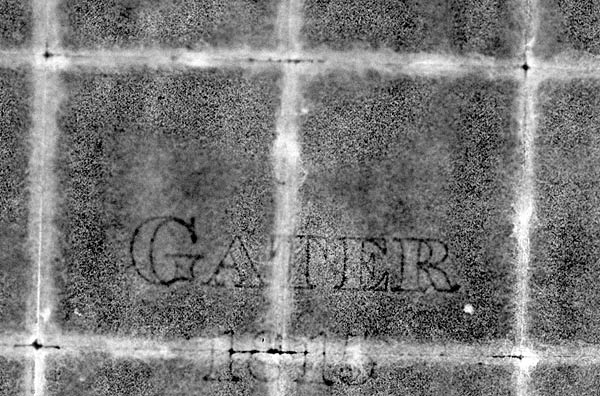
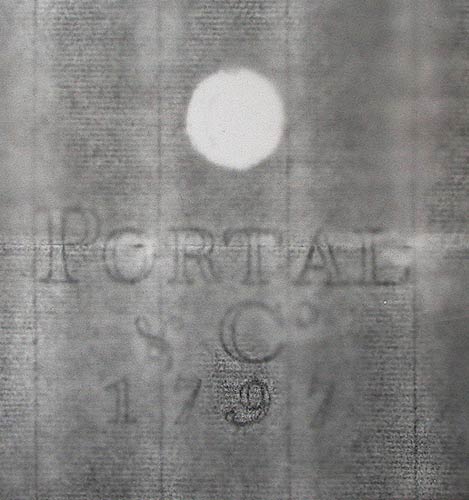
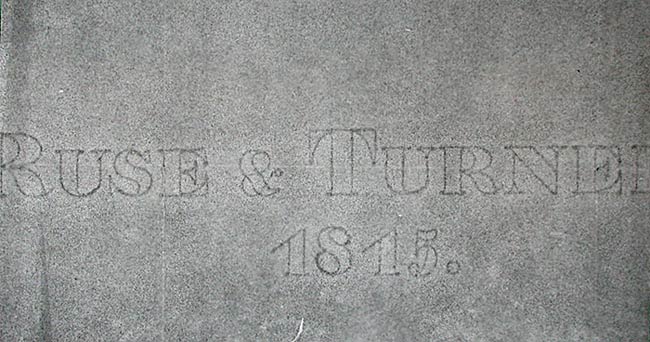
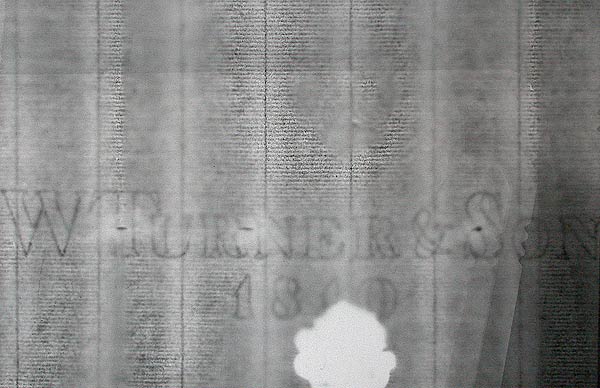
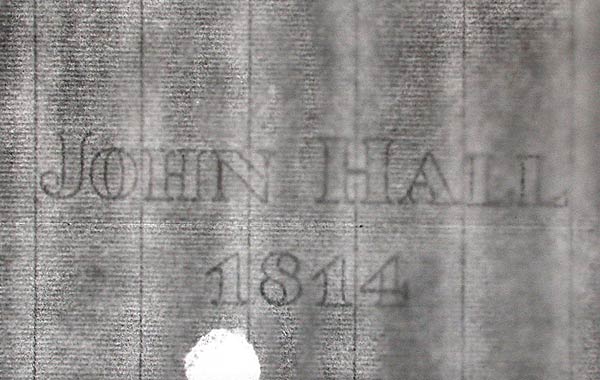
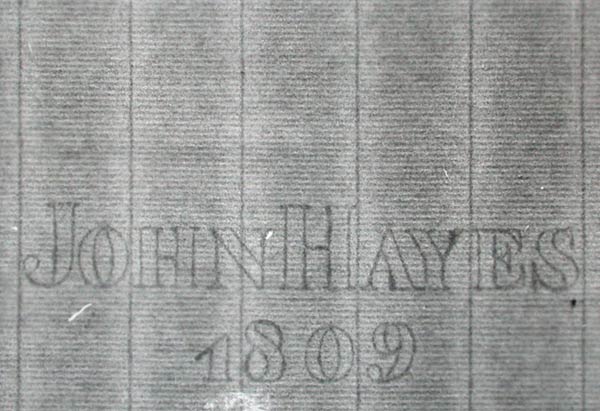
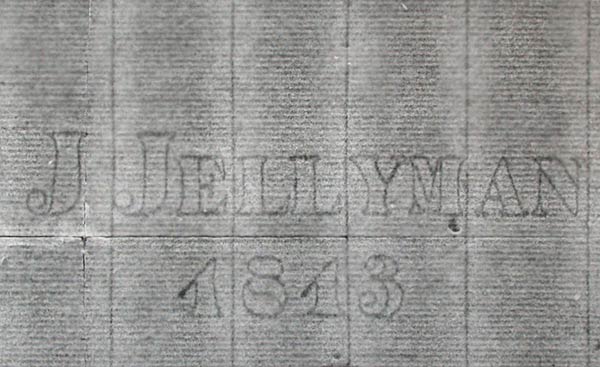
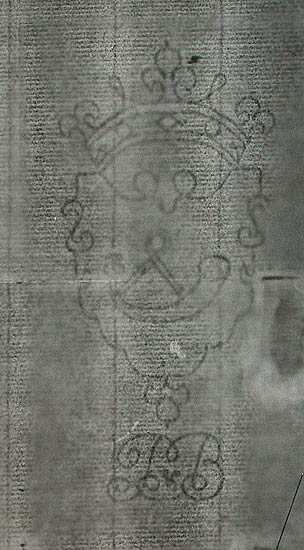
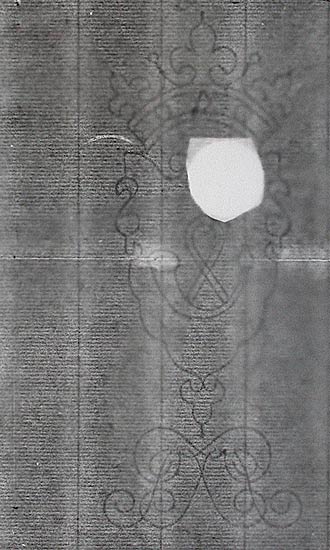
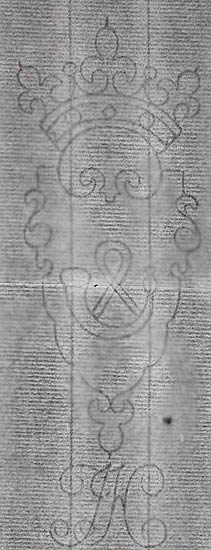
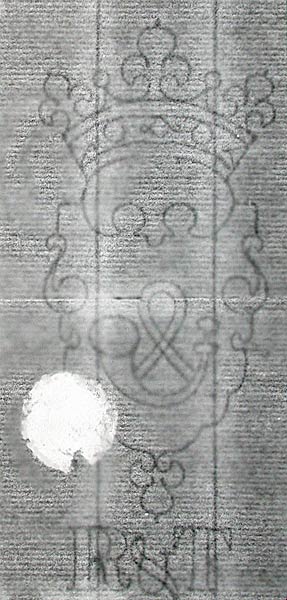
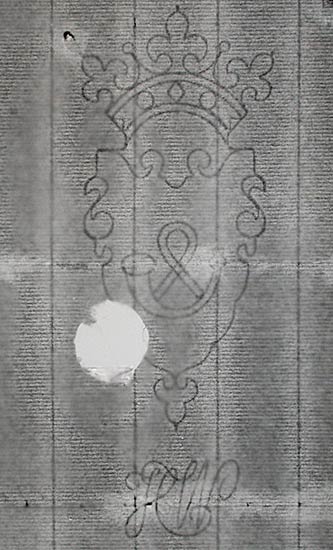
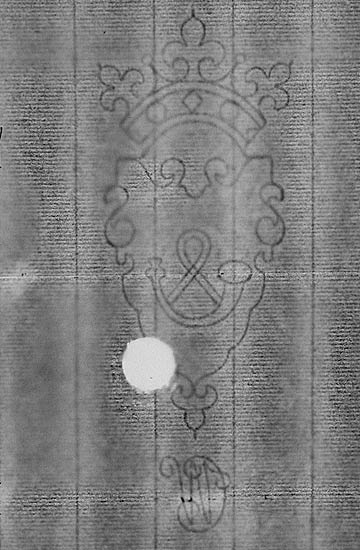
A watermark is an image—often of a name, initials, or decorative motif—that can be detected as a negative image in paper when held up to light. Watermarks can be useful in dating documents, identifying sizes and intended functions of papers, identifying mill trademarks and locations, and determining the quality of a paper. The Morgan's Thaw Conservation Center uses a beta plate to record watermarks. This method uses a low-level radioactive source to penetrate the thin paper and produce a black and white negative—in physical form and appearance it operates very much like a medical x-ray. The beta plate produces an exact copy of the structure of the paper, showing all thick and thin areas as well as the watermark. In some of the beta radiographs seen here, the white spots are the wax seals used to close up the folded letters. The sealing wax, actually colophony resin, is too dense for the beta rays to penetrate.
Among the Austen watermarks recorded, there are numerous variations on the design of an elaborate shield surrounding a post-horn (the horn used by a postman to announce delivery). This style of watermark denoted the function of the paper—standardized according to a specific size and weight to be sent by mail. It is interesting to note that the watermark LVG 1803 seen on a letter dated 1804 (MA 2911.1) is a copy of a Dutch watermark, which was appropriated by many English papermakers to denote a high quality paper. The watermarks recorded on the Morgan's Austen letters can be linked to specific papermaking mills. These marks include:
LVG 1803 (MA 2911.1)
Floyd & Co. Eynsford Mill, Kent (MA 977.2)
Gater 1815 - John and William Gater, Up Mills, West End, South Stoneham, Hants (MA 977.6)
Portal & Co 1797 - Laverstokes, Hants (MA 977.12)
Cater & Co 1808 (wove paper) (MA 977.19)
Ruse & Turners 1815 (wove paper) (MA 977.41); Ruse and Turners 1807 (laid) (MA 977.29) - Upper Tovil Mill, Maidstone, Kent
W. Turner & Son 1810 - William Turner, Chafford Mill, Penshurst, Kent. (MA 977. 35)
John Hall 1814 Cotton Mill, Ringstead, Northamptonshire (MA 977.40)
John Hayes, 1809 - John Hayes, Padsole Mill, Maidstone, Kent (MA 2911.3)
J. Jellyman, 1814 - Joseph Jellyman, Wiltshire (MA 2911.6)
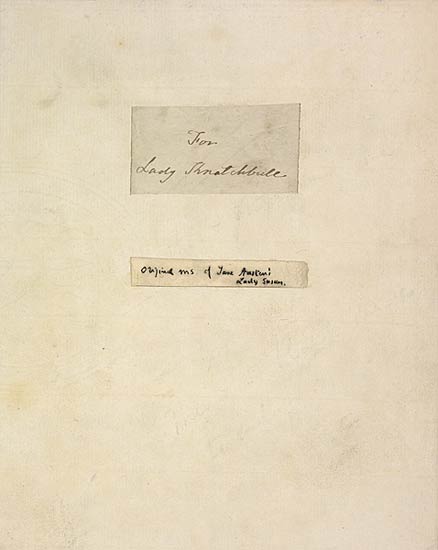
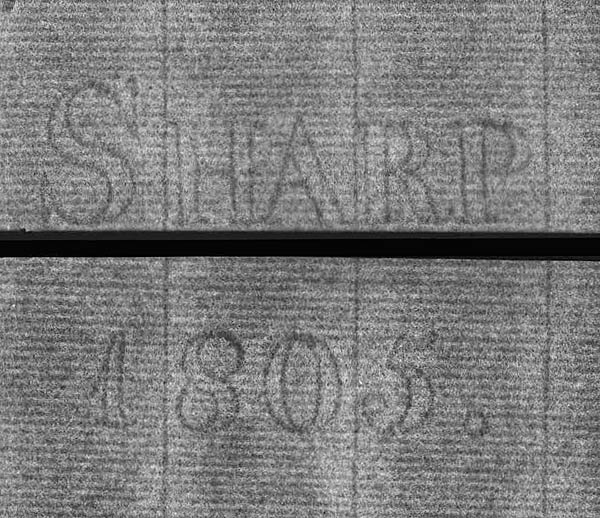
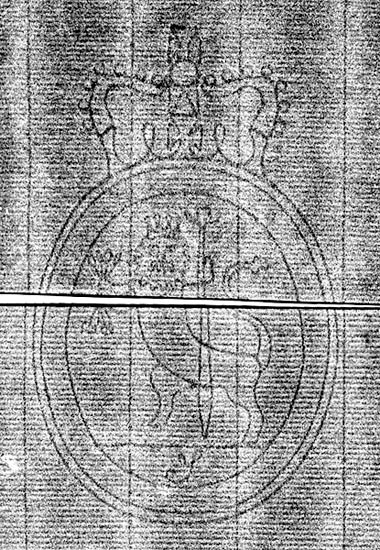
The manuscript of Austen's Lady Susan is a fair copy in Austen's hand, almost free of corrections or revisions. There is no conclusive evidence for the date of composition, but Austen probably wrote Lady Susan in 1794–95. Few of the 158 papers of this manuscript are watermarked. One dated with the mark SHARP / 1805 is seen twice, suggesting that Austen transcribed her earlier draft (which does not survive) between 1805 and 1809, perhaps for possible publication or gift. The only other recorded watermark is a triple circle with an animal inside. The image depicts both the upper and lower halves of the watermark. However, they do not meet up with precision, indicating that the edges of each sheet of paper may have been trimmed. This fair copy was eventually given by Austen to her niece, Fanny Knight, who became Lady Knatchbull.
Glossary of terms
Colophony Resin – Colophony, from its origin in Colophon, an ancient Ionic city, is now widely referred to as rosin. Rosin is a solid form of resin obtained from pines and some other plants, mostly conifers, produced by heating fresh liquid resin to vaporize the volatile liquid terpene components.
Fair copy – A copy of a document made after final correction.
Hot-pressed – A smooth-surfaced paper created by pressing a finished sheet of paper through hot cylinders.
Laid – Paper made on a screen with narrow horizontal bands (laid) and thicker vertical bands (chains) that produce a pattern of thick and thin lines when held up to the light.
Quarto – A quarto is made by folding a sheet of Royal-sized (20 x 25") paper into quarters. The resulting pages will thus measure approximately twelve by nine inches.
Tub-sized – The paper sheet was dipped in a tub or vat of hot sizing and then pressed and dried.
Watermark – Beginning in the thirteenth century, watermarks were made by affixing a thin wire, shaped into the desired form, to the wire mesh of the papermaking screen (mould). When the sheet of paper is formed, the watermarked area is thinner (less dense) than the rest of the sheet because the wires blocked the accumulation of fibrous pulp.
White paper – Papers made from the highest quality white rags, sometimes bleached during the papermaking process. White papers varied in quality from superfine, to fine and coarse.
Wove – Paper that exhibits a pattern of fine mesh when held up to the light.
This post was created in conjunction with the exhibition A Woman's Wit: Jane Austen's Life and Legacy on view November 6, 2009, through March 14, 2010, organized by Declan Kiely, Robert H. Taylor Curator, and Clara Drummond, Assistant Curator, Department of Literary and Historical Manuscripts.