
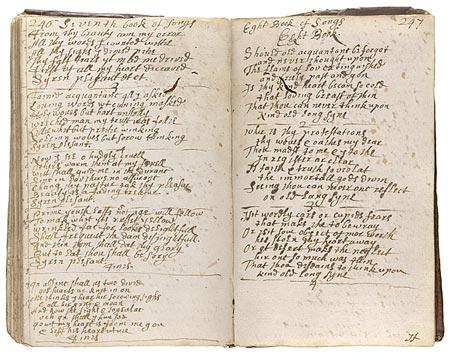
"Old Long Syne"
Manuscript commonplace book of James Crichton, 2nd Viscount Frendraught, 1667
Private collection
This manuscript, written in a nobleman's commonplace book from the 1660s, may be the earliest surviving rendering of a ballad beginning "Should old acquaintance be forgot." Various versions of this text circulated in manuscript during the seventeenth century before it was printed in broadside form and eventually in James Watson's Choice Collection of Comic and Serious Scots Poems (1711). Though the first line is familiar, the rest of the text bears little resemblance to the enduring version published over a century later. While Burns's "Auld Lang Syne" stirs pleasant memories of carefree companionship, the "old acquaintance" of this ballad is a faithless lover ("Thou art the most disloyall maid that ever my eye hath seen"), its narrator full of bitterness and regret.