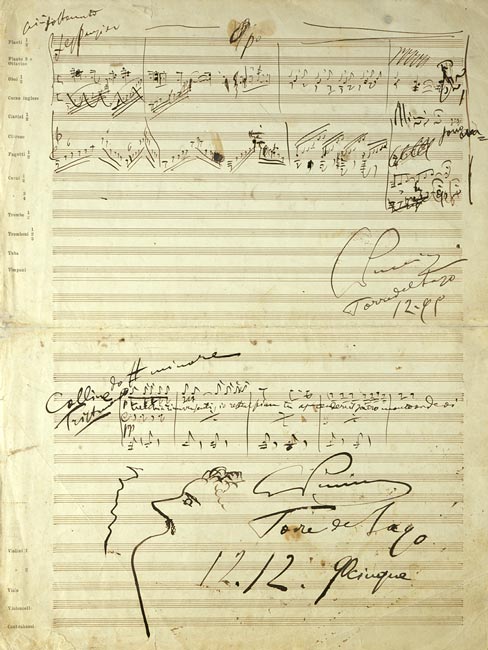
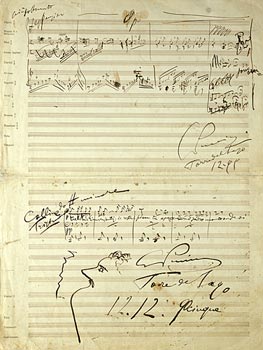
The life and music of one of opera's iconic figures, composer Giacomo Puccini, is the subject of Celebrating Puccini. On view are approximately forty items related to Puccini's career, including rarely seen original sketches for his acclaimed operas Madama Butterfly and La Bohème. The exhibition celebrates the 150th anniversary of Puccini's birth in Lucca, Italy, on December 22, 1858.
In addition to original manuscripts, the exhibition includes a display of first-edition librettos, personal letters, a period poster and playbills, souvenir postcards, and rare material linked to Puccini's relationship with such legends as Enrico Caruso and Arturo Toscanini. The exhibition is drawn almost exclusively from the Morgan's extensive music holdings, including the Cary, Heineman, and Fuld collections, as well as the Robert Owen Lehman Collection, which is on deposit at the Morgan.
Visitors have the rare opportunity to view manuscripts for five Puccini works: Le Villi, Edgar, La Bohème, Madama Butterfly, and La Fanciulla del West. A display of first-edition librettos constitutes a chronology of Puccini's operatic output, augmented by information about premieres, casts, and first performances in cities throughout the world during the composer's lifetime.
The last in a line of five generations of organists and composers, Puccini, inspired by a performance of Verdi's Aida, decided to pursue an operatic career. After graduating from the Milan Conservatory, he wrote his first opera, Le Villi. The work attracted the attention of Giulio Ricordi, Italy's preeminent publisher, who acquired the rights to the work and also commissioned the composer's next opera, Edgar. Although Edgar was not a success, Ricordi continued his support, enabling Puccini to realize his ambition.
A letter dated December 16, 1884, from Ricordi to soprano Romilda Pantaleoni documents the high regard Ricordi had for Puccini's work as well as his efforts to promote his music. Also on view is a telegram sent by Ricordi the morning after the premiere of La Bohème, attesting to his enthusiastic response.
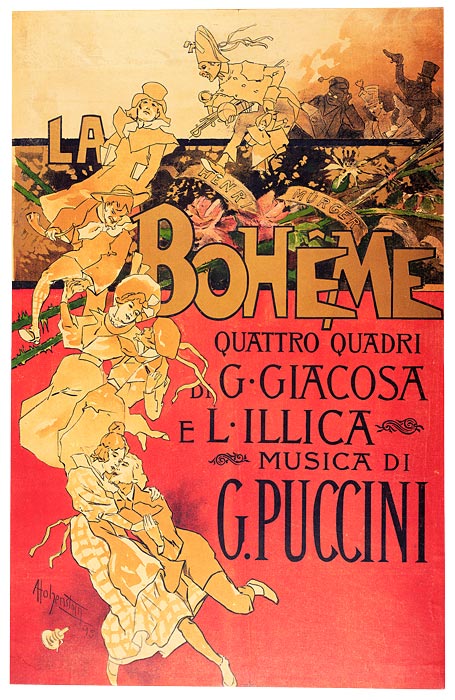
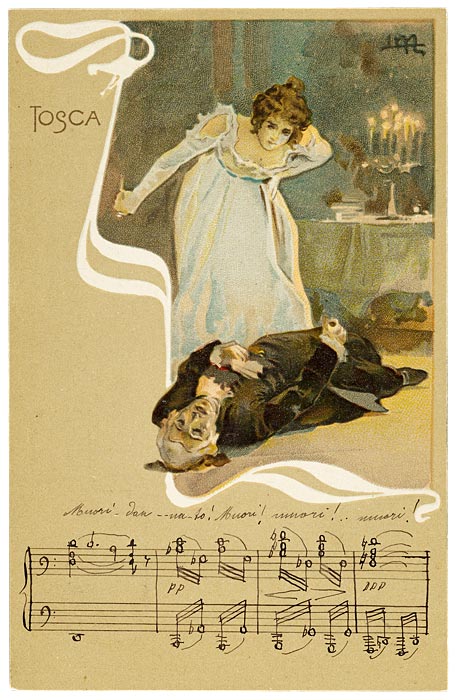
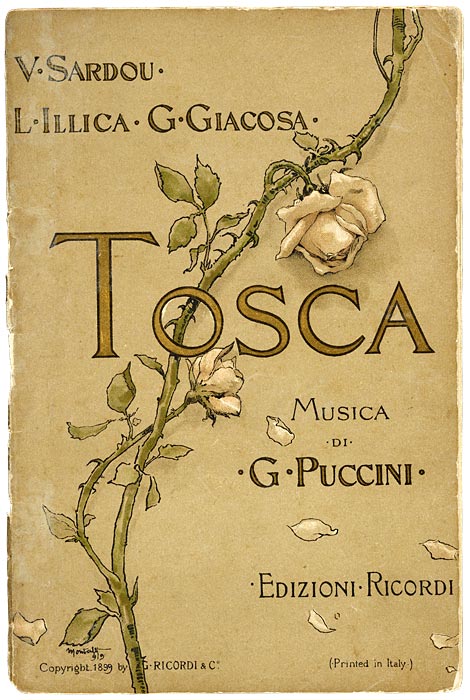
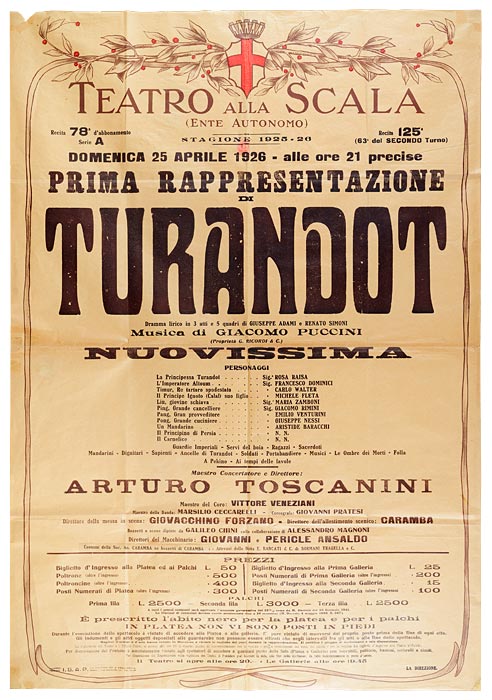
Adolf Hohenstein's vivid poster for the original production of La Bohème and a playbill for the world premiere of Turandot are on view. Also featured are souvenir postcards, designed by Hohenstein's pupil Leopoldo Metlicovitz, for Tosca, along with a commemorative postcard marking the opera's premiere at Rome's Teatro Costanzi and inscribed with comments about the performance.
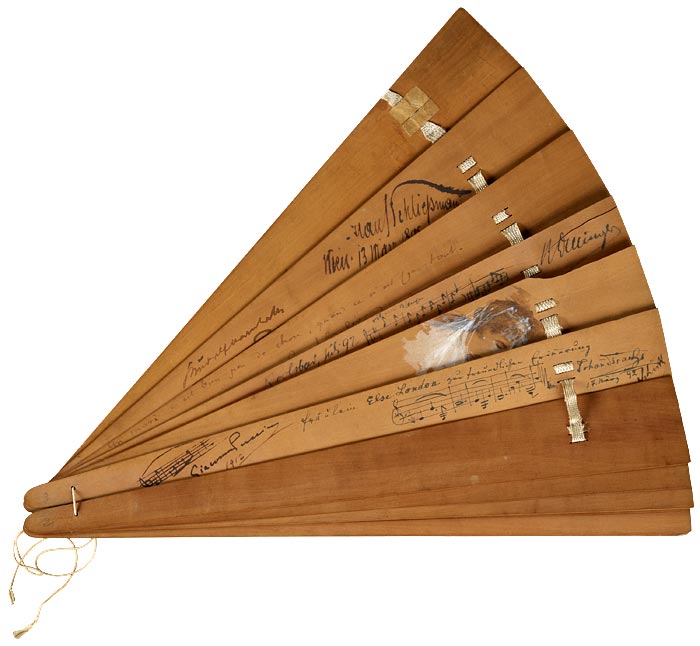
Puccini met tenor Enrico Caruso in 1897 and is reported to have said, "Who sent you to me? God?" On display is Caruso's signed receipt for his compensation for performances at Covent Garden in La Bohème and Tosca in June 1907. Also on view is a silk program from the gala performance on June 11, 1907, commemorating the visit of the king and queen of Denmark to England in which Caruso sang excerpts from Madama Butterfly and La Bohème. Puccini, in London at the time, probably attended.
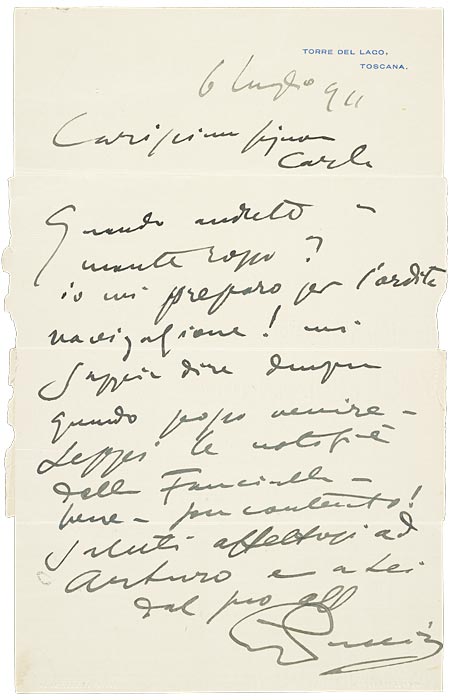
The stormy relationship between Puccini and Arturo Toscanini (who conducted the world premieres of La Bohème and Fanciulla, and after Puccini's death, Turandot) is revealed in letters from Puccini.
This exhibition is generously sponsored by Baroness Mariuccia Zerilli-Marimò.
Additional support is provided by the William C. Bullitt Foundation.
Giacomo Puccini (1858–1924)
La Bohème
Sketches for Act IV (1895)
The Dannie and Hettie Heineman Collection
Heineman MS 173B