
Download image:

Listen:
Charles Dickens
1812–1870
A Christmas Carol in Prose : Being a Ghost Story of Christmas.
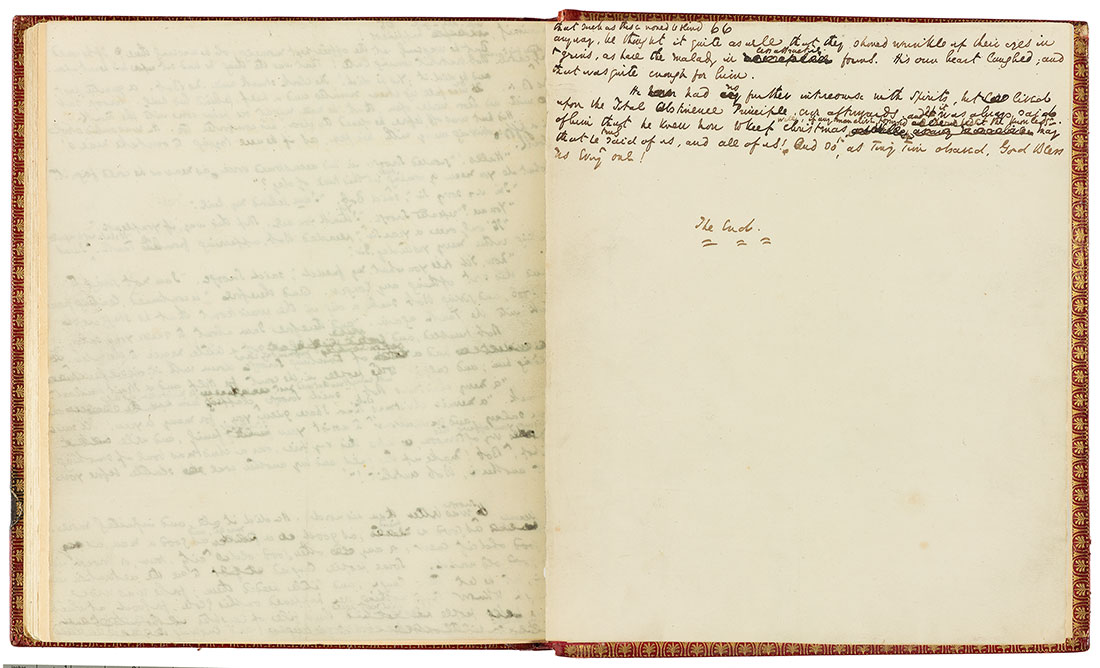
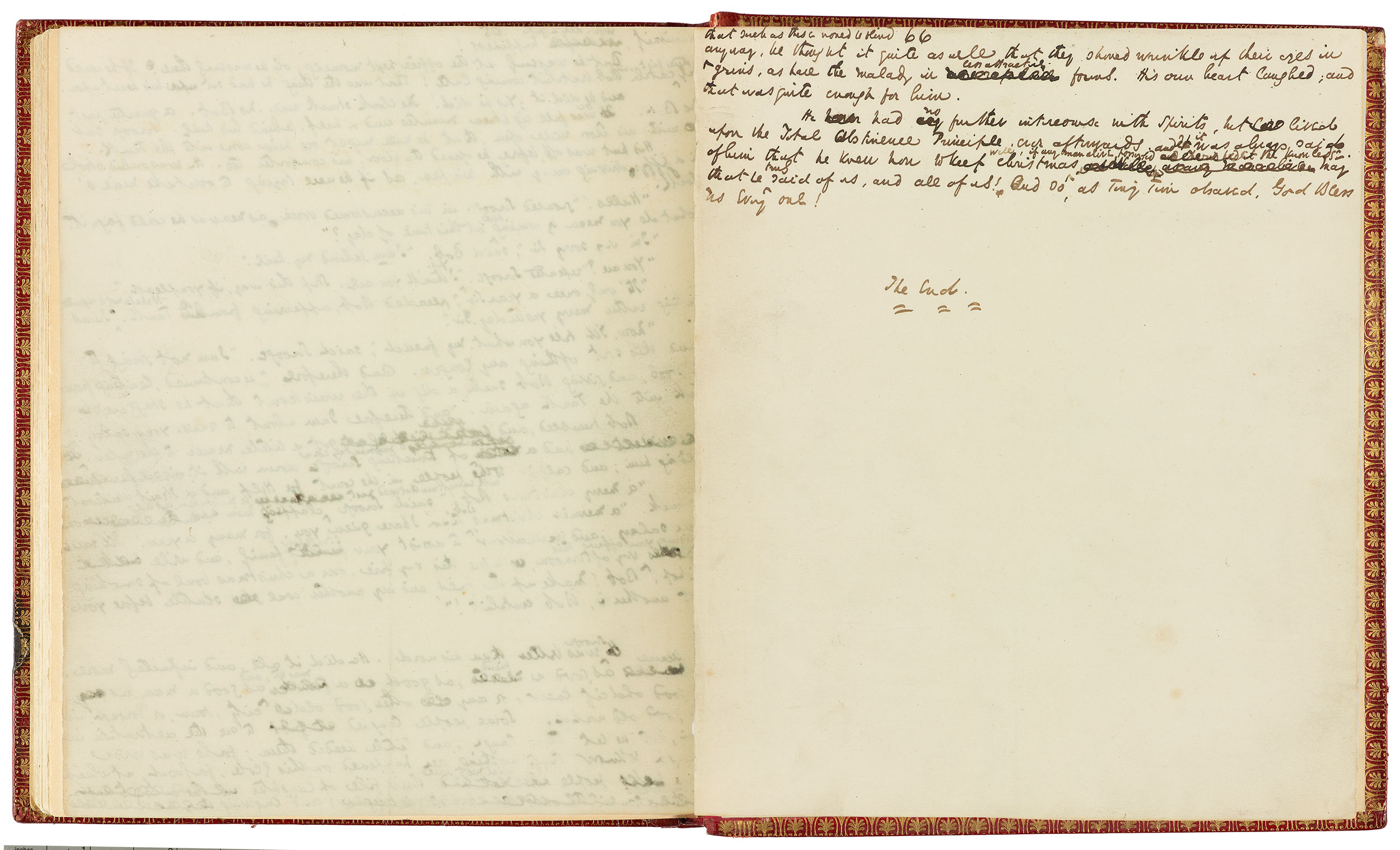
Autograph manuscript signed, December 1843
Page 66
Purchased by Pierpont Morgan before 1900
MA 97
Transcription:
66
that such as these would be blind anyway, he thought it quite as well that they should wrinkle up their eyes in grins, as have the malady in less attractive forms. His own heart laughed; and that was quite enough for him.
He had no further intercourse with Spirits, but lived upon the Total Abstinence Principle, ever afterwards; and it was always said of him that he knew how to keep Christmas well, if any man alive possessed the knowledge. May that be truly said of us, and all of us! And so, as Tiny Tim observed, God Bless Us Every One!
THE END.