

A Christmas Carol in Prose : Being a Ghost Story of Christmas.
Autograph manuscript signed, December 1843
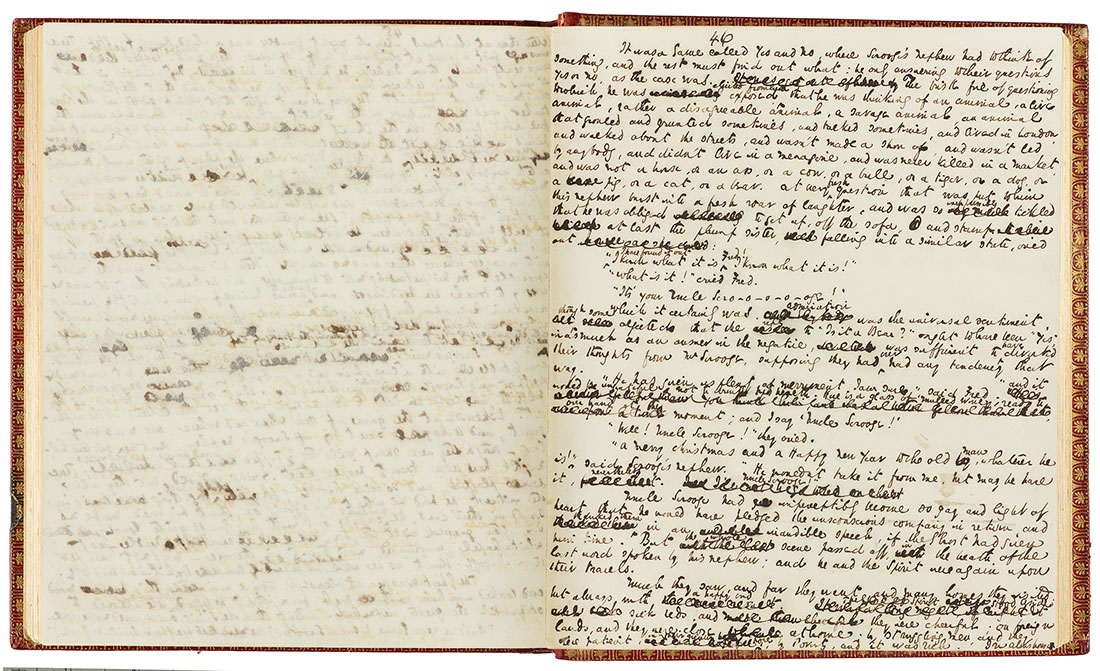
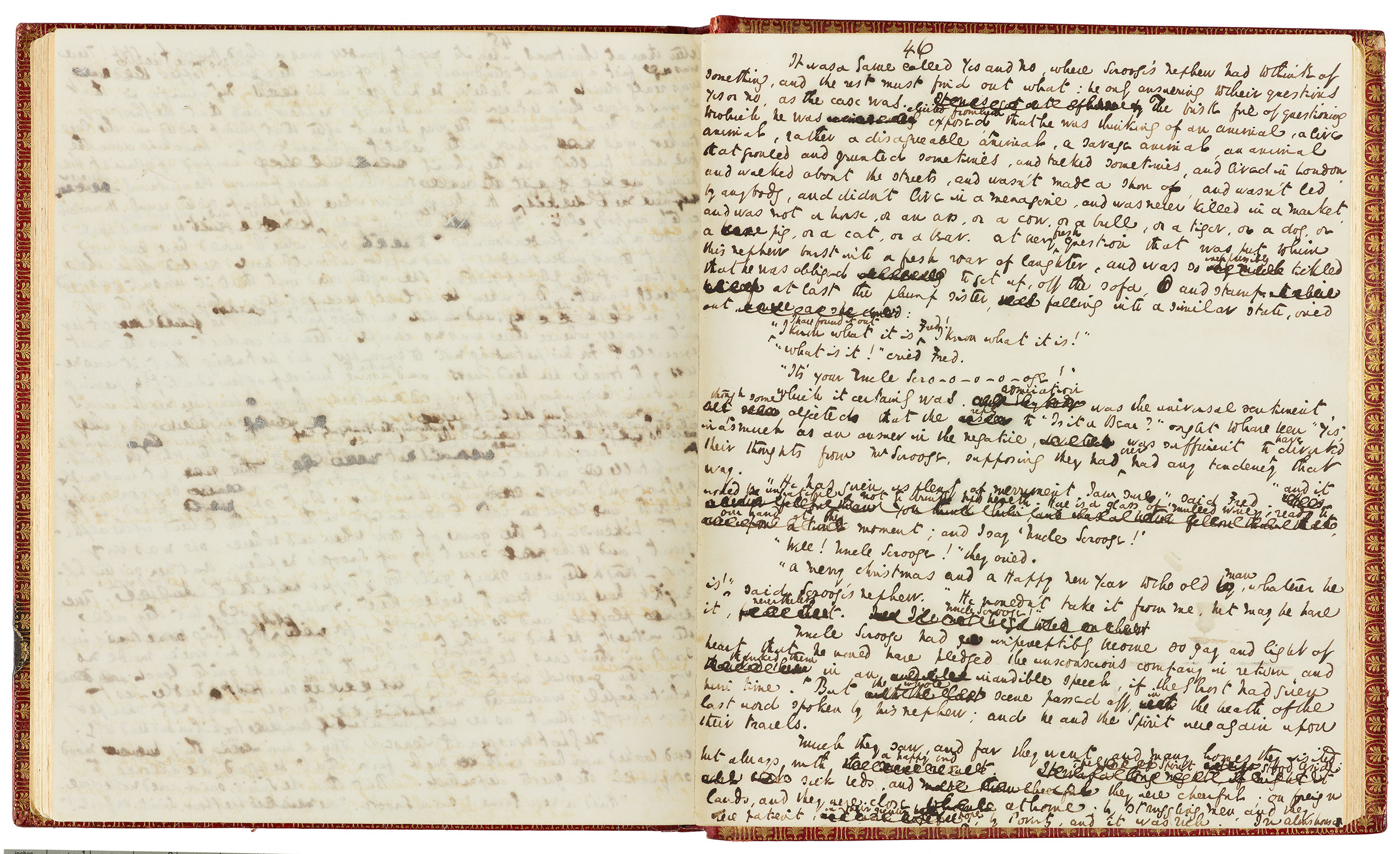
Page 46
Purchased by Pierpont Morgan before 1900
46
It was a game called Yes and No, where Scrooge's nephew had to think of something, and the rest must find out what: he only answering to their questions yes or no, as the case was. The brisk fire of questioning to which he was exposed, elicited from him that he was thinking of an animal, a live animal, rather a disagreeable animal, a savage animal, an animal that growled and grunted sometimes, and talked sometimes, and lived in London, and walked about the streets, and wasn't made a show of, and wasn't led by anybody, and didn't live in a menagerie, and was never killed in a market, and was not a horse, or an ass, or a cow, or a bull, or a tiger, or a dog, or a pig, or a cat, or a bear. At every fresh question that was put to him this nephew burst into a fresh roar of laughter, and was so inexpressibly tickled that he was obliged to get up, off the sofa, and stamp. At last the plump sister, falling into a similar state, cried out:
"I have found it out. I know what it is, Fred! I know what it is!"
"What is it!" cried Fred.
"It's your Uncle Scro-o-o-o-oge!"
Which it certainly was. Admiration was the universal sentiment, though some objected that the reply to "Is it a Bear?" ought to have been "Yes," inasmuch as an answer in the negative, was sufficient to have diverted their thoughts from Mr. Scrooge, supposing that they had ever had any tendency that way.
"He has given us plenty of merriment, I am sure," said Fred, "and it would be ungrateful not to drink his health. Here is a glass of mulled wine, ready to our hand at the moment; and I say "Uncle Scrooge!'"
"Well! Uncle Scrooge!" they cried.
"A Merry Christmas and a Happy New Year to the old man, whatever he is!" said Scrooge's nephew. "He wouldn't take it from me, but may he have it, nevertheless. Uncle Scrooge!"
Uncle Scrooge had imperceptibly become so gay and light of heart, that he would have pledged the unconscious company in return, and thanked them in an inaudible speech, if the Ghost had given him time. But the whole scene passed off, in the breath of the last word spoken by his nephew; and he and the Spirit were again upon their travels.
Much they saw, and far they went, and many homes they visited, but always with a happy end. The Spirit stood beside sick beds, and they were cheerful; on foreign lands, and they were close at home; by struggling men, and they were patient, in their greater hope; by Poverty, and it was rich. In almshouse