
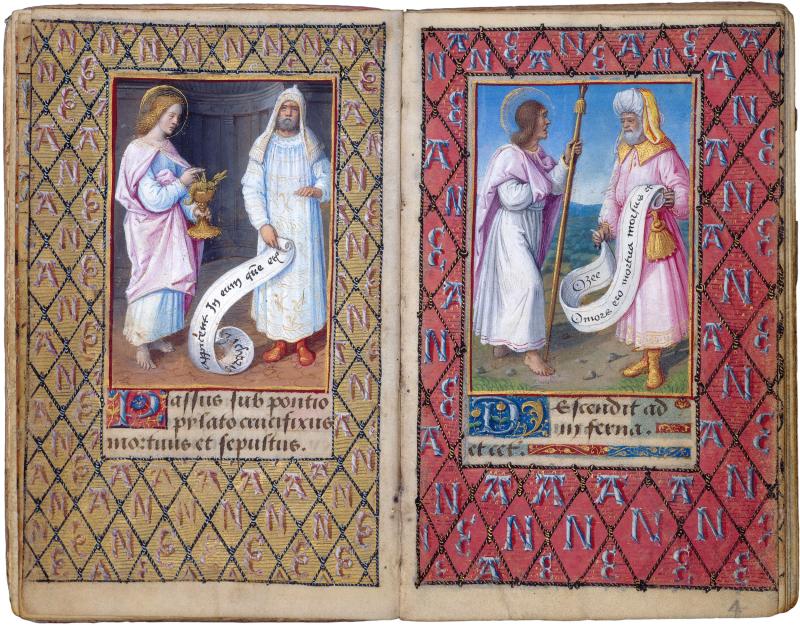

The Apostle John and the Prophet Zachariah
The Apostle Thomas and the Prophet Hosea
Prayer Book of Anne de Bretagne
Illuminated by Jean Poyer
The Pierpont Morgan Library, Purchased in 1905
The Apostle John and the Prophet Zachariah (fol. 3v, left)
Poyer employed subtle and dramatic juxtapositions. Here he contrasts the typical colors of his light palette—the pale pinks and blues of the clothing of John and Zachariah —the dark chiaroscuro of the interior behind them.
John's gold cup containing a serpent alludes to the attempt on his life by the high priest Aristodemus, who challenged the Apostle to drink a draught of poison. John's miraculous imbibing of the deadly liquid with no ill effect converted the priest.
The Apostle Thomas and the Prophet Hosea (fol. 4, right)
Thomas, holding the lance of his martyrdom, is shown in active conversation with Hosea, whose response is written on his scroll, O mors ero mor(s) tua morsus (O death, I will be thy death).
The active communication between the two figures is a visualization of the link between the Old and New Testaments, between the Articles of the Apostles' Creed and the declarations of the prophets. The pairing of Apostles and prophets in Anne's manuscript draws on a tradition dating back to the early fourteenth century.